
Central Axis
A long urban sequence linking planning ideals, ceremonial places, and public space.
Beijing Municipality · North China
A capital whose ceremonial axis, neighborhood lanes, institutions, and everyday routines reveal many layers of Chinese urban history.
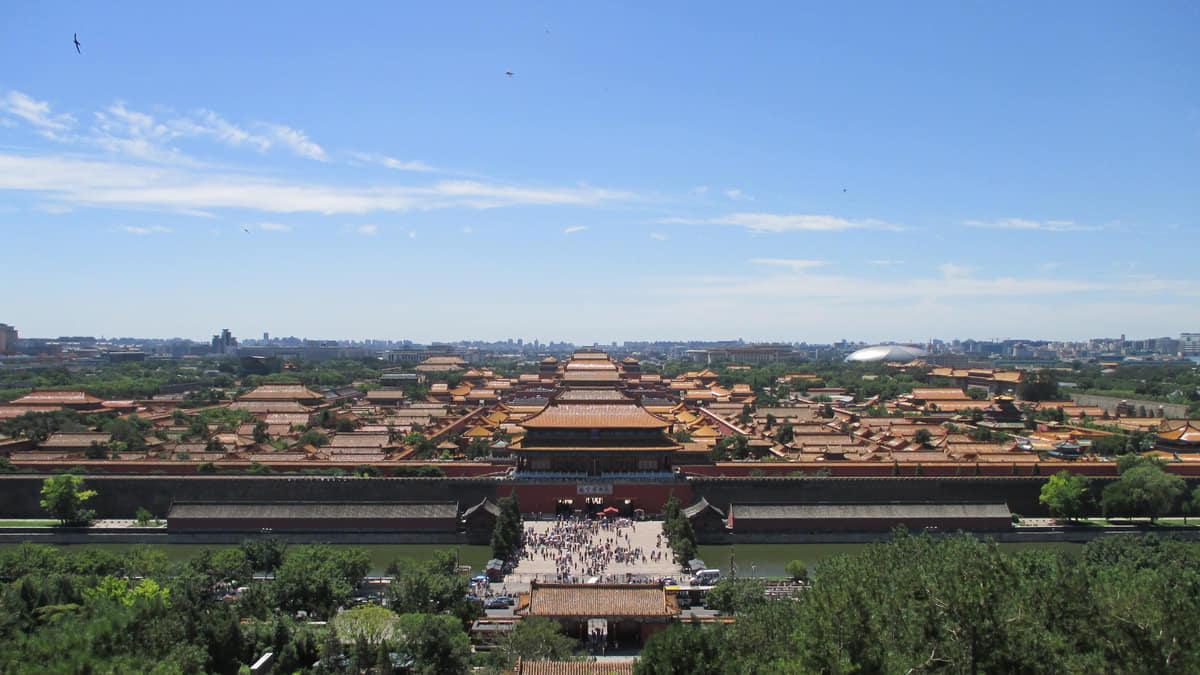
Beijing is a municipality of 16 districts, not only the historic core. End-of-2025 statistics record 21.800 million permanent residents across dense central districts, expanding plains, new towns and mountain landscapes in the north and west.
The most useful way to read the city is as overlapping systems: the Yuan–Ming–Qing urban framework and Central Axis, hutong and courtyard fabrics, water and transport networks, twentieth-century industry and institutions, and twenty-first-century cultural and metropolitan reuse.
Heritage is distributed from Zhoukoudian archaeology and mountain Great Wall sections to palaces, ritual landscapes, gardens, canals, tombs, museums and working neighborhoods. Each property has its own boundary, evidence, access rules and conservation issues; one iconic image cannot stand for the whole city.
Climate entries describe long-term seasonal patterns rather than live weather. Heat, concentrated summer rain, winter cold, pollen, air conditions, trail safety, venue hours and reservations can change quickly, so operational decisions require current forecasts and official notices.
[1][2][3][4]A long urban sequence linking planning ideals, ceremonial places, and public space.
Lanes and courtyards where housing, services, memory, and neighborhood change meet.
Collections and institutions that make national and local histories accessible.
Winter light, spring wind, summer evenings, and autumn parks change everyday rhythms.
Twenty-seven locally hosted, rights-cleared images move from the historic core and outer-district heritage to religious, civic, industrial, performance, craft and food records. Captions distinguish what is visible, what the source identifies, what is dated and what still requires institutional, scientific or current operational evidence.
Beijing combines a dense urban plain with extensive suburban districts and mountain landscapes to the north and west; citywide statistics cover all of these areas.[1][2][3][4]
Beijing sits at the northwestern edge of the North China Plain, with plains in the southeast and mountains enclosing much of the north and west.
The historic and contemporary urban core occupies the plain, while the wider municipality rises into the Yanshan and Taihang mountain systems.[1][2][3][4]
Rivers, canals, reservoirs, and transferred water support a large inland metropolis in a seasonally dry climate.[1][2][3][4]
Ring roads and radial corridors overlay an older rectilinear city whose Central Axis remains a major spatial reference.[1][2][3][4]
Population and climate figures refer to 16 districts, not only the area inside the historic city walls.[1][2][3][4]
Loading current conditions…
Forecast data: Open-MeteoPermanent residents across Beijing Municipality
Population figures use the administrative area and source date shown below.[5]Summers are hot and rainy; winters are cold and dry. Spring and autumn are shorter, and most annual precipitation falls from June to August.
Climate describes long-term seasonal patterns; live conditions appear separately.[1][2][3][4]Rapid warming, wind, and dry spells make conditions changeable; parks flower while dust and pollen can affect comfort.[1][2][3][4]
Heat, humidity, and concentrated rainfall shape travel and daily routines; short intense storms are possible.[1][2][3][4]
Clearer skies, lower humidity, and cooling temperatures often make this the most comfortable season for long walks.[1][2][3][4]
Cold, dry weather and indoor heating dominate; daylight and bare tree canopies make historic urban form especially legible.[1][2][3][4]
Eleven sourced layers connect archaeology, successive capital frameworks, palace and ritual construction, neighborhood and canal systems, damage and rebuilding, metropolitan expansion, adaptive reuse and the 2024 Central Axis inscription.
The Zhoukoudian property preserves archaeological and paleoanthropological evidence interpreted through stratigraphy, finds, research history and site protection. Museum reconstructions and shelters must be distinguished from original deposits, and individual scientific claims should retain source and date.[8]
The Beijing area had settlements and regional-capital functions before the Yuan capital. Archaeology, historical geography and later rebuilding make the record uneven, so modern street patterns should not be projected unchanged into every earlier period.[1]
Dadu established an influential rectilinear capital framework with an axial order, water systems and planned neighborhoods. The present Central Axis developed from this history, but surviving, reconstructed and archaeologically inferred elements need to be labeled separately.[4]
Major construction created the Forbidden City and completed the original Altar of Heaven and Earth within a reorganized capital. Building dates do not imply that every surviving surface is original; repair, rebuilding and later use are part of the material history.[6][10]
The Grand Canal linked grain transport, administration, markets, settlements and water engineering over long periods. Today's Tongzhou museum interprets that history, but its installations are not the canal itself and current waterways have later ecological and infrastructural layers.[12]
Imperial gardens and institutions changed through construction, appropriation, damage, dispersal, repair and new public use. Present landscapes should neither erase loss nor be treated as untouched survivals; object provenance and reconstruction require specific evidence.[9][6]
Walls and gates, roads, housing, factories, universities, museums and civic spaces were removed, added or repurposed as Beijing expanded. The result is a layered city: preservation, displacement, modernization and everyday adaptation often occupy the same district.[1][17]
Ring roads, rail and metro networks, new districts and large venues changed metropolitan scale. Shougang and 798 show different forms of industrial reuse, while photographs of one phase cannot certify current tenants, labor conditions or heritage outcomes.[17][18]
The National Stadium and Olympic Park added a new monumental landscape and later hosted changing public, sporting and cultural uses. Event legacy is not fixed: operations, access, maintenance, nearby development and public meaning continue to evolve.[18]
UNESCO inscribed a property of 15 components extending through the historic city. Inscription adds an international heritage framework; it does not freeze daily life, remove resident needs or make every nearby building part of the designated property.[4]
Eight perspectives describe a 21.8-million-resident municipality through language, neighborhood labor, research, heritage work, food systems, performance and unequal access without inventing one Beijing personality.
End-of-2025 statistics cover 21.8 million permanent residents across 16 districts. Long-established families, migrants, students, international residents, commuters and suburban or mountain communities encounter different housing, work, services and public space; no single “Beijinger” stereotype is adequate.[5][17]
Standard Mandarin is widely used, while Beijing speech remains recognizable in pronunciation, vocabulary, humor and social context. Language varies by generation, district, education, work and family history; accent should never be used as a shortcut for identity or belonging.[5][17]
Caretakers, sanitation workers, repair crews, shopkeepers, delivery riders, cooks, teachers, health workers and residents keep lanes, compounds, markets and public institutions functioning. A picturesque street image often hides this maintenance and service work.[5][17]
Universities, laboratories, libraries, museums and archives bring researchers, students, conservators, technicians, educators and visitors together. Institutional prominence should not erase uneven access, specialist labor, collection provenance and the distinction between scholarship and display.[5][17]
Archaeologists, architects, conservators, guides, performers, stage crews and craft workers turn heritage into ongoing practice. Their training, credit, consent, safety, pay, documentation and transmission deserve attention beyond finished monuments and products.[5][17]
Producers, slaughter and processing workers, wholesalers, drivers, market vendors, prep cooks, servers, cleaners and waste handlers shape Beijing food. Dish fame does not establish safe sourcing, fair labor, nutrition or environmental performance; these require separate evidence.[5][17]
Peking opera and other arts depend on performers, musicians, directors, writers, costume and makeup teams, stage technicians, schools, venues, archivists and audiences. A stage photograph captures one moment, not the full training system or a universal definition of tradition.[5][17]
Long commutes, reservations, ticket prices, disability access, care work, school schedules, weather and neighborhood services shape who can use the city. A responsible guide separates scenic possibility from practical access and checks current conditions rather than assuming equal mobility.[5][17]
Fourteen entries place famous dishes, breakfast, wheat staples, halal traditions, migration and the complete food system within technique, labor, sourcing, allergens, safety, evidence and maker variation.
Roasting, carving, wrappers, sauce and vegetable accompaniments form a restaurant sequence. The national ICH record documents one hanging-oven craft tradition; it does not make every roast-duck service identical or certify nutrition, sourcing, welfare, labor and food safety.[15][16]
Wheat noodles, fried bean-based sauce and changing vegetable toppings meet only at serving. Meat, paste, salt, oil, sweetness, cucumber, radish, cabbage, beans and portion vary among homes and shops, so one photograph is a recipe record, not a fixed canon.[16]
Thin lamb cooks quickly around a chimney pot and is paired with dipping sauce and staples. Safe practice requires traceable meat, cold chain, clean utensils, separation of raw and cooked food, complete cooking where needed and allergen awareness.[16]
Batter, egg, sauce, crisp or other fillings are assembled rapidly on a griddle for portable eating. Regional and vendor recipes differ, and a process photograph cannot establish the finished ingredients, sanitation, reuse of oil, allergen controls or current stall licensing.[16]
Douzhi is associated with mung-bean processing and a distinctive fermented flavor, often discussed with fried or pickled accompaniments. Fermentation history does not replace temperature, hygiene, freshness, ingredient and food-safety controls, and local identity does not imply universal preference.[16]
Luzhu commonly brings organ meats, tofu or bread-like pieces and broth into one bowl, but parts, seasoning and proportions vary. Menus should identify animal ingredients and allergens; heat, sourcing, cleaning, cooking, storage and cross-contamination matter more than nostalgic branding.[16]
A hot grain paste may be finished with brown-sugar syrup, sesame, raisins, preserved fruit or other toppings. Grain identity, sweetness, nuts or seeds, additives and serving temperature differ; the name and visual appearance alone cannot establish ingredients or nutrition.[16]
White almond-style jelly may use apricot-kernel flavor, dairy or other bases, while fried cakes differ in dough and filling. Naming is not an allergen declaration; customers should verify nuts, milk, gluten, sesame, filling, frying oil and cross-contact.[16]
Noodles, buns, pancakes, dumplings and breads appear across homes, canteens, markets and restaurants. Flour, hydration, fermentation, filling, cooking method, price, labor and dietary needs make this a family of practices rather than one city taste.[16]
Mutton dishes, baked goods and restaurants associated with Muslim communities are part of Beijing's food history. Accurate description requires maker identification, religious practice, sourcing, certification where applicable and community voice; appearance alone cannot establish halal status.[16]
Menus often connect dishes to famous people, court kitchens or old shops. Such narratives may be brand history, oral tradition, later adaptation or documented provenance; dates, recipes and continuity should be sourced rather than repeated as fact.[16]
Stalls, small shops, bakeries, convenience stores, canteens and home kitchens answer different schedules and budgets. Portability and speed are only part of the story: worker hours, rent, licensing, waste, nutrition and neighborhood change also shape breakfast access.[16]
Regional Chinese and international kitchens are integral to contemporary Beijing. Restaurant density does not erase origin communities, ingredient supply chains, adaptation, translation, labor and price; “Beijing food” should include what residents actually eat today.[16]
Farms, wholesale markets, cold chains, processors, water, energy, kitchens, inspections, affordability, nutrition, packaging, delivery, wastewater, cooking emissions and leftovers together form the city's food system. A famous-dish gallery is an entry point, not a sustainability or safety audit.[16]
These editorial routes connect different scales of Beijing rather than treating the city as a checklist.
Four focused guides turn the complete city profile into seasonal, itinerary, and food decisions.
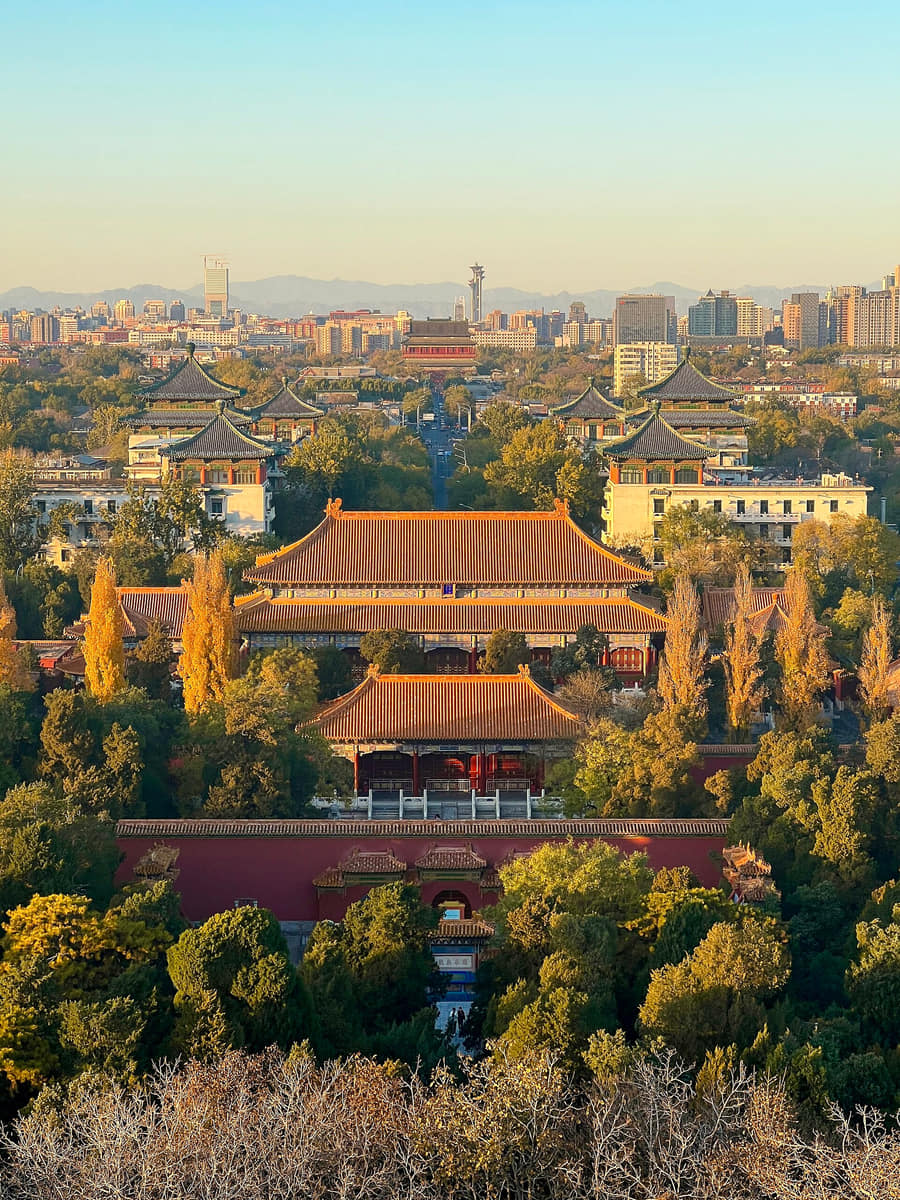
The axis is a way to read planning ideals, ceremony, public space, neighborhood change, and the continuing structure of the capital.
Read the story