
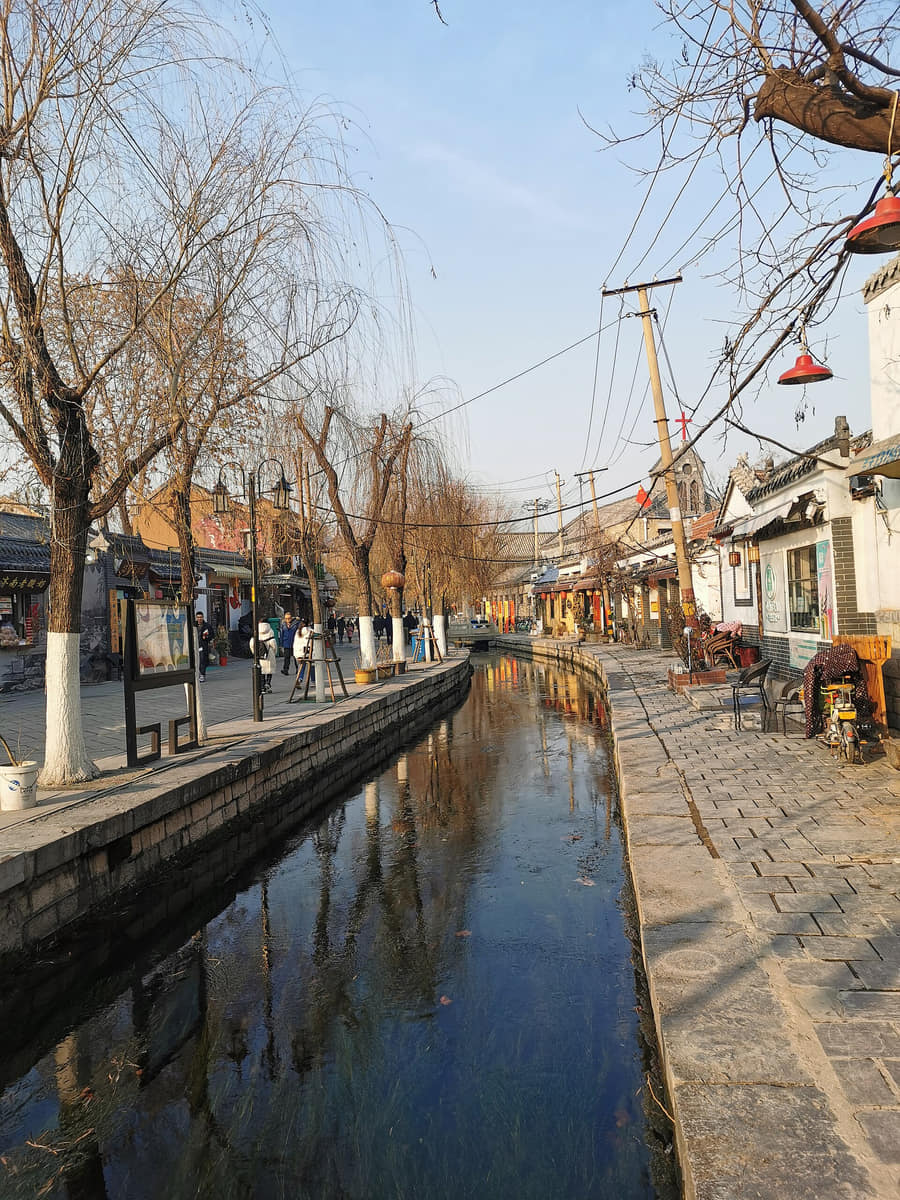
Jinan's spring water begins well beyond the famous pools. Rain enters fractured limestone in the southern hills, travels underground, and rises where geological structure and elevation bring groundwater back to the surface.[1][2][3][4]
Once water emerges, people shape its route through pools, channels, moats, gardens, bridges, and Daming Lake. These spaces support scenery, water management, historic writing, local routines, and public gathering.[1][2][3][4]
Jinan's springs are public culture only because a much larger geological and managed water system keeps them flowing.[1][2][3][4]
The system is vulnerable to rainfall variation, extraction, construction, pollution, and climate conditions. Protecting spring culture therefore means protecting recharge areas and groundwater processes as well as maintaining attractive historic sites.[1][2][3][4]
What does this reveal about Jinan?
The city's identity links deep geology with everyday civic life; conservation has to operate from mountain recharge zones to neighborhood channels and lakes.[1][2][3][4]