
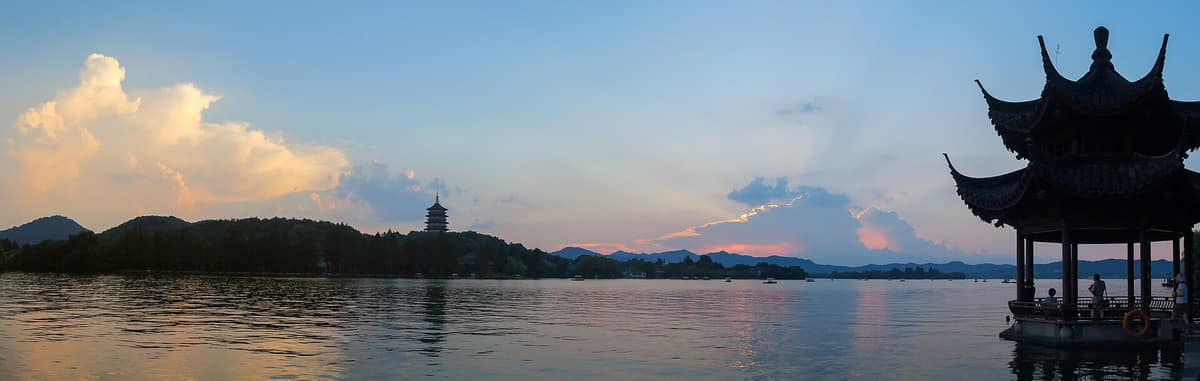
West Lake looks natural, but its cultural force comes from centuries of interpretation and intervention. Dredging, causeways, islands, planting, buildings, inscriptions, and named views shaped how the landscape is encountered.[1][2][3][4][5][6]
Poets, painters, officials, religious communities, residents, and visitors attached stories and expectations to particular scenes. The lake became both a place and a vocabulary for imagining harmony between human activity and nature.[1][2][3][4][5][6]
West Lake is not only scenery preserved from the past; it is a landscape repeatedly composed, named, maintained, and reinterpreted.[1][2][3][4][5][6]
Calling it a cultural landscape therefore changes how we look. Water and hills remain central, but so do maintenance, design, memory, public access, and the city growing around them.[1][2][3][4][5][6]
What does this reveal about Hangzhou?
Hangzhou’s identity depends on relationships between landscape and city. The lake influences how the metropolis represents itself even as work, transport, housing, and technology extend far beyond its shores.[1][2][3][4][5][6]