
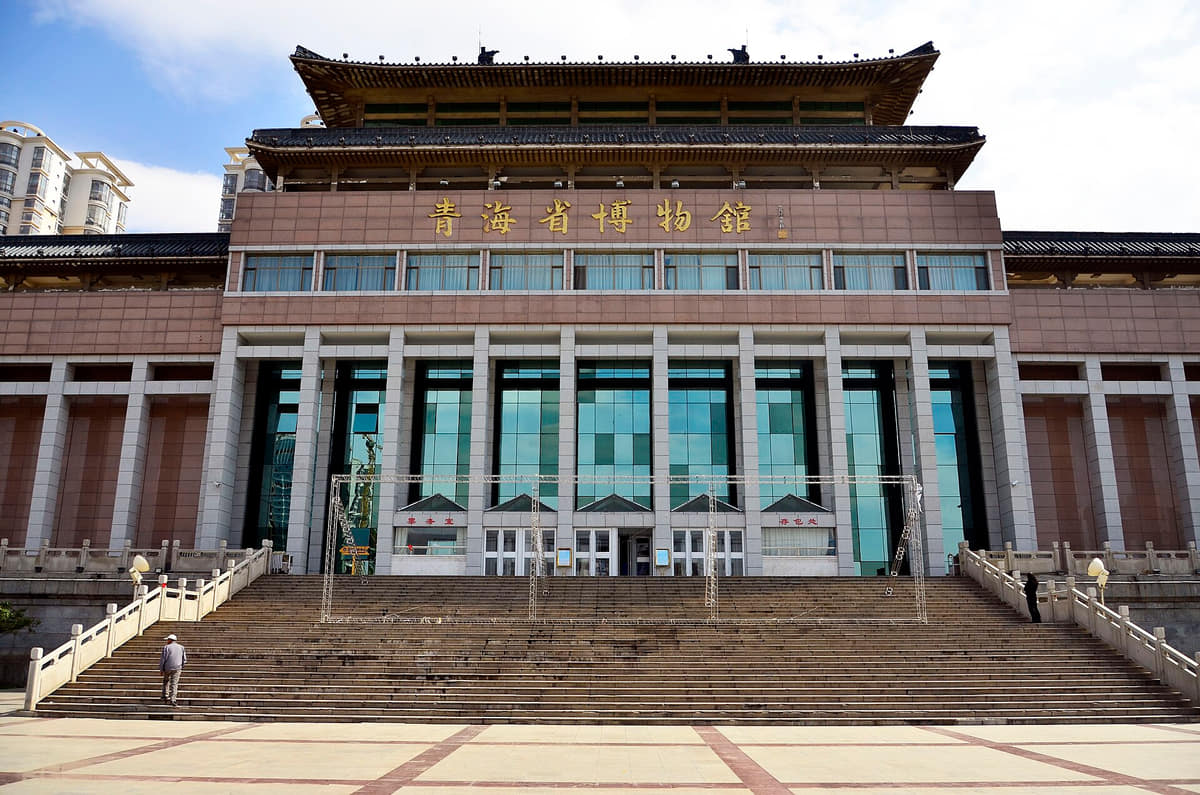
Xining occupies the Huangshui valley at the eastern edge of the Qinghai–Tibet Plateau. This lower passage through surrounding mountains has long supported farming, settlement, markets, and movement between ecological regions.[1][2][3][4]
Religious institutions, museums, schools, rail, roads, commerce, and food make several community histories visible. Yet Hui, Tibetan, Tu, Han, Mongol, Salar and other residents do not form fixed or uniform groups; work, language, generation, and migration matter.[1][2][3][4]
Xining is a crossroads because routes, institutions, and communities keep meeting in one highland valley.[1][2][3][4]
The gateway idea becomes complete only at municipal scale. Huangzhong, Datong, Huangyuan, farms, monastery landscapes, mountain routes, county towns, and villages show how the urban core depends on a much wider highland region.[1][2][3][4]
What does this reveal about Xining?
Environmental position and human mobility are inseparable, while responsible cultural description must remain specific and contemporary.[1][2][3][4]