
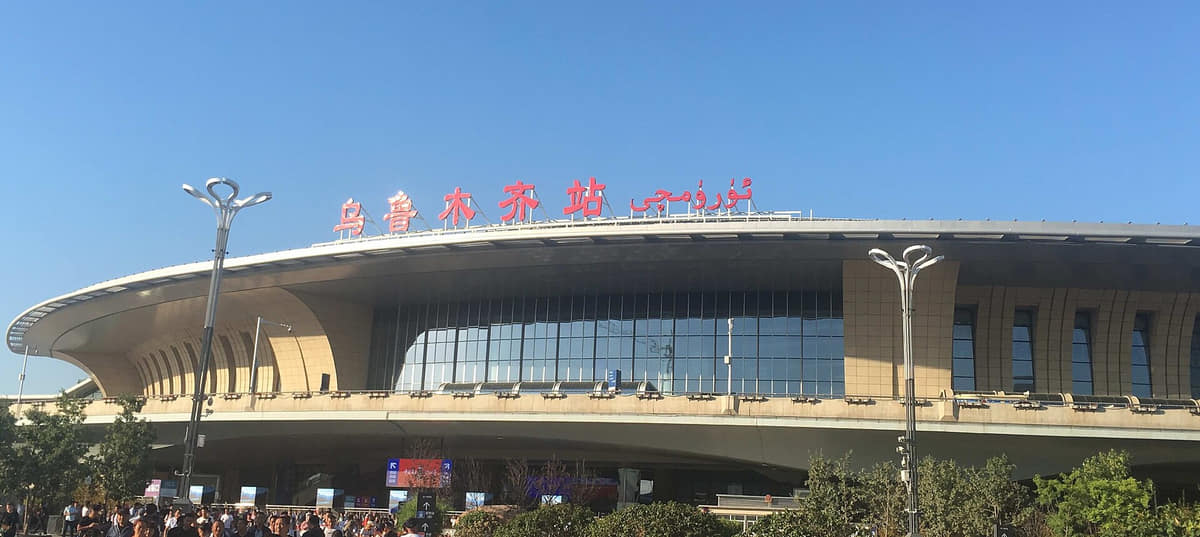
Urumqi sits on alluvial fans north of the Tianshan. Snowmelt and mountain streams support an oasis at the edge of a dry basin, while passes and corridors connect different parts of inland Eurasia.[1][2][3][4]
Modern railways, highways, aviation, warehouses, industry, markets, and services greatly expanded the gateway role. Stations and bilingual wayfinding make long-distance movement visible in everyday urban space.[1][2][3][4]
Urumqi's gateway role joins mountain water and basin geography with infrastructure and many forms of human mobility.[1][2][3][4]
A gateway is also a lived city. Residents differ by language, community, work, generation, neighborhood, education, migration, and individual choice; markets and food are meaningful only when these contexts remain specific.[1][2][3][4]
What does this reveal about Urumqi?
The city is neither only a transport node nor a cultural symbol; it is a contemporary metropolis whose environment, institutions, and varied residents continually interact.[1][2][3][4]