
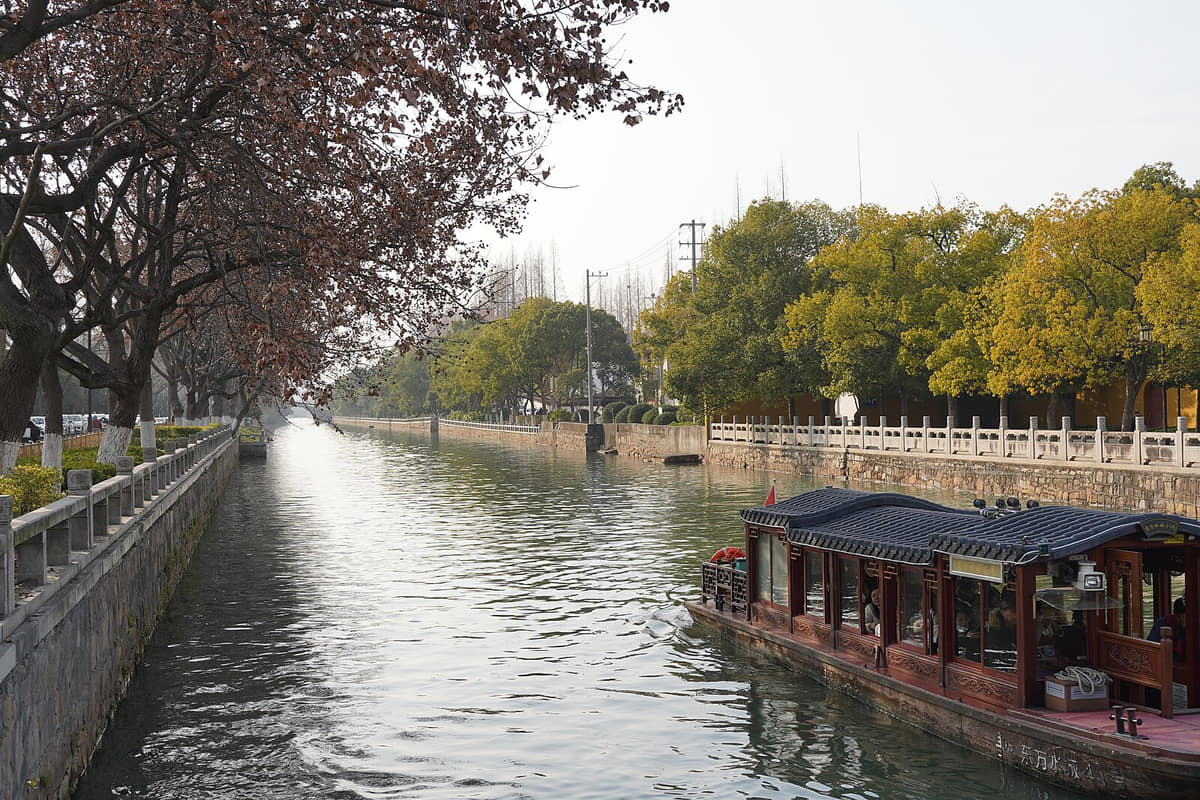
Water explains Suzhou at several scales. Inside the old city, narrow canals sit beside streets, houses, shops and institutions. Farther out, lake plains, Taihu-facing hills, water towns and the Yangtze edge shape farming, settlement, ecology and transport. The Grand Canal places these local waterways inside a much larger historical infrastructure.[6][1]
The classical gardens make this water culture visible in concentrated form, but they are not miniature versions of the whole city. Each garden is a managed residential and artistic landscape with its own chronology. Outside their walls, drainage, mobility, visitor pressure, neighborhood privacy and commercial change continue to affect the historic core.[5][6]
Suzhou is not a garden postcard with an industrial afterword; it is one municipality built through water, skill and production.[6][10]
Silk, embroidery, Kunqu and pingtan are sometimes presented as elegant symbols detached from work. In practice they depend on materials, workshops, performers, teachers, conservators, museums and audiences. Treating them as labor and institutions makes the city's cultural depth clearer and avoids reducing living practices to decoration.[9][7][8]
What does this reveal about Suzhou?
The city's competitive difference lies in explaining how heritage, living culture, county-level economies and contemporary production occupy the same water-shaped municipal system.[1][3][10]