
The central city expanded rapidly after rail lines intersected in the early twentieth century. Administration, commerce, industry, housing, and migration produced a new provincial capital on the plain.[1][2][3][4]
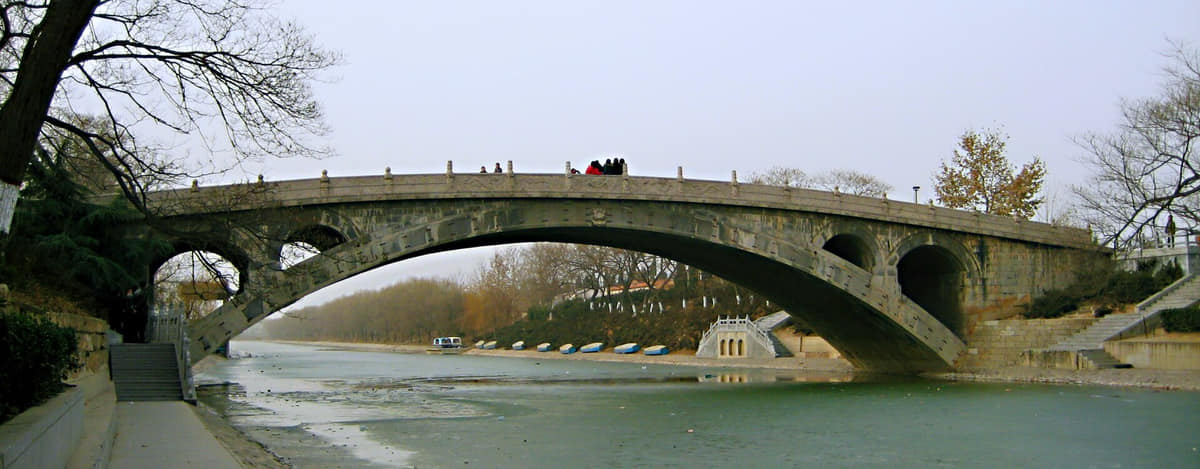
The municipality, however, contains places with far older histories. Zhengding's temples and walls, Zhaozhou Bridge, archaeological sites, and mountain settlements belong to different periods and landscapes.[1][2][3][4]
The age of a city center and the age of the places inside its municipality are not the same question.[1][2][3][4]
Treating these as one city guide changes the story: Shijiazhuang is both a modern transport city and an administrative frame containing multiple historic centers.[1][2][3][4]
What does this reveal about Shijiazhuang?
A complete account must separate the modern core from the wider municipality, then show how transport, heritage, plain, and mountain interact.[1][2][3][4]