
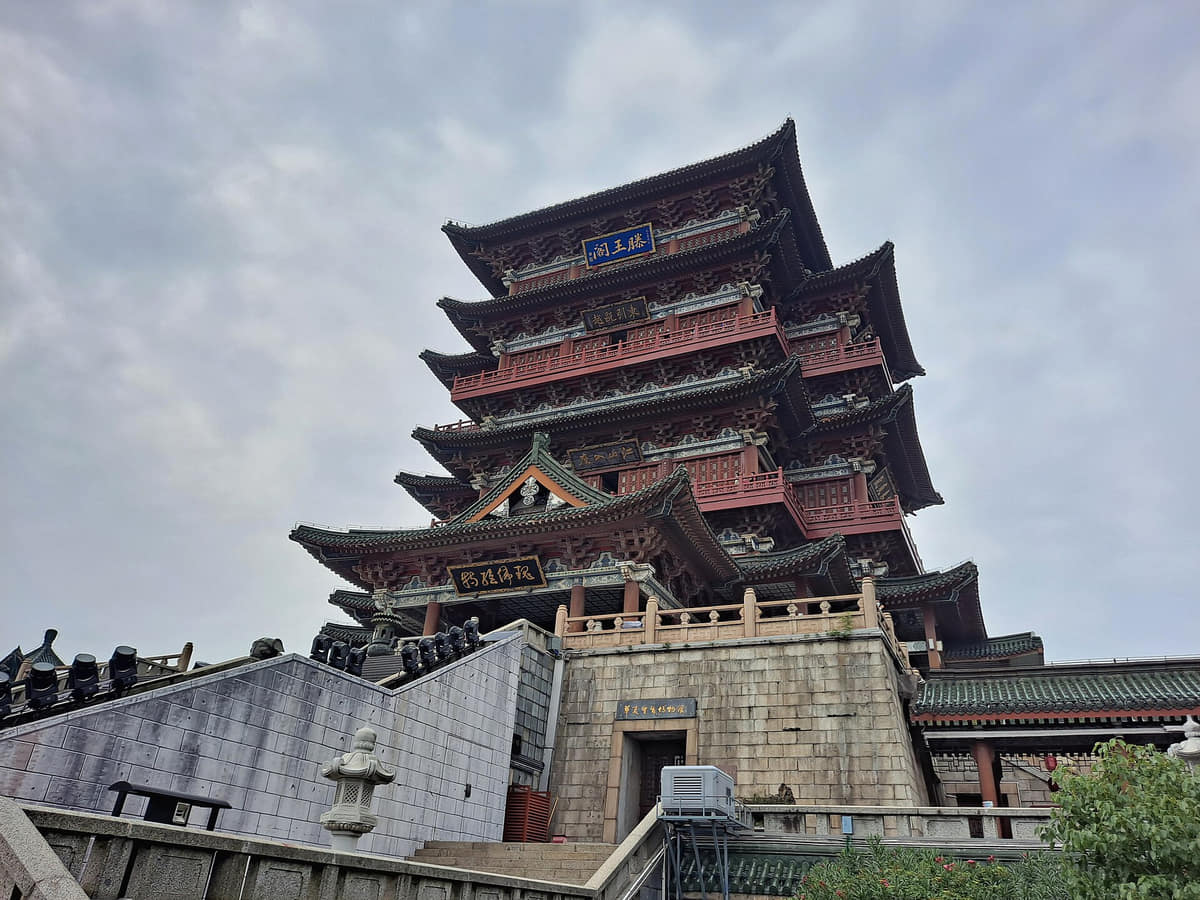
The first Tengwang Pavilion was built in the Tang period beside the Gan River. Wang Bo's celebrated essay transformed the building and its views into a literary landscape known far beyond Nanchang.[1][2][3][4]
The structure did not remain unchanged. Damage, relocation, rebuilding, altered riverbanks, and new urban surroundings repeatedly changed what visitors saw. The current pavilion is part of that long history of reconstruction rather than an untouched original.[1][2][3][4]
Tengwang Pavilion endures not because one building escaped time, but because writing, rebuilding, and the Gan River keep renewing its meaning.[1][2][3][4]
Its durability therefore lies in a network: text, school learning, architecture, river scenery, civic identity, tourism, and the decision to rebuild. The landmark shows how cultural memory can remain powerful while its physical form changes.[1][2][3][4]
What does this reveal about Nanchang?
The city connects literary memory with a living river landscape; authenticity here includes documented change, reconstruction, and continuing public use.[1][2][3][4]