
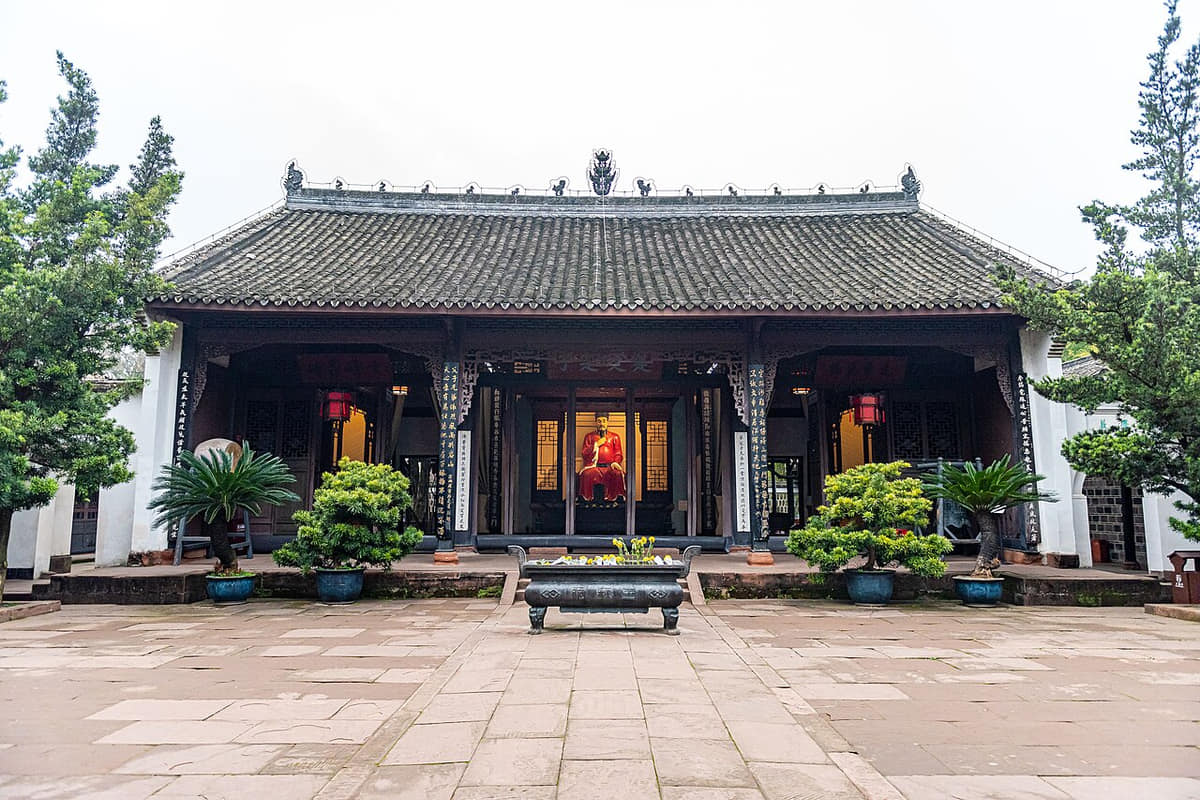
In Meishan, family memory, texts, gardens, schools, food names, festivals, museums, and commercial branding continually reinterpret the Su writers.[1][2][3][4]
The evidence is distributed across museums, landscapes, working neighborhoods, county routes, and local collections. Reading them together avoids reducing Meishan to one postcard image.[1][2][3][4]
Meishan is best understood as connected systems rather than a single attraction.[1][2][3][4]
The result is a neutral, place-based explanation: it records change, identifies sources, and leaves room for different residents' experiences.[1][2][3][4]
What does this reveal about Meishan?
A Min River plain-and-mountain city where the Sansu literary tradition, Dongpo food memory, irrigation agriculture, Wawu biodiversity, old towns, and archaeological sites create a broad cultural landscape.[1][2][3][4]