
Land and water
This city-specific topic connects place, daily life, and the wider municipal landscape: Land and water.
Sichuan Province · Sichuan Province, Southwest China
A Min River plain-and-mountain city where the Sansu literary tradition, Dongpo food memory, irrigation agriculture, Wawu biodiversity, old towns, and archaeological sites create a broad cultural landscape.
Meishan is a six-part municipality, not simply the birthplace attached to one writer. Dongpo and Pengshan districts occupy the central Min River corridor; Renshou extends into eastern basin hills; Hongya rises toward the Qingyi River and Wawu forests; Danling adds farms and compact heritage sites; Qingshen links Min River settlements, bamboo craft, temples, and cliff archaeology. The county-level map is therefore part of the explanation.
Water organizes Meishan at several scales: the Min River and tributaries structure settlement and agriculture; historical and modern channels redistribute irrigation; Dongpo's lake parks create urban public space; Heilongtan stores water and supports habitat and recreation; Liujiang responds to valley rain and flood; Wawu's forests and streams belong to a high-rainfall mountain system. These waters cannot be treated as one scenic category.
The literary association with Su Xun, Su Shi, and Su Zhe is important because texts, family memory, museum practice, gardens, schools, food naming, performance, research, and tourism keep interpreting it. Yet Meishan also requires archaeology at Jiangkou and dispersed cliff sites, Qingshen bamboo work, Hongya's old-town and ecological knowledge, Renshou's reservoir landscape, Danling's monuments, agriculture, transport, and ordinary public services.
Every image and named place in this guide is dated evidence. A museum changes exhibitions; a gate combines old and repaired fabric; a reservoir changes level; a forest photograph captures one species and season; a dish varies by maker; a railway timetable changes. The guide records material and cultural practice, identifies uncertainty, and adopts no political position.
This city-specific topic connects place, daily life, and the wider municipal landscape: Land and water.
This city-specific topic connects place, daily life, and the wider municipal landscape: Historical layers.
This city-specific topic connects place, daily life, and the wider municipal landscape: Living culture.
This city-specific topic connects place, daily life, and the wider municipal landscape: County diversity.
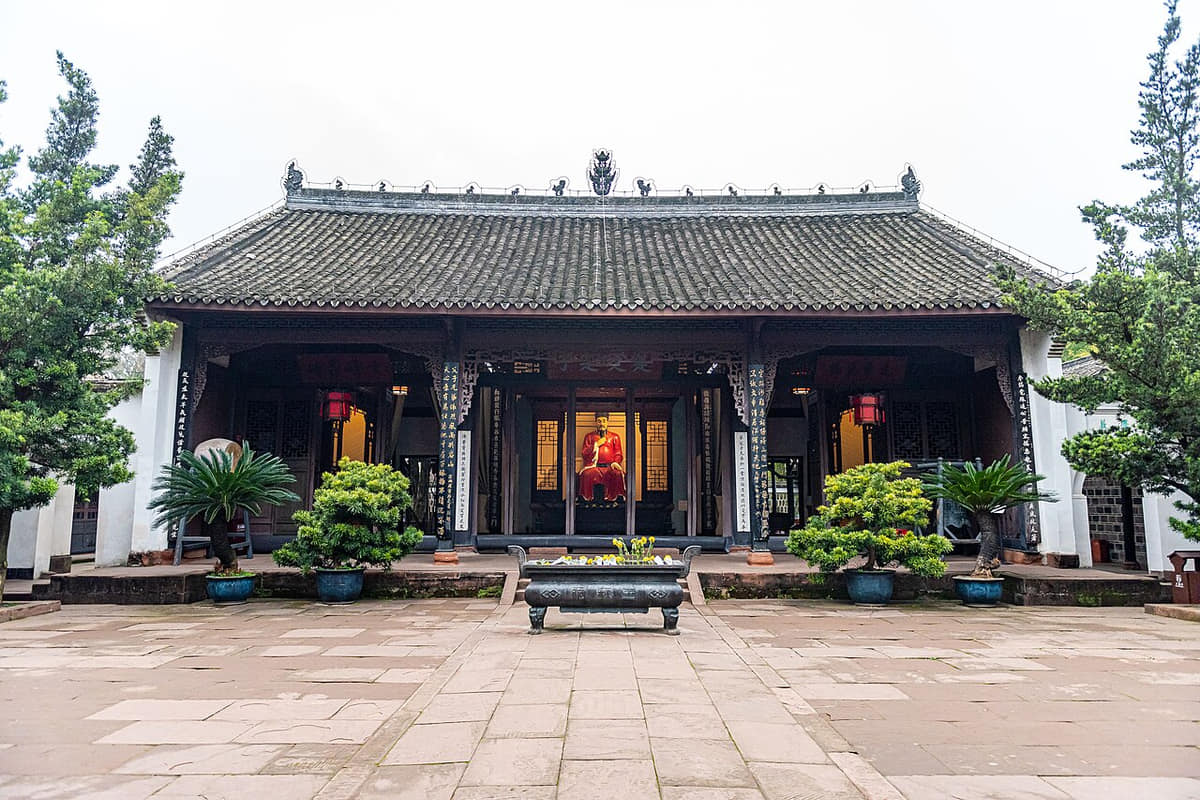
Eighteen rights-cleared images connect Sansu Shrine and Dongpo's urban lake, two contextual Dongpo dishes and local citrus, Wawu biodiversity, Liujiang and Zeng Family Garden, Pengshan archaeology and rail, Renshou water and rock art, Qingshen temple and tomb landscapes, and Danling's pagoda and cliff sculpture.
This city-specific topic connects place, daily life, and the wider municipal landscape: Min River plain.[1][2][3][4]
Four geographic relationships define Meishan.
This city-specific topic connects place, daily life, and the wider municipal landscape: Min River plain.[1][2][3][4]
This city-specific topic connects place, daily life, and the wider municipal landscape: Western mountain rise.[1][2][3][4]
This city-specific topic connects place, daily life, and the wider municipal landscape: Wawu forest and plateau.[1][2][3][4]
This city-specific topic connects place, daily life, and the wider municipal landscape: Six county-level units.[1][2][3][4]
Loading current conditions…
Forecast data: Open-MeteoPermanent residents across Meishan Municipality
Population figures use the administrative area and source date shown below.[1][2][3][4]Warm humid plain conditions contrast with cooler, rainier Wawu Mountain and western county highlands.
Climate describes long-term seasonal patterns; live conditions appear separately.[1][2][3][4]Temperatures rise quickly; rain, cloud, and local elevation call for flexible outdoor plans in Meishan.[1][2][3][4]
Warm humid plain conditions contrast with cooler, rainier Wawu Mountain and western county highlands.[1][2][3][4]
Clearer intervals and cooler evenings usually favor river, old-town, museum, and county routes.[1][2][3][4]
Damp cool conditions make layered clothing and indoor–outdoor route pairing practical.[1][2][3][4]
Nine evidence-led layers move from river settlement and cliff archaeology through changing administration, the Northern Song Su family, agriculture and irrigation, old towns and residences, modern infrastructure, and contemporary stewardship.
The Min and Qingyi systems offered water, fertile terraces, fishing, crossings, cultivation, and exchange between basin and mountain. Archaeological sites, dates, deposits, finds, later disturbance, and environmental evidence must be documented separately rather than assigned one broad cultural label.[6][7]
Jiangkou, Ruifeng, Maoshui, Zhengshan, Zhongyan, and other dispersed rock sites reveal burial, image-making, routes, geology, patronage, ritual, and later reuse at different dates. Chamber type, iconography, excavation context, conservation, and community access should not be merged into one chronology.[10][18]
Historical records show changing names and jurisdictions, county seats, schools, temples, tax and grain systems, ferries, post roads, markets, villages, and links to Chengdu, Leshan, and mountain corridors. Present boundaries should never be projected unchanged into earlier eras.[6][7]
Su Xun, Su Shi, and Su Zhe connect Meishan to prose, poetry, calligraphy, historical writing, education, family correspondence, official careers, travel, later editions, scholarship, and commemoration. Biography, text, object, building, reconstruction, and modern branding require separate sources.[8][9]
Water allocation, channels, field leveling, seed and variety choice, seasonal labor, livestock, bamboo management, orchards, storage, roads, market days, credit, price, household work, flood, drought, pests, and soil care shaped rural life across all six units.[20][12][21]
Texts and local records were copied, collected, taught, inscribed, and attached to gardens, halls, temples, and county landscapes. Modern reconstruction or naming can renew a literary connection, but it must be distinguished from surviving historic fabric and documentary evidence.[6][22]
Liujiang and Zeng Family Garden open questions about river commerce, family wealth, construction labor, hybrid architecture, household organization, local performance, schools, roads, war, later institutional change, conservation, tourism, and resident life.[13][14]
Heilongtan, irrigation channels, roads, bridges, railways, station districts, schools, hospitals, industry, housing, and utilities changed water access, travel time, farming, work, migration, land use, ecology, and county-town form. Construction benefits and environmental or social effects need separate evidence.[17][20][21]
Current Meishan manages museums, excavations, cliff sites, craft teaching, forests, water sources, reservoirs, old towns, farms, tourism, transport, public services, disaster risk, and Chengdu Plain connections at once. A plan, completed project, current service, and cultural aspiration must remain clearly distinguished.[9][11][16][21]
Six perspectives center language and six local contexts; farm, market, and kitchen labor; bamboo transmission; museum and ecological work; changing households; and neutral, sourced biography.
Southwestern Mandarin and Standard Mandarin coexist with household, school, workplace, media, generation, migration, and neighborhood differences. A Dongpo museum worker, Pengshan commuter, Renshou reservoir resident, Hongya forest worker, Danling farmer, or Qingshen craftsperson cannot be reduced to one city personality.[5][2]
Planting, irrigation, pruning, harvesting, grading, weaving material preparation, food processing, cooking, packaging, transport, wholesale, retail, sanitation, e-commerce, seasonal risk, care work, and household decisions connect rural and urban livelihoods.[12][15]
Qingshen bamboo weaving depends on bamboo species and maturity, splitting, shaving, sizing, dyeing, pattern planning, hand control, eyesight, posture, time, design, teaching, apprentices, workshops, attribution, price, exhibitions, orders, occupational health, and a viable market.[11]
Excavators, conservators, registrars, researchers, guides, security staff, cleaners, gardeners, builders, forest rangers, wildlife monitors, rescue teams, water managers, drivers, and community collaborators make heritage and protected landscapes function beyond the visitor photograph.[9][16][17]
Housing, rent, schools, clinics, elder and child care, markets, buses, rail, driving, walking, flood protection, waste, jobs, migration, return migration, digital services, disability access, public space, extreme weather, and household preference structure different daily lives.[21][2]
Su Xun, Su Shi, Su Zhe, Wang Fu, historical patrons, artisans, local teachers, archaeologists, and modern cultural workers belong to different evidence types. Dates, writings, objects, buildings, family memory, later commemoration, disputed claims, and current interpretation should be sourced independently and described without political endorsement.[8][6]
Twelve entries place Dongpo-named pork and elbow, pickles, lamb soup, reservoir fish, duck, bamboo shoots, citrus, rattan pepper, Hongya banquet dishes, daily foods, and service systems within technique, sourcing, labor, safety, season, price, and maker variation.
Pork source, cut size, blanching, browning, soy, sugar, wine where used, aromatics, water, vessel, heat, time, resting, fat texture, portion, sodium, storage, reheating, allergens, shop variation, and the difference between literary association and recipe history should be stated.[15][12][5]
Hock source, cleaning, hair removal, blanching, bone and skin, seasoning, braising liquid, vessel, heat penetration, tenderness, holding, portion, carving, bone safety, cooling, storage, hygiene, sodium, and restaurant or banquet variation determine the dish.[15][12][5]
Vegetable variety, freshness, washing, cutting, salt concentration, water quality, starter brine, vessel, temperature, oxygen exposure, fermentation time, acidity, microbial safety, cross-contamination, refrigeration, sodium, packaging, traceability, and household or factory method matter.[15][12][5]
Animal and cut source, slaughter and cold chain, blanching, bones, broth time, fat removal, sliced meat or offal, ginger, pepper, salt, herbs, reheating, holding temperature, portion, allergens, hygiene, price, and shop practice require checking.[15][12][5]
Species, legal source, aquaculture or purchase record, water quality, protected and restricted fishing rules, freshness, cold chain, cleaning, bones, kitchen separation, cooking temperature, chile and salt level, allergy, waste, season, and traceability take priority over vague claims of wild fish.[15][12][5]
Duck source, thawing where relevant, cleaning, brining or spice curing, cooking method, internal temperature, skin drying, oil, maltose or sugar glaze, seasoning, cooling, slicing, bone safety, holding time, takeaway packaging, allergens, and maker variation shape the result.[15][12][5]
Bamboo species, shoot season, harvest size, land and forest rules, cleaning, peeling, bitterness removal, blanching, fresh or dried form, storage, fiber, cooking time, meat or vegetarian pairings, seasoning, traceability, and household knowledge determine quality and sustainability.[15][12][5]
Cultivar, rootstock, soil, irrigation, pruning, pollination, pest management, harvest maturity, sugar-acid balance, grading, waxing where used, protective wrapping, storage, cold chain, transport, price, packaging waste, and grower attribution matter more than a generic orange label.[15][12][5]
Pepper species and harvest, fresh or preserved form, aroma loss, oil infusion, dosage, chicken, fish or vegetables, salt, chile, heating, allergy and sensitivity, kitchen separation, storage, packaging, farm traceability, and chef variation should be recorded.[15][12][5]
Fresh or dried shoots, soaking, slicing, pork cut, fat balance, browning, stock, salt, aromatics, cooking time, texture, portion, banquet timing, food safety, storage, season, household memory, and restaurant variation make this a technique rather than a fixed picture.[15][12][5]
Rice, wheat and maize, beans, tofu, eggs, greens, roots, peanuts, tea, fruit, meat, soups, pickles, school and work meals, season, price, nutrition, household labor, allergies, medical needs, and personal preference describe everyday eating better than a celebrity-linked menu.[15][12][5]
Farm gates, wholesalers, produce markets, breakfast shops, household kitchens, restaurants, school and factory canteens, hospital meals, delivery, cold storage, water, sanitation, ventilation, worker conditions, accessibility, affordability, allergens, packaging, leftovers, composting, and waste collection complete the food story.[15][12][5]
Three routes pair the core city with contrasting county-level landscapes.
In Meishan, family memory, texts, gardens, schools, food names, festivals, museums, and commercial branding continually reinterpret the Su writers.
Read the story