
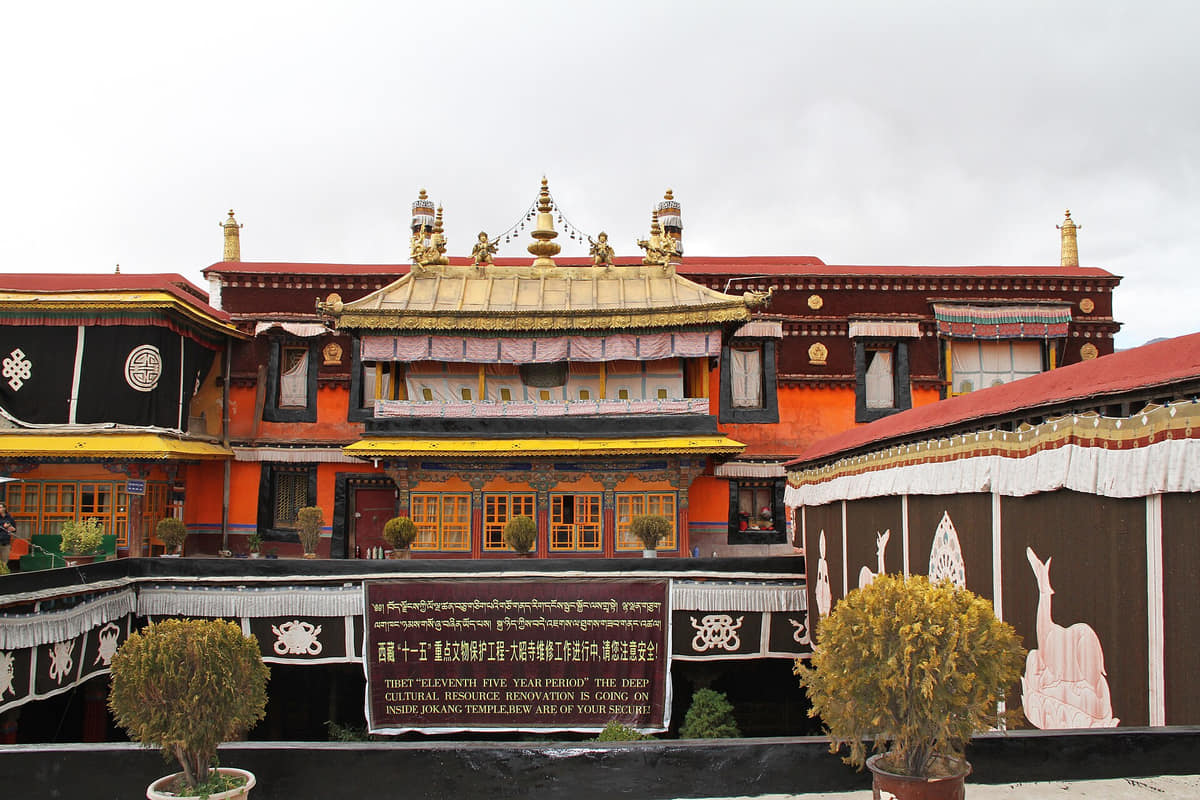
The Jokhang and surrounding Barkhor routes are active religious spaces. People pray, walk circuits, make offerings, meet relatives, shop, work, and pass through the area for different reasons.[1][2][3][4]
The same streets contain homes, courtyards, shops, utilities, fire-safety needs, waste collection, deliveries, heritage buildings, and large visitor flows. Conservation therefore involves ordinary urban services as well as monument repair.[1][2][3][4]
Lhasa's old city is meaningful because ritual, residence, work, and conservation continue to share space.[1][2][3][4]
A respectful guide observes behavior without turning residents or worshippers into attractions. It explains where photography, movement, clothing, altitude, and temple rules require attention and leaves room for varied individual lives.[1][2][3][4]
What does this reveal about Lhasa?
Its heritage is not frozen architecture; it is a managed, inhabited landscape whose religious importance and everyday needs must be understood together.[1][2][3][4]