
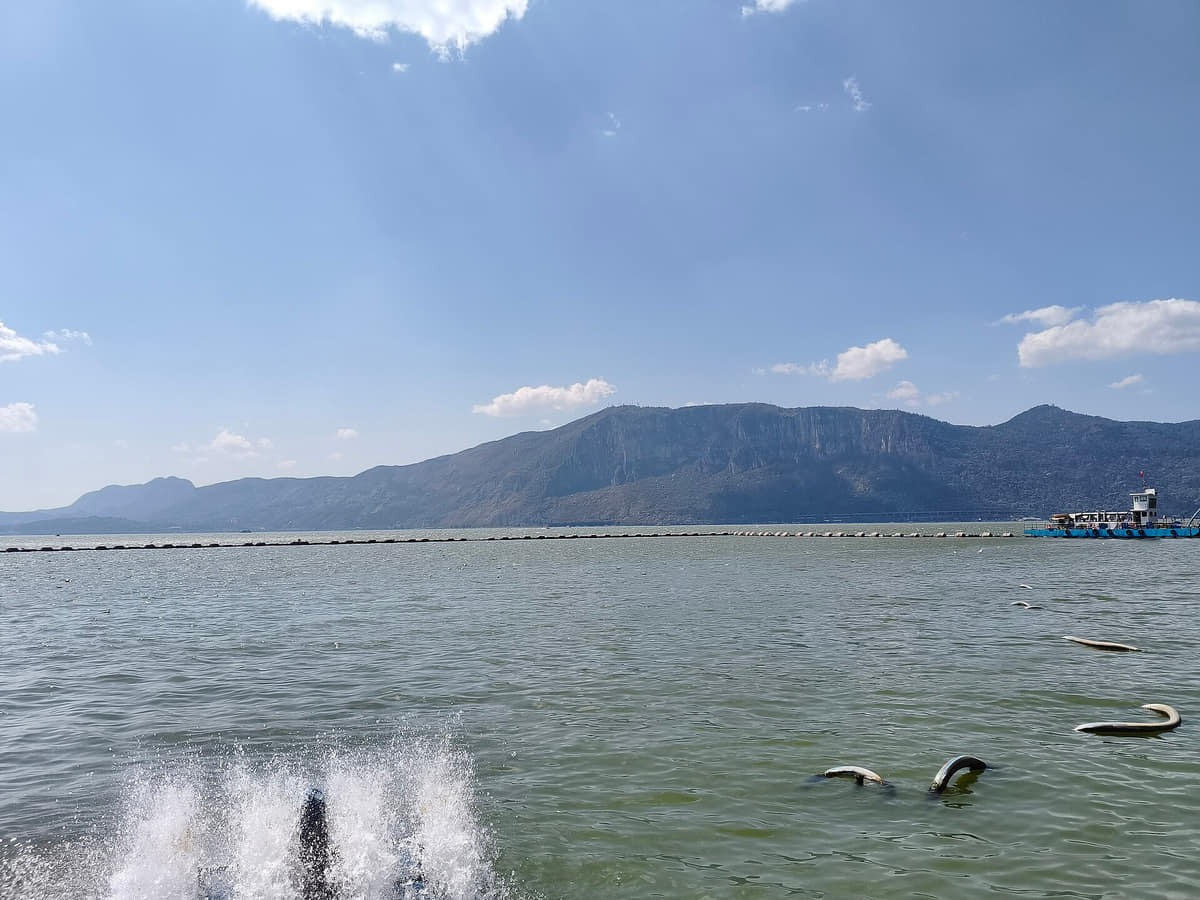
Kunming's core developed in a high basin draining toward Dianchi. The lake, surrounding mountains, tributaries, wetlands, and fertile lowlands helped organize settlement and agriculture.[1][2][3][4]
Rapid urban and industrial growth placed heavy pressure on water quality and shoreline systems. Sewage treatment, tributary management, wetland restoration, monitoring, and land-use change therefore belong to the city's modern history.[1][2][3][4]
Dianchi is the water system through which Kunming's geography, growth, and ecological responsibilities become connected.[1][2][3][4]
A complete lake route should include more than a viewpoint. Villages, restored wetlands, transport, recreation, new districts, farming, and the West Hills reveal competing uses around one watershed.[1][2][3][4]
What does this reveal about Kunming?
Its mild-climate image rests on an actively managed highland basin whose lake, communities, infrastructure, and outer counties cannot be separated.[1][2][3][4]