A highland lake-basin capital where mild seasons, Dianchi restoration, Yunnan-wide cultural exchange, markets, museums, food, karst, and a vast ecological municipal range converge.
Dianchi, mild plateau climate, flowers, Stone Forest, Yunnan regional cultures, rice noodles, wetlands, universities, markets, and mountain counties[1][2][3][4]
Guide scope
Fourteen county-level units spanning the Dianchi basin, old and new centers, Anning industry, airport corridor, Shilin karst, Dongchuan, mountain counties, farms, forests, and valleys[1][2][3][4]
Understand Kunming through lake, plateau, and provincial exchange
Kunming's core occupies a high basin beside Dianchi, with mountains defining the horizon and elevation moderating seasonal temperatures. The lake's tributaries, wetlands, villages, and restoration projects make water central to the metropolitan story.
As Yunnan's capital, Kunming gathers regional communities, languages, food, craft, students, trade, tourism, and institutions. Shilin, Dongchuan, Anning, northern counties, and other outer landscapes show how much the municipality differs from its mild central basin.
The municipality is much larger than the mild-climate central basin. Dongchuan's red-earth uplands, Shilin's karst, Anning's industrial and hot-spring landscapes, lake-edge settlements, county towns, farms, and transport corridors require separate treatment.
This guide separates visible form from live conditions: lake water quality, flower seasons, mushroom safety, transport schedules, market vendors, heritage access, and weather must be checked at the time of a visit.
Lake-basin metropolis
Dianchi, tributaries, wetlands, mountains, water systems, and shoreline growth explain the core.
Plateau seasons
Elevation, monsoon rain, strong sun, dry winters, and large day–night ranges make climate a daily structure.
Provincial diversity
Kunming gathers many Yunnan cultures, but responsible interpretation keeps places, communities, histories, and voices specific.
Municipal ecological range
Fourteen units extend from lake basin and industry to karst, dry-hot valleys, forests, farms, and high mountains.
A visual record of the city
Eighteen locally hosted, rights-cleared images cover the central city, outer municipal areas, institutions, transport, daily space and food context. Captions distinguish city evidence from regional references and live conditions.
A dated Kunming streetPhoto: Sasha India · source · CC BY 2.0
Location, boundary, and 3D buildings
The core sits north and east of Dianchi; the municipality extends across lake shores, high basins, karst, industrial valleys, dry-hot river sections, forests, county seats, farms, and mountains.[1][2][3][4]
A high plateau basin, Dianchi watershed, mountain edges, karst, valleys, and fourteen county-level units define Kunming.
High plateau basin
Kunming's core occupies a broad basin around 1,900 meters above sea level, framed by mountains and linked to Dianchi.[1][2][3][4]
Dianchi watershed
Lake water, tributaries, wetlands, farmland, wastewater systems, shoreline development, and restoration connect ecology with urban growth.[1][2][3][4]
Karst and mountain counties
Shilin, eastern and northern counties, Dongchuan, valleys, forests, dry-hot river sections, and highlands create large ecological variation.[1][2][3][4]
Fourteen units
Seven districts, six counties including autonomous counties, and Anning span the core, lake shore, industry, airport, farms, towns, and remote mountain landscapes.[1][2][3][4]
Population figures use the administrative area and source date shown below.[1][2][3][4][5]
Climate
Subtropical highland monsoon climate
Elevation moderates temperatures year-round; summers are rainy and comparatively mild, winters dry and sunny, and strong ultraviolet exposure and day–night temperature ranges remain important.
Climate describes long-term seasonal patterns; live conditions appear separately.[1][2][3][4][5]
Seasonal patterns
March–May
Spring
Strong sun, dry periods, flowers, wind, and growing pre-monsoon heat require sun protection and hydration.[1][2][3][4]
June–September
Summer
The monsoon brings frequent rain, cooler daytime temperatures than many lowland cities, and storm or landslide risk in mountain areas.[1][2][3][4]
October–November
Autumn
Rain retreats, skies often clear, nights cool, and lake, wetland, karst, and county routes become easier to combine.[1][2][3][4]
December–February
Winter
Dry sunny days can feel mild, but large day–night temperature ranges, frost, and high ultraviolet exposure matter.[1][2][3][4]
A short history of the city
Lake-basin archaeology, trade routes, imperial administration, rail, wartime institutions, industry, and contemporary ecological metropolitan growth form distinct layers.
Archaeology around Dianchi records farming, metalwork, trade, settlements, and regional political formations.[1][2][3][4][5]
Administrative and trade center
Roads, military and administrative systems, markets, religious institutions, migration, and links to Southeast and Southwest Asia shaped the city.[1][2][3][4][5]
Rail and commercial change
Railways, trade, schools, industry, banks, and new urban institutions accelerated change.[1][2][3][4][5]
Wartime institutions and industry
Wartime migration, universities, aviation, factories, housing, and later industrial development expanded the basin city.[1][2][3][4][5]
Lake-region metropolis
Chenggong, metro, airport, services, tourism, universities, manufacturing, wetland projects, and county connections reshape the municipality.[1][2][3][4][5]
Walls, gates and temple axes
Old-city gates, pagodas, temples, markets and street alignments formed a durable central layer, though surviving fabric and later rebuilding must be distinguished.[1][2][3][4][5]
Rail, schools and provincial institutions
Rail connections, modern schools, Yunnan University, administration, industry and new streets expanded the city beyond the old walled core.[1][2][3][4][5]
Basin-scale urban growth
Housing, factories, ring roads, rail hubs, airports and public institutions reshaped the basin while increasing pressure on Dianchi and surrounding land.[1][2][3][4][5]
Metropolitan and ecological management
Metro construction, regional rail, old-city projects, lake restoration, wetland management and county connections now operate together.[1][2][3][4][5]
People, language, and everyday rhythms
The municipality includes old and new urban residents, students, traders, workers, migrants, lake-shore and county communities, farmers, and many ethnic and language traditions.
Language
Standard Mandarin is widely used; local Southwestern Mandarin and multiple Yunnan languages appear across neighborhoods, markets, families, and county areas.[1][2][3][4][5]
Regional mobility
Students, traders, service workers, technology and manufacturing employees, migrants, and visitors connect Kunming with all Yunnan and beyond.[1][2][3][4][5]
Basin and counties
Lake-shore residents, inner-city neighborhoods, new districts, Anning industry, Shilin tourism, county towns, farmers, and mountain communities follow different rhythms.[1][2][3][4][5]
Community-aware description
Yi, Hui, Bai, Hani, Dai, Miao, Han and other communities should be connected to specific places, histories, languages, work, and contemporary choices.[1][2][3][4][5]
Basin and county routines
Central commuters, university communities, market workers, industrial households, lake-edge residents, farmers and county-town families follow different daily geographies.[1][2][3][4][5]
Plural cultural context
Han, Yi, Hui, Bai, Miao and many other communities live in the municipality; language, dress, food or festival imagery must not be used to assign identity to individuals.[1][2][3][4][5]
Museums, universities, markets, transport, publishing, food, music, and migration gather many provincial traditions without making them one culture.[1][2][3][4][5]
Lake-basin heritage
Dianchi archaeology, temples, old streets, villages, boats, wetlands, agriculture, and water rituals connect settlement with the lake.[1][2][3][4][5]
Craft and material culture
Metalwork, textiles, woodwork, ceramics, stone, paper, painting, and contemporary design require specific maker and community attribution.[1][2][3][4][5]
Performance and media
Regional music, dance, opera, festivals, contemporary stages, film, live venues, and tourism presentation occupy different contexts.[1][2][3][4][5]
Flower and market systems
Climate, horticulture, logistics, wholesale markets, festivals, retail, and household use make flowers both industry and visible culture.[1][2][3][4][5]
Living diversity
Migration, intermarriage, education, tourism, social media, and urban work continually change how people identify and represent tradition.[1][2][3][4][5]
Yunnan University and knowledge institutions
Campus buildings, libraries, museums and research communities connect local history with province-wide and international scholarship.[1][2][3][4][5]
Markets as changing culture
Flower, bird, produce and food markets combine household supply, horticulture, tourism and regulated commerce; no dated image defines current vendors.[1][2][3][4][5]
Temple and mosque landscapes
Buddhist, Daoist, Islamic and other religious places belong to living communities as well as architectural history, with site-specific rules and schedules.[1][2][3][4][5]
Contemporary arts and public life
Theatres, galleries, music venues, campuses, parks, media and design communities add present-day expression beyond heritage display.[1][2][3][4][5]
Food and local flavor
Rice noodles, wild mushrooms, rice cakes, steam-pot cooking, flowers and herbs, preserved ingredients, and food traditions from across Yunnan shape the capital's table.
Hot broth, rice noodles, thin ingredients, herbs, oil, sequence, and restaurant styles form a recognizable but varied system.[1][2][3][4][5]
Everyday bowl
Small-pot rice noodles
Rice noodles cooked in a small pot with minced meat, pickles, chives, chile, broth, and shop-specific additions are a common format.[1][2][3][4][5]
Seasonal ingredient
Wild mushrooms
Markets and restaurants handle many species with strict identification and cooking needs; official safety guidance matters.[1][2][3][4][5]
Regional restaurant dish
Steam-pot chicken
A ceramic steam pot, chicken, gentle cooking, broth, and optional medicinal or aromatic ingredients create a clear technique.[1][2][3][4][5]
Market and home staple
Erkuai and rice foods
Pressed rice cakes are grilled, fried, sliced, or served with sauces, vegetables, meat, pickles, and changing local combinations.[1][2][3][4][5]
Capital exchange
Provincial table
Dishes and ingredients from Dali, Yuxi, Chuxiong, Honghe, Pu'er, Dehong, Diqing and other regions circulate through Kunming.[1][2][3][4][5]
Cooked to order
Small-pot noodle cooking
Rice noodles, broth, minced meat or other toppings, pickles and seasonings vary by shop; visible ingredients do not settle allergens or preparation.[1][2][3][4][5]
Rice-based staple and snack
Erkuai
Pressed rice cakes appear grilled, fried or sliced with varied fillings and sauces across breakfast stalls and homes.[1][2][3][4][5]
Yunnan regional dish
Steam-pot method and regional context
A clay steam pot shapes one cooking method, but chicken, stock, herbs and service vary; it is regional context rather than proof of a single Kunming origin.[1][2][3][4][5]
Seasonal ingredient with real risk
Wild-mushroom safety and seasonality
Markets and restaurants handle many species. Identification, sourcing and thorough cooking require trained local practice, never visual guesswork.[1][2][3][4][5]
Commercial pastry
Flower cakes
Rose-filled pastries circulate through bakeries and packaged retail; freshness, filling, sweetness and manufacturer differ.[1][2][3][4][5]
A plural morning table
Market breakfasts
Rice noodles, steamed breads, fried dough, soy drinks, pickles and migrant cuisines coexist; there is no single citywide breakfast.[1][2][3][4][5]
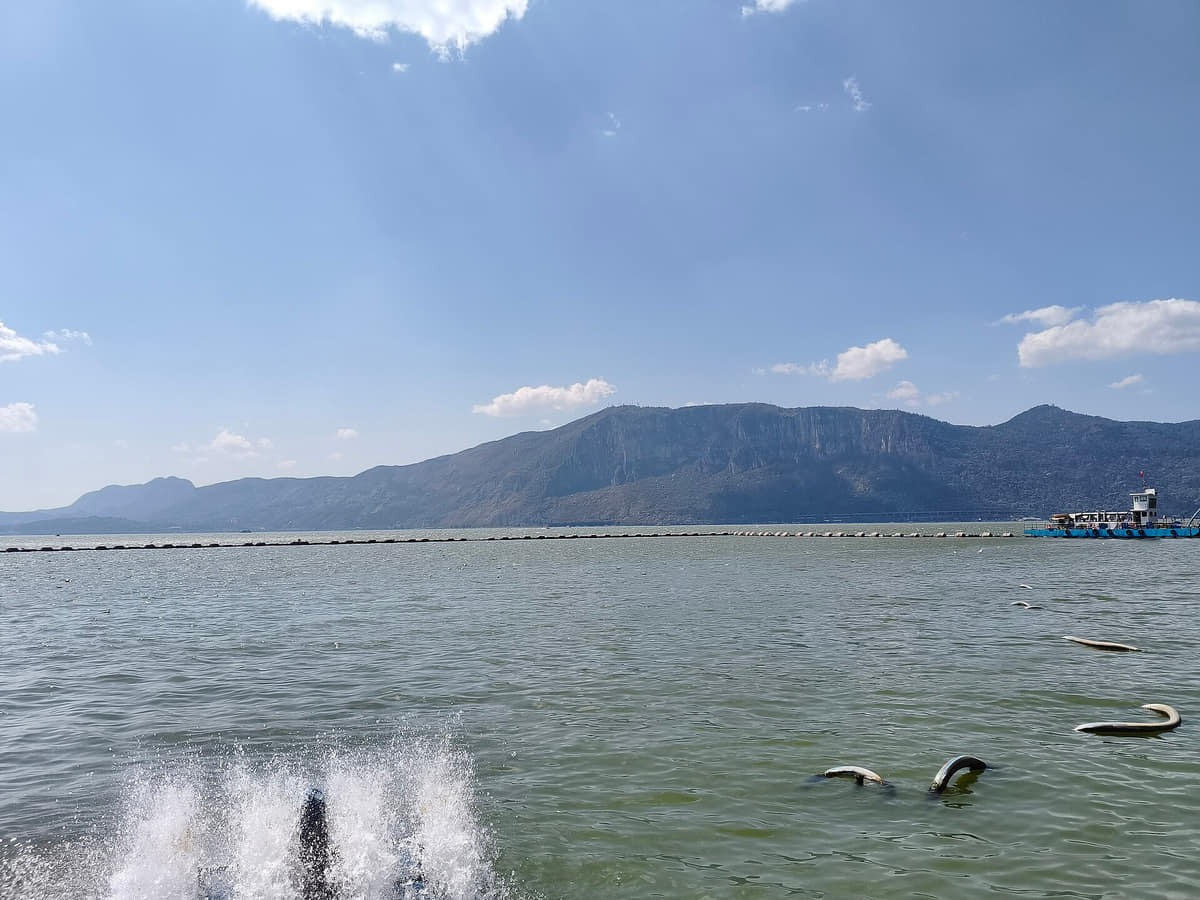
A large, pressured lake system where wetlands, water quality, tributaries, villages, urban growth, recreation, and restoration meet.[1][2][3][4][5]
Yunnan Provincial Museum
A starting point for archaeology, art, ecology, trade, languages, communities, conservation, and provincial context.[1][2][3][4][5]
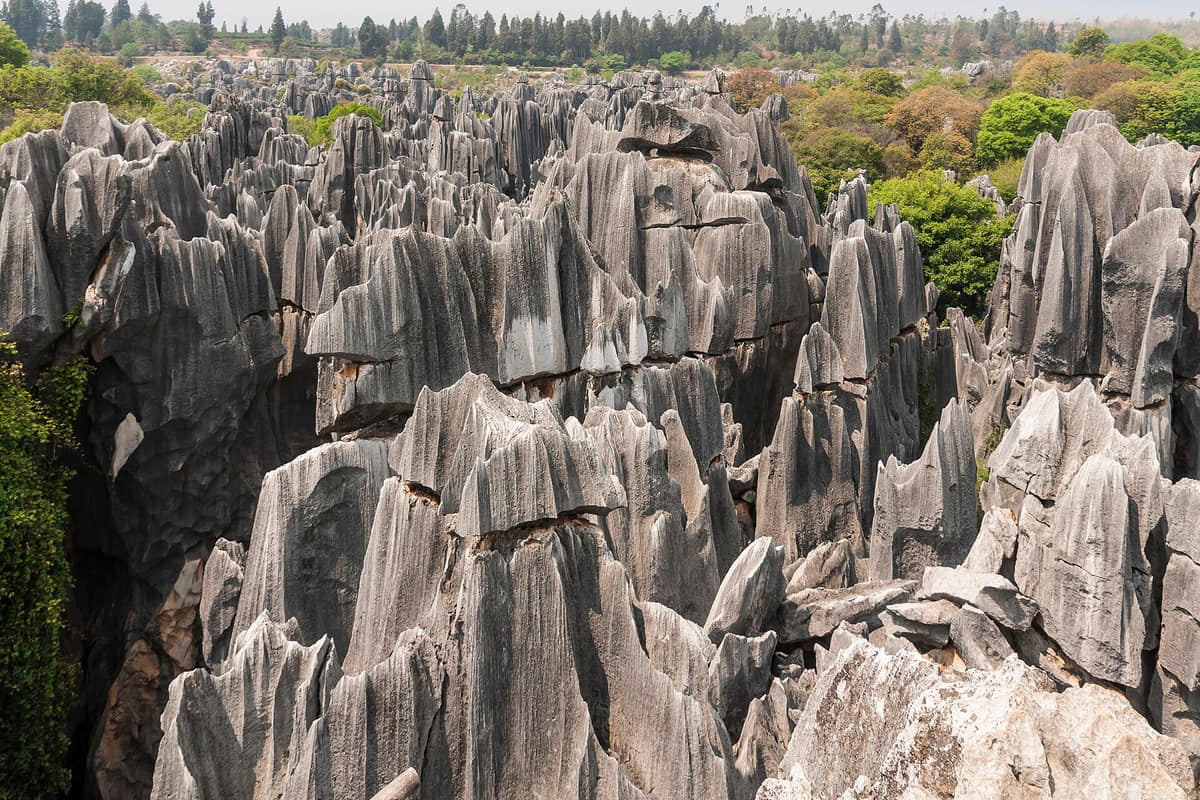
Stone Forest
A county-scale karst landscape requiring attention to geology, Yi community histories, conservation, tourism, towns, and villages.[1][2][3][4][5]
Golden Temple
Bronze architecture, gardens, hill terrain, religious history, repair, recreation, and city views overlap in one complex.[1][2][3][4][5]
West Hills
The mountain edge provides geology, forest, religious sites, paths, villages, lake views, tourism, and ecological pressure.[1][2][3][4][5]
Old city and markets
Rebuilt gates, remaining lanes, temples, shops, food markets, demolition, conservation, and tourism make urban memory contested and active.[1][2][3][4][5]
Yuantong Temple
A central religious and architectural complex whose courtyards, halls, worship and visitor access must be read as living, managed space.[1][2][3][4][5]
Green Lake Park
An urban-water and public-space landmark shaped by seasonal ecology, walking, exercise, performances and nearby institutions.[1][2][3][4][5]
East and West Pagodas
Paired landmarks that help locate the old-city layer while surrounding blocks, access and reconstructed fabric require close reading.[1][2][3][4][5]
Yunnan University
A campus landscape connecting modern education history, architecture, research and daily student life.[1][2][3][4][5]
Dongchuan Red Land
A highland agricultural landscape whose visible colours depend on soil, crops, season, light and viewpoint—not a permanent surface effect.[1][2][3][4][5]
Anning
A county-level city within Kunming Municipality shaped by transport, industry, hot springs, river valleys, neighbourhoods and surrounding villages.[1][2][3][4][5]
Ways to explore the city
Read the Dianchi basin first, then use museums and markets for regional context and one outer county route for municipal scale.
Lake basin
Dianchi wetland → village or waterfront → West Hills
Read lake ecology, water management, shoreline development, recreation, and mountain-basin form from several positions.[1][2][3][4]
Objects and old city
Yunnan Provincial Museum → old-city markets → Jinri Tower
Move from documented provincial histories to living commerce, reconstructed heritage, food, and changing central neighborhoods.[1][2][3][4]
Municipal contrast
Core basin → Stone Forest, Dongchuan, or a northern county
Pair the metropolitan center with one outer landscape to understand how varied Kunming Municipality actually is.[1][2][3][4]
Planning collection
Plan a first visit to Kunming
Four focused guides turn the complete city profile into seasonal, itinerary, and food decisions.