
Best Time to Visit Kunming: Dry & Rainy Seasons
Compare Kunming's dry and rainy seasons for city walks, Dianchi and Stone Forest trips. Understand cool evenings, flexible outdoor days and climate limits.
The short answer
For a walking-focused visit, start by considering the drier part of the year, while allowing for cool mornings and evenings. The regional wet season broadly runs from May to October, but its onset and end vary. Kunming's mild reputation should not replace a forecast for the place and day you actually plan to visit.
Read Kunming's seasons through rain and daily temperature changes
A dry-versus-wet distinction is often more useful here than importing assumptions about a hot lowland summer or a northern winter. It still cannot predict conditions for one date.
The drier months: leave room for cool hours
Yunnan's official climate overview places the regional dry season broadly from November through April and highlights large day–night temperature variation. This is regional context, not a station-specific forecast for every part of Kunming. Plan layers that can be adjusted rather than packing for one fixed daytime temperature.
For a city walk or chosen Dianchi edge, decide how long you want to stay outside and where the shorter alternative is. A clear-looking day does not make every exposed place equally comfortable. The best season for you depends partly on whether you value a longer walk, an indoor institution or a wider excursion.[6]
The wetter months: protect the order of the plan
The same regional overview identifies May through October as the main wet-season window. Do not translate that into a prediction of all-day rain on every date. Instead, keep the most weather-sensitive part of the visit movable and check warnings for the actual locality before committing to an outdoor route.
A museum or a shorter city block makes a more coherent fallback than an improvised excursion farther away. Keep essential belongings protected and avoid building a departure day around the activity with the least flexibility. Seasonal averages explain why a buffer is useful; they do not establish whether a particular service is operating.[6]
Do not apply central Kunming's weather to every excursion
Yunnan's strong variation with elevation is an important limit on the phrase Spring City. An urban forecast should not be assumed to describe every mountain, county or lake-edge setting. Match the weather source to the location you intend to visit, not only to the name of the nearest major city.
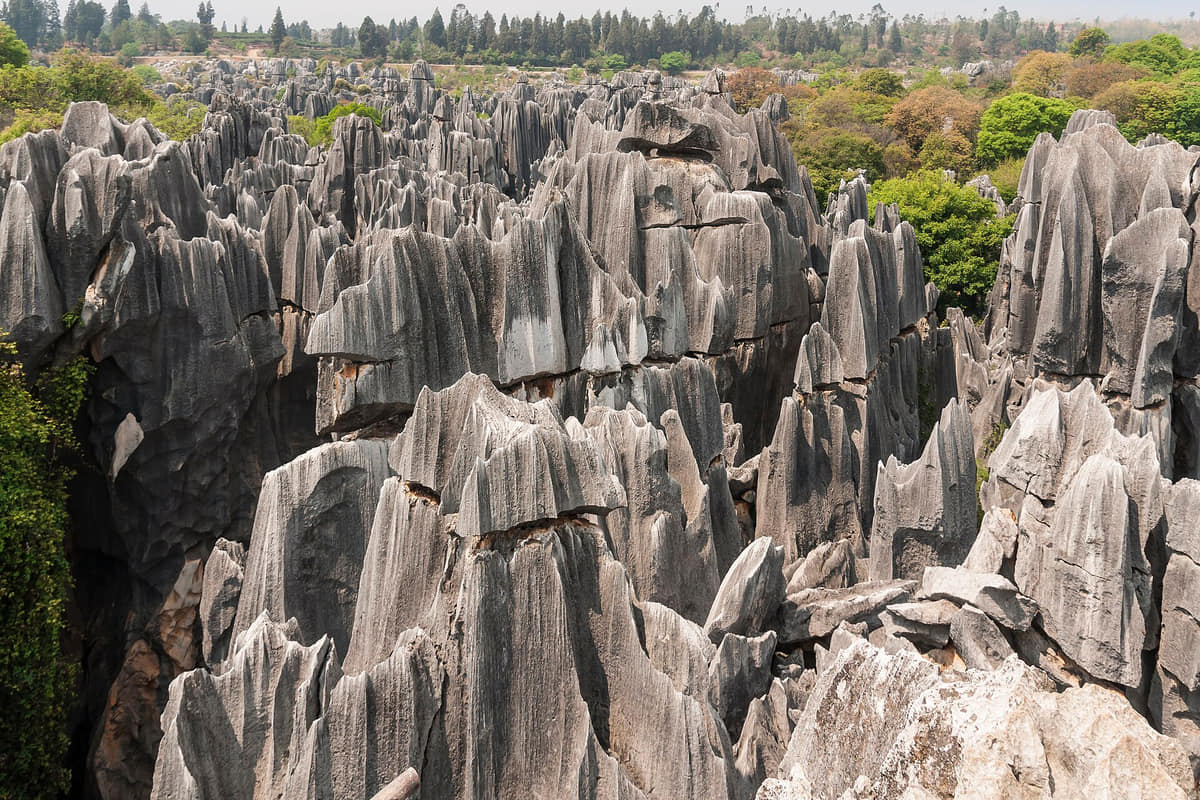
For Shilin, use the actual site forecast and visitor notice before finalizing the day. Our preference is to keep the urban and excursion blocks interchangeable when possible. That protects the purpose of the visit without promising that a different season can eliminate all uncertainty.[6][7]
Questions before you go
Does Spring City mean I never need a warm layer?
No. Regional climate guidance emphasizes differences between daytime and nighttime and between elevations. Check your dates and destination, and bring layers appropriate to the forecast instead of relying on a city nickname.[6]
Should I avoid the entire rainy season?
Not necessarily. Choose according to your tolerance for changing outdoor plans and the activities that matter to you. A flexible city visit is a different proposition from a trip built around one fixed outdoor excursion.[6]
The places and background above are source-based; suggested priorities are editorial choices, not guaranteed travel times or current opening arrangements. Check official venue and weather notices before a visit.