
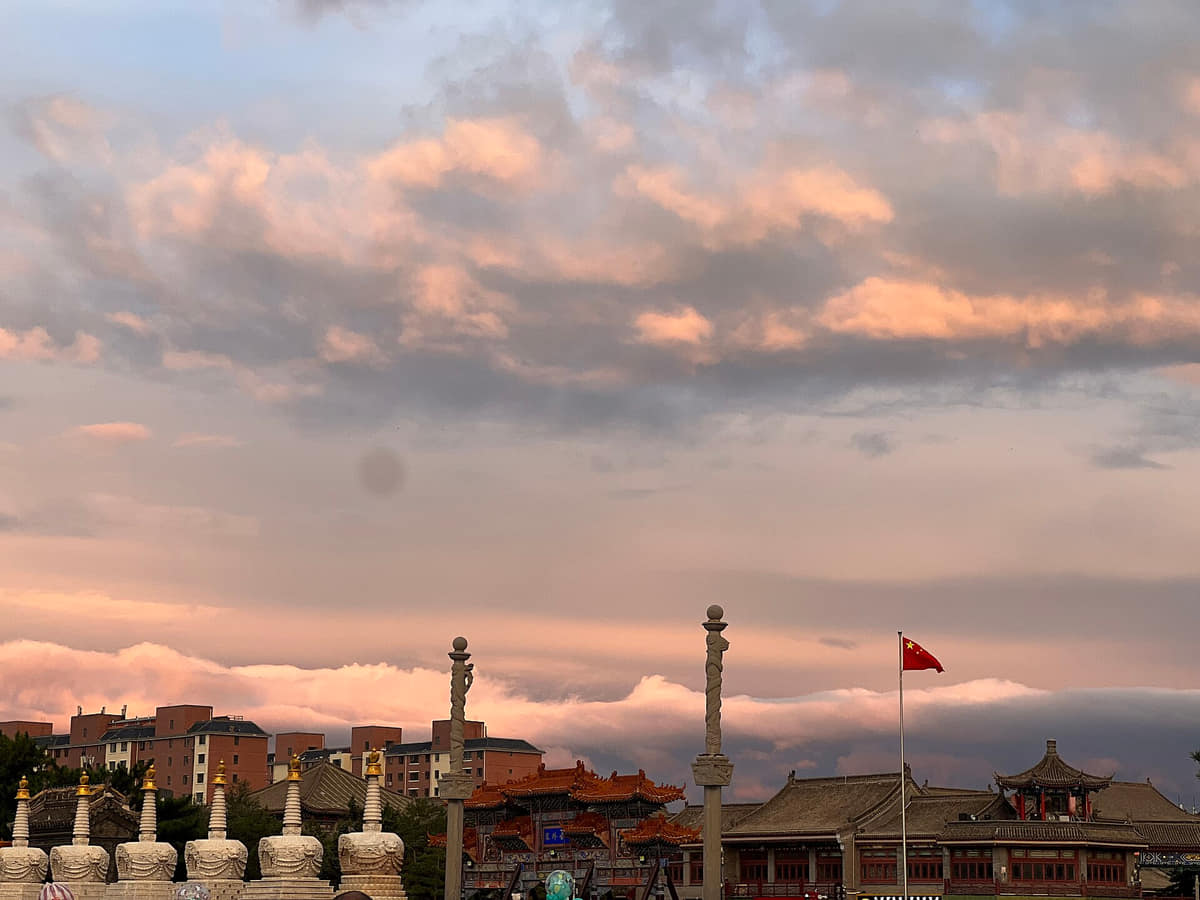
Dazhao was part of the sixteenth-century foundation of Kökeqota. Temple construction helped organize political authority, religious life, craft, pilgrimage, and commerce within the walled city.[1][2][3][4]
Later temples and the adjacent Suiyuan garrison city added new architectural and administrative layers. Their courtyards, inscriptions, images, and surrounding streets preserve different histories.[1][2][3][4]
Hohhot's temples are urban archives: they record belief, authority, art, trade, language, and neighborhood life in the same spaces.[1][2][3][4]
Modern Hohhot has expanded far beyond the old city, but the temple landscape remains essential because it shows how a regional capital grew from specific institutions and networks rather than from grassland imagery alone.[1][2][3][4]
What does this reveal about Hohhot?
The capital's history is one of interaction among many communities and landscapes. Religious architecture provides evidence without reducing the city to a single identity.[1][2][3][4]