
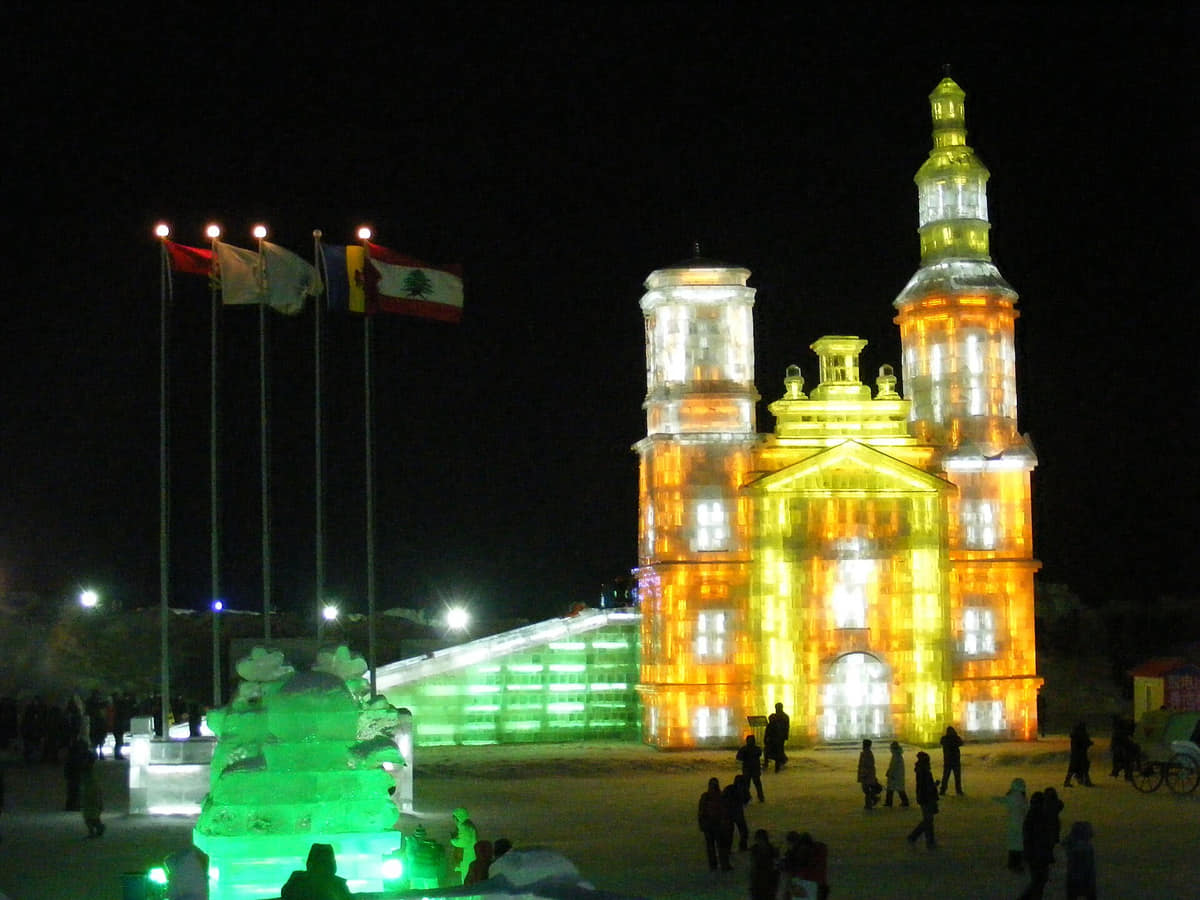
Harbin's winter is long and very cold. Buildings, utilities, vehicles, clothing, work schedules, street maintenance, and household routines all adapt to freezing temperatures.[1][2][3][4]
The frozen Songhua River becomes both material and space. Ice is harvested and engineered into temporary architecture, while parts of the river support routes, recreation, and seasonal activity.[1][2][3][4]
Harbin does not simply endure winter; it organizes infrastructure, labor, design, and public culture around it.[1][2][3][4]
Festival images therefore show only one layer. The deeper story is practical urban competence: keeping a large city working while also turning winter knowledge into art, sport, tourism, and collective identity.[1][2][3][4]
What does this reveal about Harbin?
Climate becomes culture through repeated practical work. Spectacle depends on less visible systems of engineering, maintenance, heating, safety, and everyday adaptation.[1][2][3][4]