
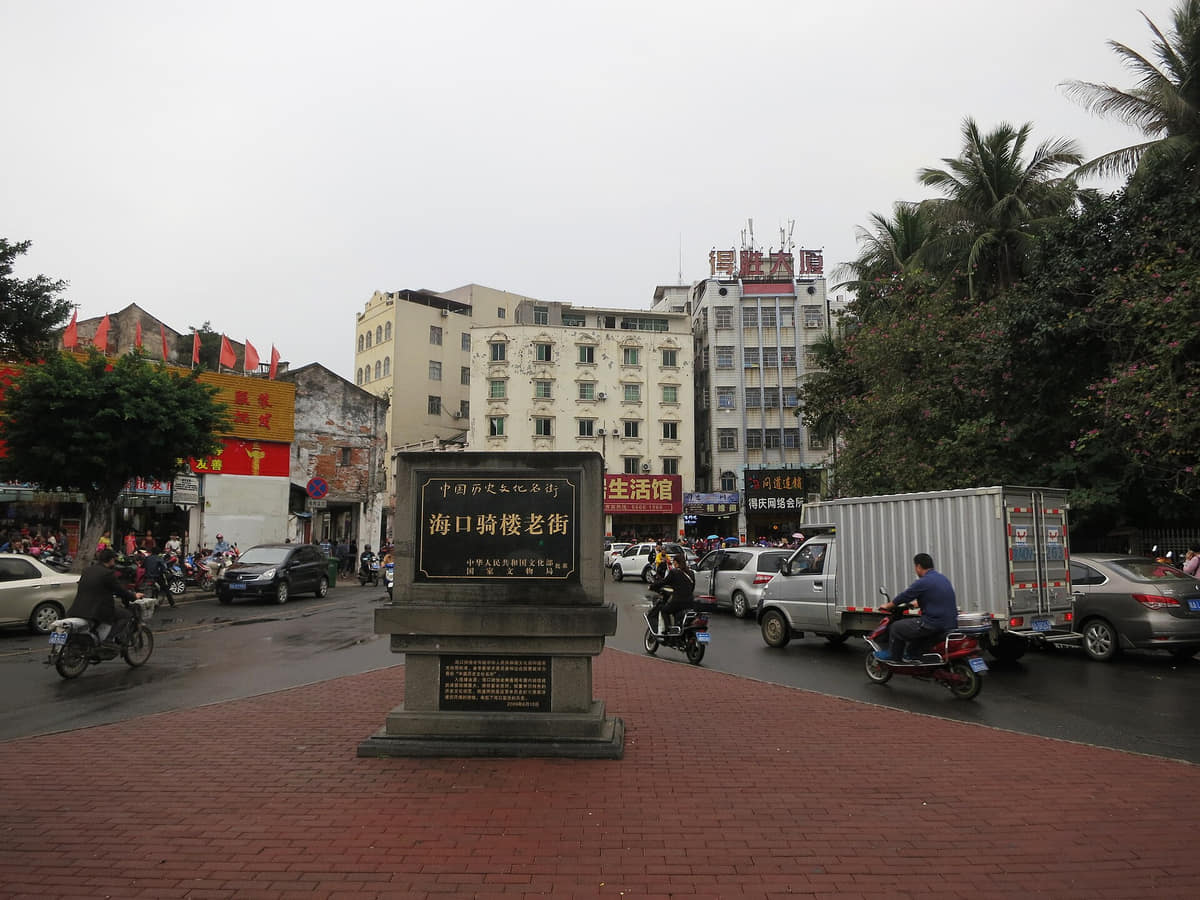
A qilu combines commercial frontage, upper-floor space, and a covered arcade. The shaded walkway protects movement and shop activity from tropical sun and heavy rain, turning climate response into a continuous street edge.[1][2][3][4]
The buildings also reflect maritime mobility. Overseas Hainanese networks, trade, imported architectural ideas, local builders, materials, family businesses, and port routes all contributed to the streetscape.[1][2][3][4]
Haikou's arcades are both climate infrastructure and records of people moving across the sea.[1][2][3][4]
Preservation is not simply façade repair. Housing, shops, tourism, fire safety, utilities, traffic, ownership, affordability, and resident needs determine whether the old streets remain living neighborhoods.[1][2][3][4]
What does this reveal about Haikou?
The city becomes most legible where tropical adaptation, trade, migration, architecture, and ordinary street life are considered together.[1][2][3][4]