
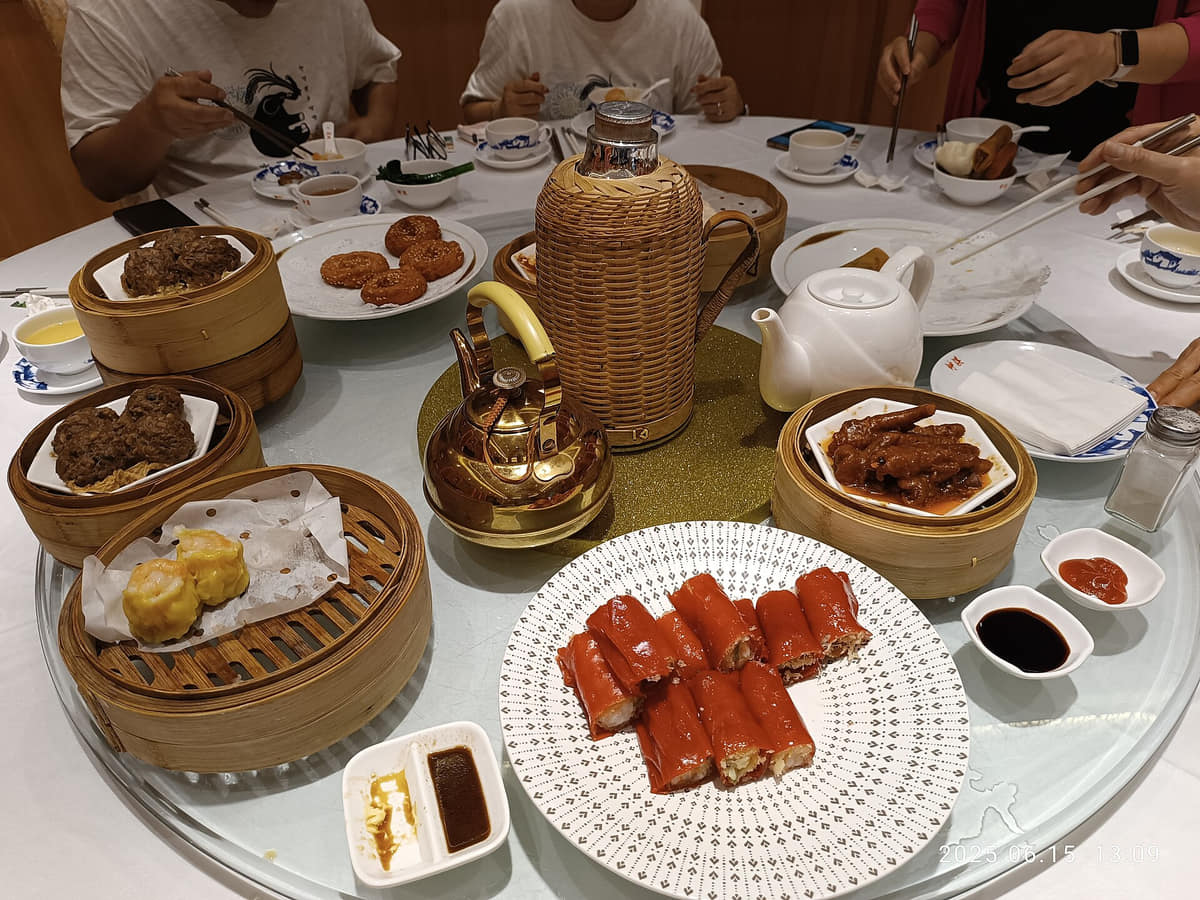
Dim sum draws attention because of variety and technique, but yum cha begins with a social arrangement. People share a table, order in rounds, pour tea, talk, wait, and adjust the meal to the group's pace.[1][2][3][4]
Behind the dining room is specialized work. Different doughs, fillings, steaming, baking, frying, roasting, and service schedules require organized kitchens and experienced labor.[1][2][3][4]
Yum cha is a way of organizing time and relationships as much as it is a way of serving food.[1][2][3][4]
The practice changes with neighborhood restaurants, hotels, chains, delivery, tourism, family size, and working hours. Its continuity lies in adaptation while tea and shared small dishes continue to structure social time.[1][2][3][4]
What does this reveal about Guangzhou?
The city often turns trade, craft, migration, and technical skill into repeatable neighborhood practices rather than static symbols.[1][2][3][4]