
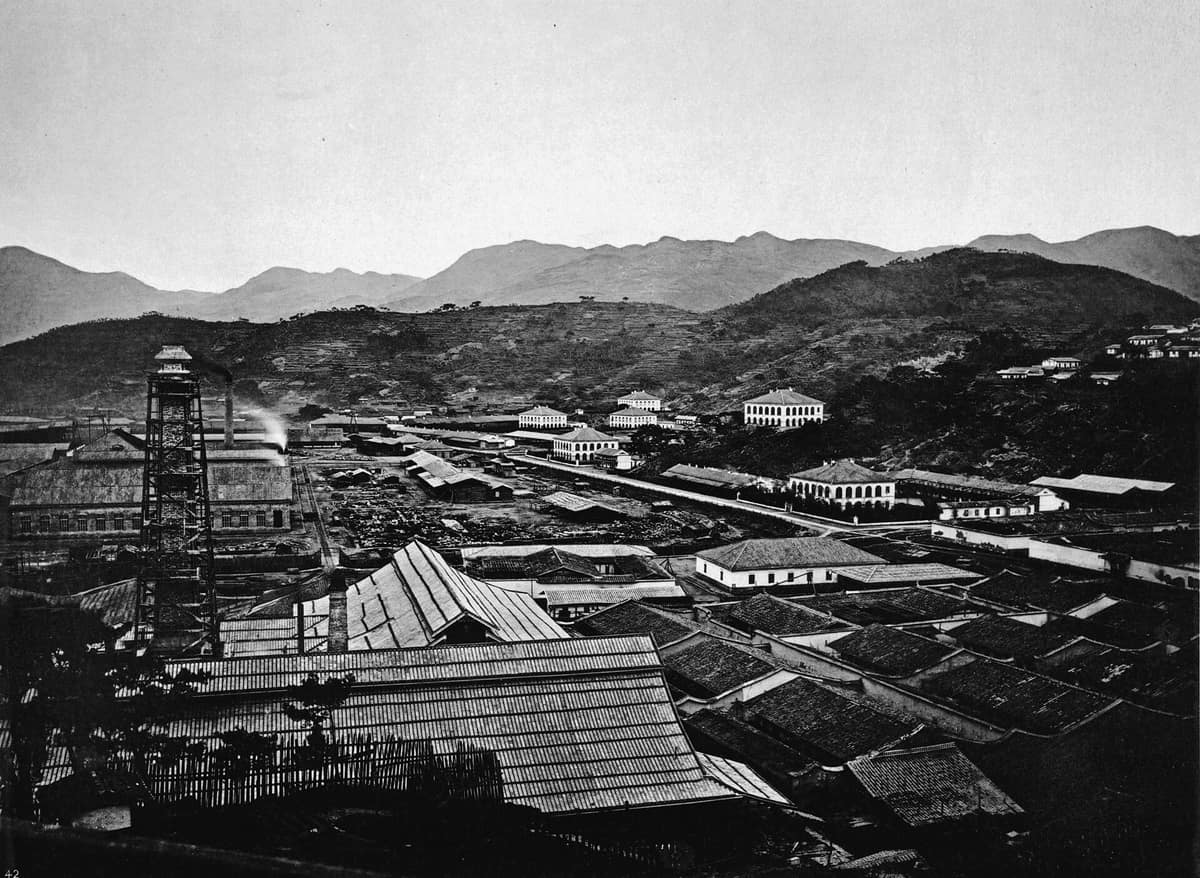
Fuzhou's lower Min River location long connected inland products and communities with coastal shipping. In the nineteenth century, Mawei became the site of an ambitious shipbuilding and naval-education program.[1][2][3][4]
The arsenal required more than docks and machines. It brought together technical schools, foreign-language learning, translation, drawing, metallurgy, navigation, management, and skilled industrial labor.[1][2][3][4]
At Mawei, the route from river to sea also became a route through classrooms, workshops, languages, machines, and new professions.[1][2][3][4]
Museums and surviving sites now make this network visible. They show that maritime modernization was not simply about ships; it involved people learning, adapting, producing, and circulating knowledge through a river-port city.[1][2][3][4]
What does this reveal about Fuzhou?
The city's maritime identity includes knowledge institutions and labor as much as trade or coastal scenery, linking local history to wider technical networks.[1][2][3][4]