
Where is Fuzhou, China?
Fuzhou is the capital of Fujian Province on the lower Min River, facing the Taiwan Strait. Its 13 county-level units extend from the central river plain through mountain counties to estuaries, ports and coast.
Fujian Province · East China
Fuzhou, China, is Fujian's capital and a 13-unit municipality running from the lower Min River to the coast. Three Lanes and Seven Alleys, shipbuilding history, Eastern Min culture and estuary ecology belong to one river-to-sea city.
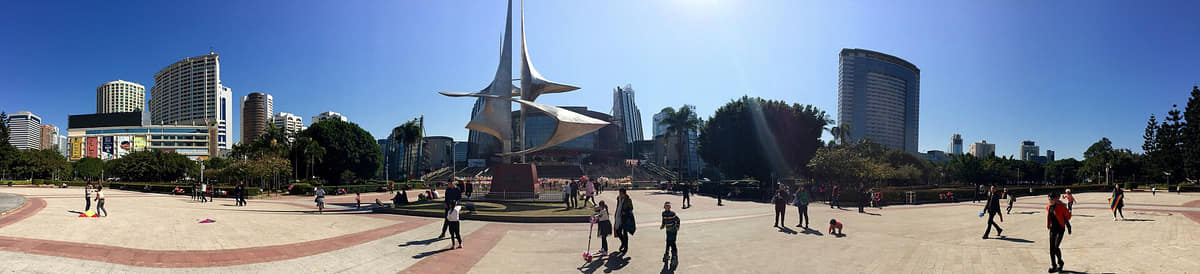
Fuzhou is a thirteen-unit municipality on the lower Min River: six districts, six counties and Fuqing county-level city span the central river plain, tributary valleys, mountain basins, the estuary, ports, bays and exposed coastal landscapes. The map therefore treats the municipality as a river-to-sea system rather than only the old urban core.
The city layers archaeological sites such as Tanshishan, an urban grid whose Three Lanes history reaches back to the Tang period, Song timber architecture, Ming–Qing residences and crafts, nineteenth-century ship administration, and a contemporary river-coast metropolis. Each layer is separated from later restoration, reconstruction, museum display and tourism branding.
Fuzhou has a humid subtropical monsoon climate with long hot, humid summers, heavy seasonal rain and possible tropical-cyclone effects; winters are usually mild but can feel damp and cool. Climate describes long-term patterns, not live weather, flood, typhoon, heat, trail or marine-safety conditions.
The official end-2025 permanent-resident count is 8.521 million for the full statistical municipality. It must not be mixed with registered population, central-city, metropolitan or temporary-visitor figures; a single total also cannot erase differences between dense districts, county towns, mountain communities, industrial corridors, fishing ports and islands.
Fuzhou is the capital of Fujian Province on the lower Min River, facing the Taiwan Strait. Its 13 county-level units extend from the central river plain through mountain counties to estuaries, ports and coast.
Fuzhou is known for Three Lanes and Seven Alleys, banyan-shaded streets, Eastern Min language, jasmine tea, lacquer and stone craft, Mawei shipbuilding history, river and coastal landscapes, and Fujian food traditions.
The Min River links inland watersheds, urban islands, ports, coast, and overseas routes.
Warm humid ecology, steep terrain, shade, gardens, and evergreen streets shape urban experience.
Shipbuilding, navigation, translation, education, trade, and migration make the sea an intellectual history too.
Language, houses, crafts, food, temples, and lineage networks continue through contemporary use and change.
Twenty-seven locally hosted, rights-cleared images connect a river-estuary metropolis, ordinary streets, protected lanes, timber architecture, archaeology, ship administration, museum craft objects and five food settings. Every caption preserves date and visual limits and separates what is visible from current conditions, recipes, institutional interpretation and political endorsement.
The central city occupies a river plain enclosed by mountains; the municipality follows tributary valleys and the Min estuary toward bays, ports, fishing settlements, coastal counties, and islands.[1][2][3][4]
The Min River estuary, near-city mountains, humid subtropical ecology, coast, islands, and a thirteen-unit municipality define Fuzhou.
Fuzhou developed where the Min River leaves mountain basins, divides around islands, crosses a broad plain, and approaches the Taiwan Strait.[1][2][3][4]
Gushan, Qishan, forest parks, and surrounding ranges place steep green terrain near dense urban districts.[1][2][3][4]
The municipality reaches bays, ports, wetlands, fishing communities, islands, and the exposed marine landscapes of Pingtan.[1][2][3][4]
Six districts, six counties, and Fuqing county-level city contain very different river-valley, mountain, coastal, island, urban, and rural environments.[1][2][3][4]
Loading current conditions…
Forecast data: Open-MeteoPermanent residents across Fuzhou's six districts, six counties and Fuqing county-level city; do not mix with registered-population, central-city or visitor estimates
Population figures use the administrative area and source date shown below.[5][6]Summers are long, hot, humid, and rainy; winters are mild, while heavy rain and tropical-cyclone effects require seasonal attention.
Climate describes long-term seasonal patterns; live conditions appear separately.[1][2][3][4]Mild-to-warm, humid weather and frequent rain make covered lanes, museums, gardens, and flexible mountain plans useful.[1][2][3][4]
Heat, humidity, strong sun, heavy rain, and possible tropical-cyclone effects require weather checks and conservative coastal planning.[1][2][3][4]
Warm-to-mild, often clearer conditions favor riverbanks, old districts, mountain paths, and coastal journeys after weather review.[1][2][3][4]
Winters are generally mild but can be damp and cool; evergreen landscapes remain prominent while mountain and coast feel windier.[1][2][3][4]
Eleven sourced layers move from Tanshishan archaeology and more than two millennia of urban history through Tang street structure, Song timber and maritime growth, Ming–Qing society, treaty-port change, 1866 ship administration, the 1884 battle, twentieth-century disruption and today's thirteen-unit river-coast municipality.
Excavated layers, burials and artefacts at Tanshishan in Minhou provide material evidence for prehistoric communities in the lower Min River region. Dates and interpretations depend on stratigraphy and reports; the site should not be promoted as a universally proven single origin of maritime civilisation.[23]
Official historic-city records describe more than 2,200 years of urban history, but the municipality contains multiple earlier and later settlement centres. Written chronology, archaeology, place-name traditions and modern administrative boundaries are related evidence, not interchangeable proof.[9]
The Three Lanes and Seven Alleys record traces the district's street framework to the Tang period. Surviving houses are not all Tang buildings: later dynasties, repairs, rebuilding, new uses and conservation have repeatedly altered the same urban grain.[10]
Song-era Fuzhou grew through administration, trade, temples, education, printing and maritime connections. Hualin Temple's hall, founded in 964 and repeatedly conserved, provides exceptional architectural evidence, while its visible condition includes later intervention.[20][9]
Courtyard houses, ancestral institutions, market streets, examination culture, lacquer, stone carving, tea and overseas family networks shaped urban and county life. These records often foreground elites; artisans, boat crews, servants, traders, farmers and other workers also sustained them.[9][10]
Residences associated with Yan Fu, Lin Juemin and other figures connect family space with education, translation, reform, literature and changing public memory. Present museums combine surviving fabric, conservation, reconstruction, collections and curatorial choices that need separate labels.[10][11]
Fuzhou's treaty-port era intensified international trade, foreign institutions and unequal power relations along the river and in Cangshan. Warehouses, churches, residences, labour and new infrastructure form one history; architectural survival should not romanticise coercion or erase local agency.[9]
The institution created at Mawei combined shipbuilding, machinery, administration, translation, navigation and technical schools. Its history includes Chinese and foreign specialists and a large workforce; it should be studied through workshops, curricula, labour, finance and surviving sites rather than a single heroic story.[22]
The Battle of Fuzhou damaged the Fujian fleet and made Mawei a site of war, death and remembrance as well as industry and education. Museums and memorials require careful source-based interpretation; describing the conflict factually does not endorse any state or military position.[22][21]
Regime changes, warfare, Japanese invasion, migration, schooling, industry and municipal rebuilding changed Fuzhou and its counties. A neutral account distinguishes dated events, civilian experience, institutions and later memory rather than treating the century as a single uninterrupted political narrative.[9][21]
Post-1949 provincial-capital functions, bridges, housing, manufacturing, ports, universities, metro lines, conservation and ecological work reshaped the city. Today's six districts, six counties and Fuqing connect very different urban, mountain, estuary and coastal trajectories; end-2025 permanent residents totalled 8.521 million.[5][6]
Eight perspectives describe 8.521 million permanent residents through statistical scope, thirteen local contexts, language, overseas networks, labour, river–mountain–coast livelihoods, mobility and climate-shaped routines—without assigning one character to everyone.
The 8.521 million figure is the official end-2025 permanent-resident count for the statistical municipality. Registered population, urban-core residents, commuters, students, migrant workers, tourists and metropolitan estimates answer different questions and should not be substituted.[5][6][7][8]
Gulou, Taijiang, Cangshan, Mawei, Jin'an and Changle districts differ from Minhou, Lianjiang, Luoyuan, Minqing, Yongtai and Pingtan counties and Fuqing City. Density, work, transport, dialect, coast exposure and public services vary within each unit too.[5][6][7][8]
Standard Mandarin is widely used, while Fuzhou speech belongs to Eastern Min and other local varieties occur across the municipality. Fluency, generation, neighbourhood, schooling, migration and media use differ; language should be documented rather than used to decide who is authentically local.[5][6][7][8]
Family, education, religious, business and community ties connect Fuzhou localities with Southeast Asia, Japan, North America, Europe and elsewhere. Overseas links are uneven and personal; they do not make every household wealthy, mobile or internationally connected.[5][6][7][8]
Government, education, health care, retail, logistics, construction, manufacturing, ports, fisheries, food service, care work, museums and digital businesses all sustain the municipality. Ship administration and craft stories become more accurate when workers and training remain visible.[5][6][7][8]
Central riverfront districts, tea and fruit landscapes, mountain counties, industrial corridors, aquaculture areas, fishing ports and islands follow different work and seasonal calendars. Scenic coast or mountain imagery never proves income, environmental health, access or safety.[5][6][7][8]
Students, graduates, county-to-city movers, interprovincial migrants, returning families and commuters change where people live and work. One annual population total cannot show duration of residence, housing pressure, household registration, displacement, commuting or neighbourhood turnover.[5][6][7][8]
Shade, rain protection, drainage, air conditioning, flood awareness, typhoon preparation and marine-weather checks are ordinary parts of life in a hot, humid, rain-prone region. Needs differ by housing, health, job, income, age, disability and distance from coast or river.[5][6][7][8]
Fourteen entries explain fish balls, rouyan, Fotiaoqiang, litchi pork, surf clams, guobianhu, laohua, taro paste, red lees, aquatic foods, sweets, Aojiu porridge and jasmine tea through technique, variation, provenance, dietary rules, allergens and current food safety.
Fish paste is worked for texture, shaped around fillings in many versions and served in broth. Fish species, starch, pork or other filling, seasoning and size vary; fish, meat, egg, soy, gluten, bones, sourcing, cold chain and safety need shop-level checks.[18][19][17]
Traditional rouyan uses a very thin wrapper associated with pounded pork and starch around a filling, often served in clear broth. Technique and recipe vary; pork, starch, egg, stock, cross-contact, origin stories and dietary suitability must be confirmed.[18][19][17]
This banquet preparation can combine many dried and fresh ingredients through soaking, stock-making and slow cooking. Names and luxury claims do not guarantee a fixed recipe; seafood, shellfish, meat, poultry, mushrooms, alcohol, sodium, sourcing and price vary sharply.[18][19][17]
Cut pork is often scored, fried and coated so its shape and colour recall litchi rather than relying on the fruit. Pork cut, starch, vinegar, sugar, colouring, oil and garnishes vary; wheat, shared fryer, meat source and current food safety require checks.[18][19][17]
Thin shellfish slices may be quickly scalded with hot chicken broth to protect texture. Species, legal source, freshness, slicing, stock and serving method vary; shellfish and poultry allergy, alcohol, heat, cross-contact and food safety require direct confirmation.[18][19][17]
Rice batter is spread around a hot vessel, cooked into thin pieces and moved into broth with varied toppings. Rice does not guarantee gluten-free service; shellfish, fish, meat stock, mushrooms, soy, utensils, breakfast timing and cross-contact differ by venue.[18][19][17]
Fine rice noodles are briefly cooked and lifted into a broth with selectable toppings in common versions. The name covers many combinations; stock, offal, seafood, meat, herbs, gluten-containing sauces, utensils, price and hygiene require venue-level checks.[18][19][17]
Taro is steamed and worked into a smooth sweet paste, sometimes with lard, other fats, sugar, nuts, seeds or dried fruit. A glossy surface does not reveal temperature; fat source, sesame or nut allergy, sugar, recipe and cross-contact need confirmation.[18][19][17]
Red fermentation lees can season meat, poultry, seafood and vegetables, adding colour and fermented aroma. Recipes, salt, sugar, alcohol residue and colouring vary; fermentation does not guarantee preservation safety, and diners should ask about alcohol and allergens.[18][19][17]
The municipality spans river, estuary, bays, aquaculture areas and open coast, but every product has a specific species and source. Wild or farmed status, closed seasons, legality, contaminants, sustainability, bones, shellfish allergy and cold chain need current product evidence.[18][19][17]
Soft-cooked peanuts, starches, rice products, taro and seasonal ingredients appear in sweet bowls and breakfast settings. Peanut is a major allergen; sugar, milk, egg, sesame, nuts, thickener, shared utensils and whether a version is local require confirmation.[18][19][17]
A sweet porridge associated with the Aojiu observance is linked in local accounts with care for elders and family remembrance. Rice, glutinous rice, peanuts, red dates, longan, sugar and other ingredients vary; ritual meaning and household practice are not uniform.[18][19][17]
Repeated scenting can bring tea leaves and fresh jasmine together through carefully timed contact and separation. Aroma alone cannot prove Fuzhou origin, flower source, tea base, number of scenting rounds or protected technique; caffeine, storage and added flavouring should be checked.[18][19][17]
Fish, shellfish, pork, poultry, wheat, soy, sesame, peanut, egg, mushrooms, alcohol seasoning and shared equipment appear across Fuzhou dining. Confirm halal, vegetarian, allergy and medical needs, cross-contact, cooking, storage and current inspection with the venue; photographs never certify safety.[18][19][17]
Move from old-city lanes to the Min River, then choose a mountain, Mawei, or a weather-appropriate coastal route to understand the full municipal system.
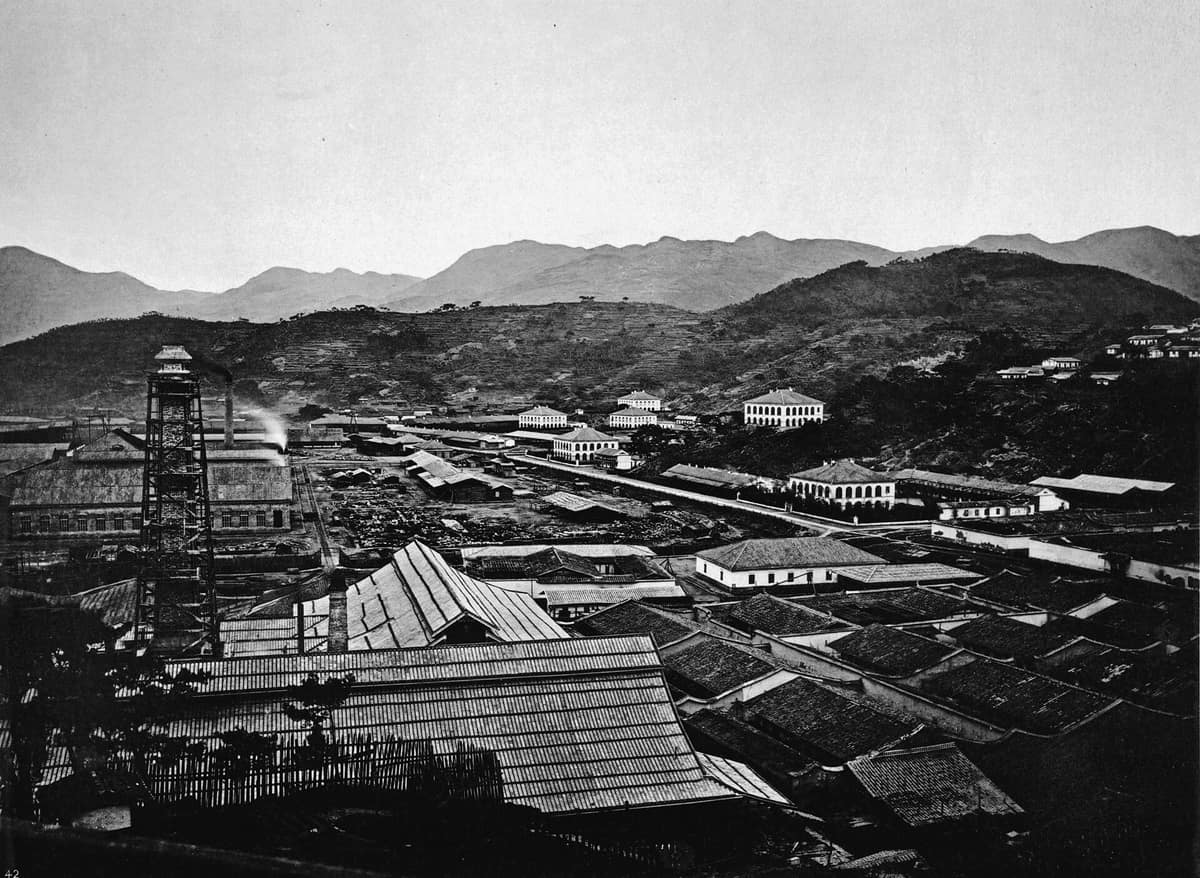
At Mawei, shipbuilding depended on translation, engineering, education, navigation, industrial labor, and global technical exchange.
Read the story