
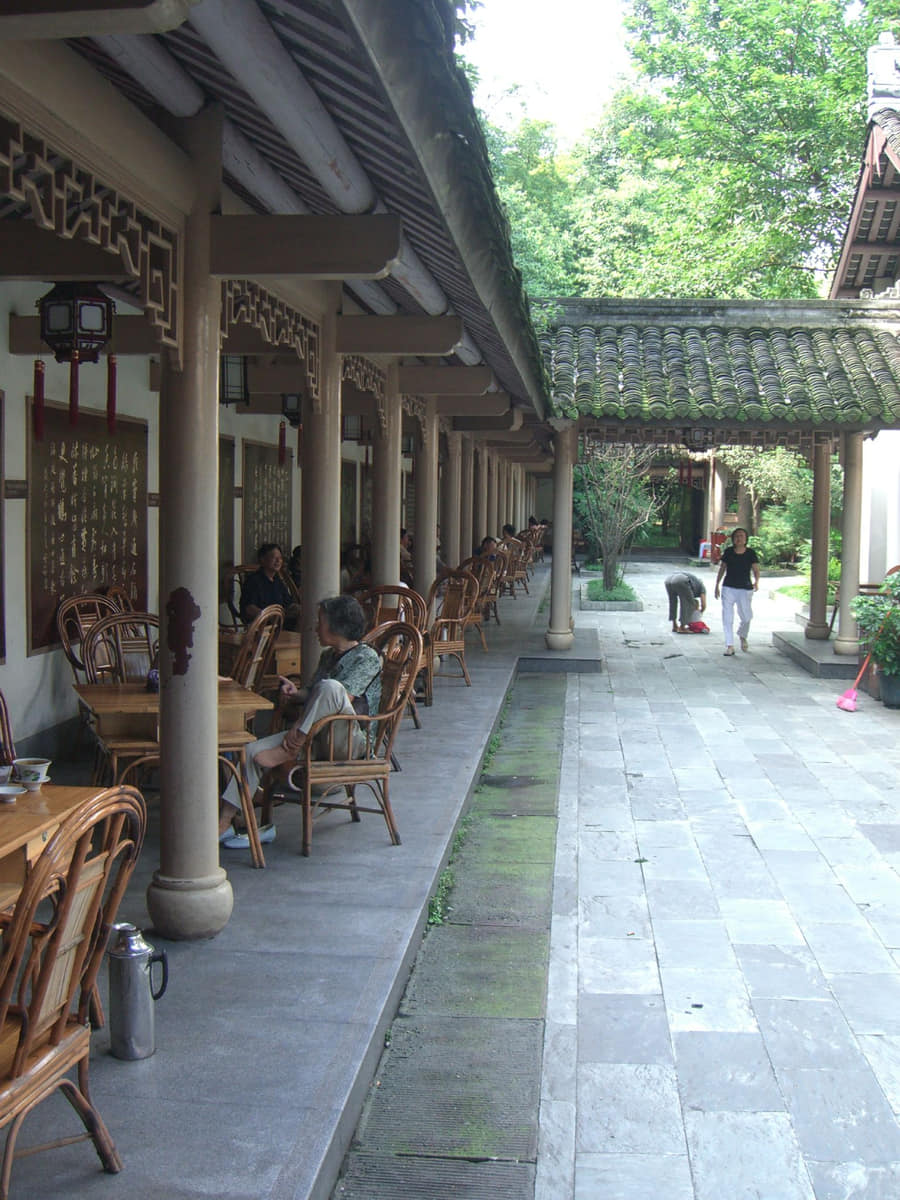
A Chengdu teahouse often begins its day under the shade of park trees. Retirees, nearby residents, workers on a break, and visitors may sit for far longer than it takes to finish a cup.[1][2]
The attraction is not only the tea. A teahouse offers an easy form of public sociability: people talk, read, play games, listen, or simply watch the day unfold. Participation is optional, and that looseness is part of its appeal.[1][2]
In Chengdu, a teahouse creates enough room for people to meet while still letting everyone keep their own pace.[1][2]
The pace also reveals something about how Chengdu’s identity is narrated. Leisure is not the absence of urban life; it is one of the ways relationships, information, and the everyday life of the city become visible.[2]
What does this reveal about Chengdu?
Teahouse culture connects openness, public space, conversation, and attention to everyday comfort. It should not be treated as a personality shared by every resident, but as a recurring institution that helps explain how the city imagines itself.[1][2]