
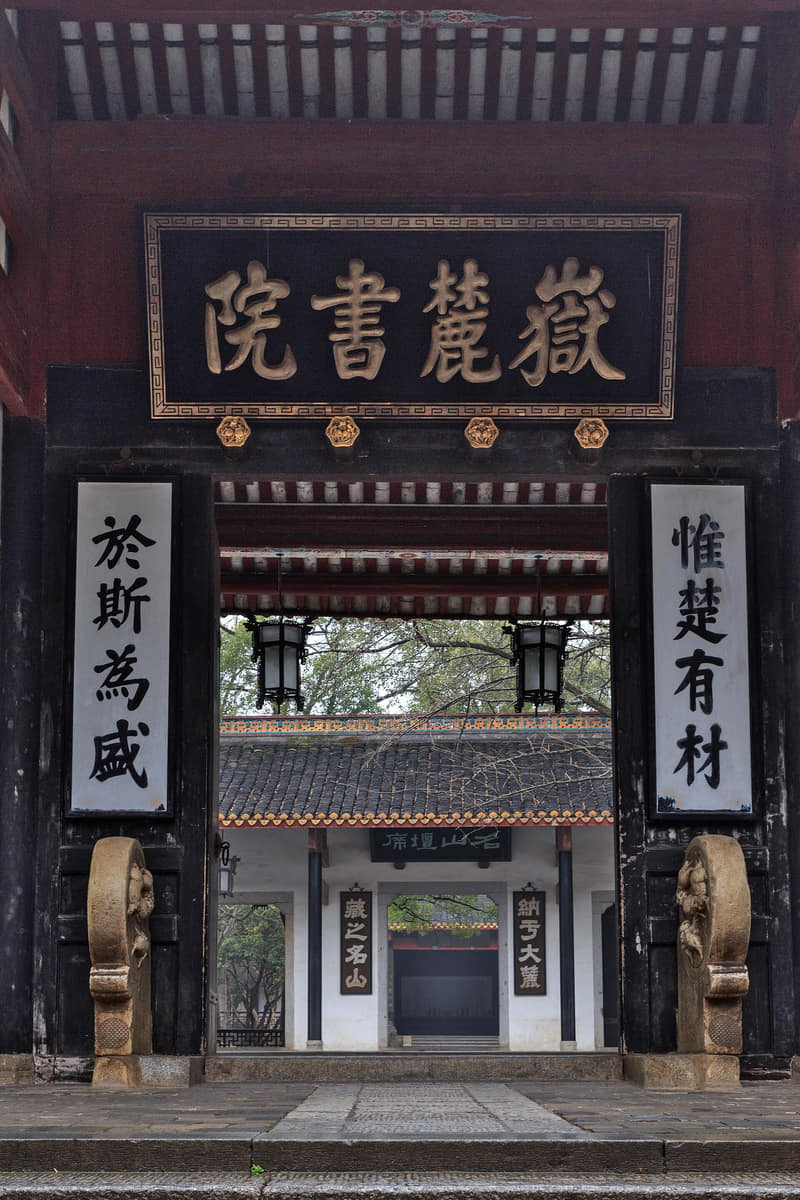
Yuelu Academy began within a mountain setting rather than as an isolated classroom. Courtyards, gates, texts, ritual spaces, springs, paths, and nearby religious institutions shaped how learning was experienced.[1][2][3][4]
Its buildings, curriculum, administration, and social role changed repeatedly. The academy later became connected to modern higher education, while restoration, scholarship, tourism, and public interpretation added new uses.[1][2][3][4]
Yuelu's continuity lies in repeated use and reinterpretation, not in a frozen institution.[1][2][3][4]
Continuity therefore does not mean that nothing changed. Yuelu endures because successive institutions preserved, rebuilt, taught, researched, visited, and debated the meaning of a learning place.[1][2][3][4]
What does this reveal about Changsha?
The city often connects education, landscape, public memory, and contemporary media rather than separating old culture from modern urban life.[1][2][3][4]