
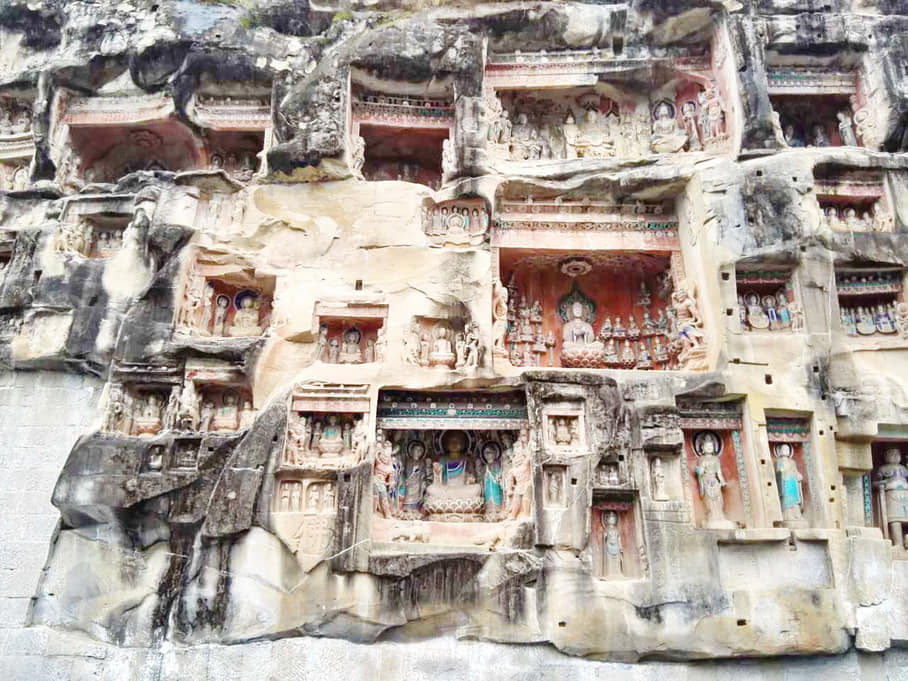
Geology made carving possible, while roads, patronage, workshops, Buddhist practice, weathering, repainting, and conservation shaped what survives.[1][2][3][4]
The evidence is distributed across museums, landscapes, working neighborhoods, county routes, and local collections. Reading them together avoids reducing Bazhong to one postcard image.[1][2][3][4]
Bazhong is best understood as connected systems rather than a single attraction.[1][2][3][4]
The result is a neutral, place-based explanation: it records change, identifies sources, and leaves room for different residents' experiences.[1][2][3][4]
What does this reveal about Bazhong?
A Micang Mountain city where Nankan grottoes, Enyang's old-town fabric, mountain passes, red-sandstone carving, forest biodiversity, and dispersed county communities offer a quieter but highly specific Sichuan story.[1][2][3][4]