
Xi’an Food Guide: What to Eat and How to Explore
Explore Xi’an through signature dishes, meal formats, markets, food safety, neighborhood context, and the cultural practices around eating.
The short answer
Xi’an food exploration centers on wheat, broth, roasting, hand-shaped noodles, filled breads, dumplings, and long histories of exchange. Muslim Quarter signage should not be used as a shortcut for assuming ingredients or certification.
What to eat
Fourteen entries place noodles, breads, soups, cold-dressed staples, pastries, condiments and migrant kitchens within technique, community attribution, ingredients, allergens, labor, regulation and the complete food system.
Biangbiang noodles
Wide hand-pulled or stretched noodles are associated with Guanzhong, but thickness, fold, oil, chili, vinegar, vegetables and meat vary. The complex written character is a popular cultural sign, not an ingredient list; verify wheat, soy, sesame, peanut and cross-contact.[6]
Roujiamo
Baked flatbread is split and filled with chopped braised meat in many forms. Bread style, meat species and cut, braising liquid, fat, salt and size vary; the preparation photograph records labor but not universal recipe, hygiene or nutrition.[6]
Yangrou or niurou paomo
Paomo combines torn bread, broth and commonly mutton or beef, with maker-specific spices and service. The national ICH record documents one Laosunjia mutton tradition, not every bowl; confirm meat, gluten, broth, sodium, coriander, chili and halal practice.[14]
Liangpi
Liangpi is a family of cold-dressed sheets or strips made through different rice, wheat or starch processes. Texture, gluten content, sauce, vinegar, garlic, sesame, peanut, chili and bean sprouts vary; appearance alone cannot identify a safe allergen profile.[14][6]
Steamed and baked breads
Flatbreads, buns and wheat cakes support sandwiches, soups and standalone snacks. Fermentation, oven or steam, flour, oil, filling and holding temperature differ by stall or household; a steam-filled frame does not establish sanitation.[14][6]
Qishan-style saozi noodles
Sour, aromatic broth, diced toppings and thin noodles are associated especially with western Guanzhong and Qishan rather than originating in Xi'an city. Xi'an restaurants make and adapt them; label regional origin, meat, egg, tofu, wheat and vinegar accurately.[14][6]
Hulutou paomo
Common versions combine torn bread with pork intestine and broth, but shops and recipes differ. The name should not obscure offal, pork, gluten, fat, sodium and preparation; it is not suitable for all dietary or religious practices.[14][6]
Guantang baozi
Soup buns in Xi'an include Muslim and non-Muslim restaurant traditions with different fillings and techniques. Hot liquid can burn; verify meat, broth, wheat, sesame, soy and halal practice rather than using one famous shop to represent every maker.[14][6]
Food as a way to read the city
Chang'an as memory
Chang'an is an archaeological place, a set of historical capitals and a powerful cultural name used in scholarship, literature, place branding and daily speech. These uses overlap but are not identical to the boundaries of modern Xi'an.[8]
Qinqiang opera
The national ICH record describes a northwestern theatrical tradition shaped by Guanzhong speech, melodic systems, percussion, role types and physical technique. A single staged performer cannot stand for its repertory, musicians, schools, audiences or safeguarding challenges.[11]
Xi'an drum music
The documented tradition combines wind and percussion ensembles, seated and processional forms, ritual settings and orally transmitted notation. Listed communities include groups in Lianhu, Chang'an, Beilin and Zhouzhi; it is a living network, not a soundtrack detached from practitioners.[12]
Buddhist institutions and translation memory
Pagodas, temples, texts and collections connect Xi'an to Buddhist study, translation, patronage and pilgrimage across centuries. Individual buildings have different construction, rebuilding and institutional histories; reverence and archaeology require different forms of evidence.[8][9]
Islamic community life
Mosques, prayer, education, family life, trade and food practices connect architecture with living Hui communities. Visitor photography should respect worship and privacy, and architectural appearance cannot prove a business's ingredients or halal compliance.[9]
Daoist landscapes
Louguantai and other sites combine religious institutions, mountain geography, inscriptions, buildings, ritual practice and later tourism. Accounts linking Laozi to a precise place should be labeled as tradition unless supported by appropriate historical evidence.[9]
Plan a responsible food day
- Keep the Terracotta Army and related eastern sites as a dedicated day rather than attaching them to a crowded old-city schedule.
- Walk or cycle only a manageable section of the wall if museums and neighborhoods matter more than completing the circuit.
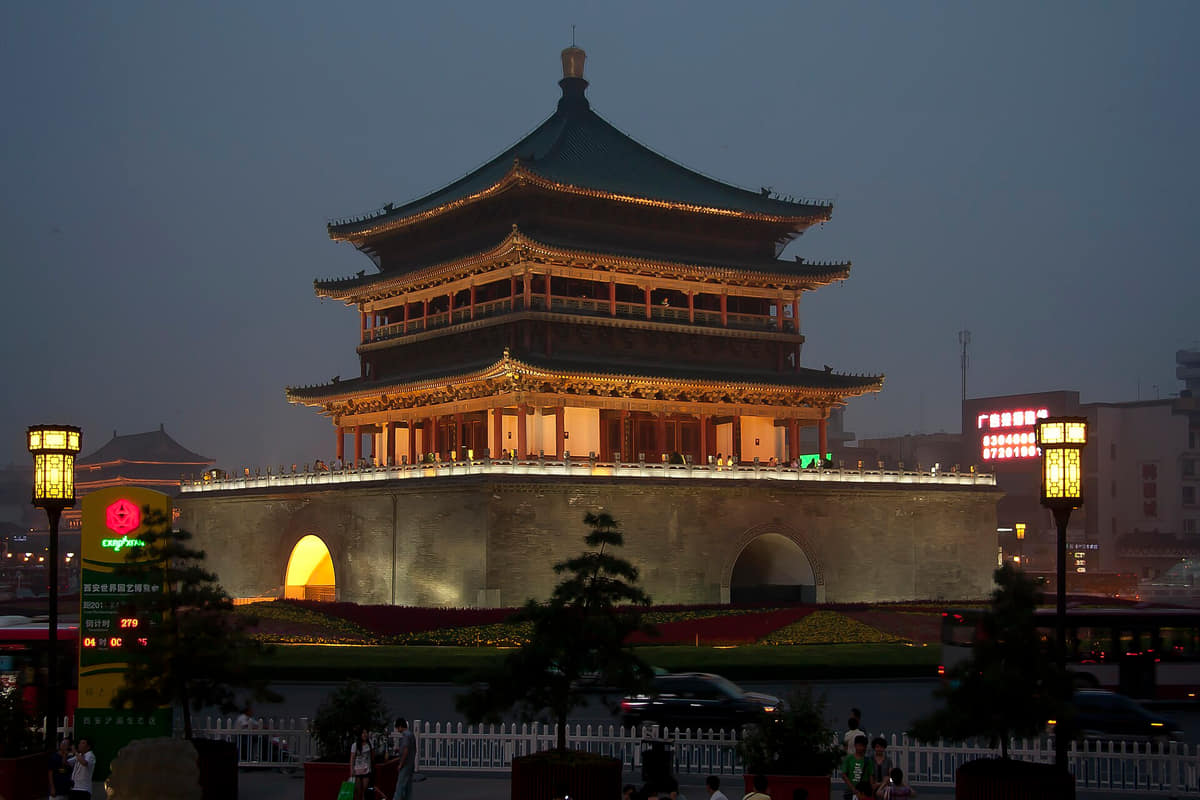
- Distinguish the Bell and Drum Tower commercial core from the wider history of Muslim communities, mosques, markets, and residential streets.
- Use museum collections before or after monument visits to understand objects, excavation context, chronology, and conservation.