
Best Time to Visit Xi’an: Weather and Seasons
Compare Xi’an by season, including weather trade-offs, walking conditions, indoor alternatives, and the city experiences that change through the year.
The short answer
Spring and autumn are generally the easiest seasons for walls, archaeological sites, and outdoor walking. Summer can be hot with concentrated rain, while winter is cold and drier with fewer daylight hours.
Season by season
Spring
Dry air, wind, rapid warming, and occasional dust make conditions changeable.[1][2][3][4][5]
Summer
Heat and the main rainy season overlap; indoor museums and evening walks can balance outdoor archaeology.[1][2][3][4][5]
Autumn
Cooling temperatures and clearer intervals support city walks and trips toward the mountain edge.[1][2][3][4][5]
Winter
Cold, relatively dry weather makes warm food and indoor collections especially useful parts of an itinerary.[1][2][3][4][5]
How climate changes the plan
Warm-temperate, semi-humid continental monsoon climate
Four seasons are distinct: spring is dry and changeable, summer hot and rainy, autumn cooler, and winter cold with relatively little precipitation.[1][2][3][4][5]
- Keep the Terracotta Army and related eastern sites as a dedicated day rather than attaching them to a crowded old-city schedule.
- Walk or cycle only a manageable section of the wall if museums and neighborhoods matter more than completing the circuit.
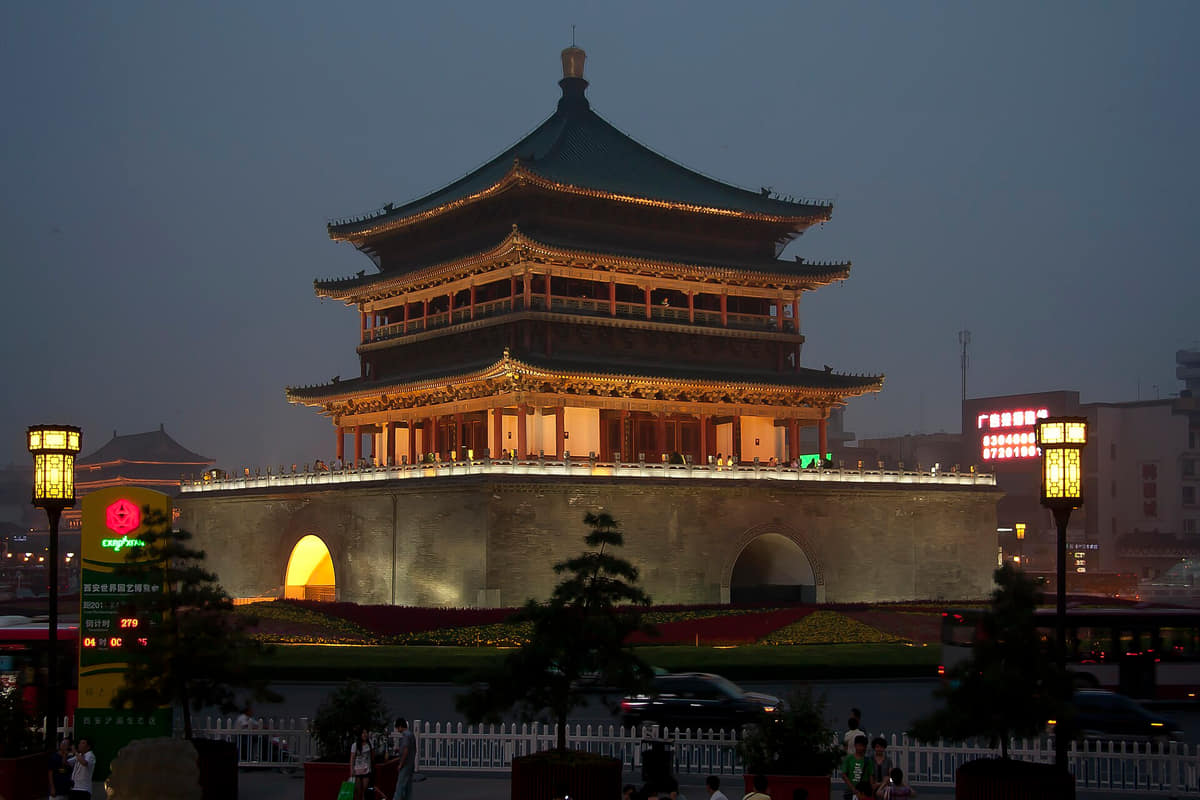
- Distinguish the Bell and Drum Tower commercial core from the wider history of Muslim communities, mosques, markets, and residential streets.
- Use museum collections before or after monument visits to understand objects, excavation context, chronology, and conservation.
Flexible city routes
Walled city layers
City wall → Bell Tower → Great Mosque neighborhoodRead defense, centrality, religion, commerce, and daily life within one compact area.[1][2][3][4][5]
Object and context
Shaanxi History Museum → Giant Wild Goose PagodaConnect collections, translation history, architecture, and Tang-period exchange.[1][2][3][4][5]
Imperial landscape
Central Xi'an → Lintong museum zoneTreat the Terracotta Army as one part of a wider mausoleum and conservation landscape.[1][2][3][4][5]