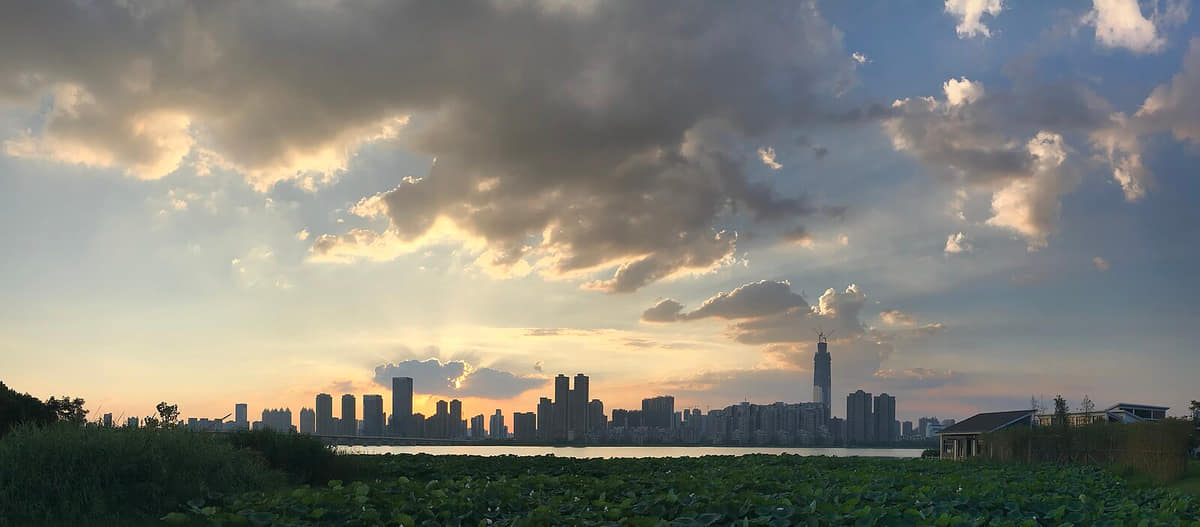
Three days should compare the three historic towns, cross the Yangtze at different scales, connect museum and university knowledge, and make room for lake systems or industrial and neighborhood history.
A culture-first three-day route
Day 1
Three towns by water
Hankou riverfront → ferry or bridge → Wuchang → Hanyang
Compare commercial, educational-administrative, and industrial histories through real river crossings.[1][2][3][4]
Day 2
Museum to lake
Hubei Provincial Museum → East Lake greenway
Connect middle-Yangtze collections and ancient music with contemporary lake ecology, universities, and public recreation.[1][2][3][4]
Day 3
Deep city
Panlongcheng → Hankou heritage → modern bridge
Move from early settlement to port-city streets and twentieth-century metropolitan infrastructure.[1][2][3][4]
Keep the pace realistic
Build each day around Hankou, Wuchang, or Hanyang and one planned river crossing; repeating cross-city trips wastes time and hides the logic of the three towns.
Treat East Lake as a large landscape system with multiple gates and routes, not as a single stop that can be paired casually with distant central attractions.
Use museums and university collections to connect ancient regional history, 1911 memory, modern industry, science, medicine, and contemporary urban life.
Start breakfast exploration early, order in small portions, and confirm queues, ingredients, seating, and hygiene rather than relying on viral shop rankings.
What to eat along the way
Fourteen entries treat breakfast as a system rather than one icon: hot-dry noodles, three-fresh doupi, mianwo, shaomei, soup dumplings, beef noodles, fermented-rice foods, lotus-root soup, fish, duck and wetland ingredients, followed by menu-safety guidance. Images are servings, not origin proof or universal recipes.
Mixed breakfast noodles
Hot-dry noodles
Alkaline noodles are commonly mixed with sesame-based sauce, oil, preserved vegetables, scallion and shop-specific seasoning; convenient packaged standards and a freshly served bowl are not the same product.[28][32][33]
Griddled rice parcel
Three-fresh doupi
A thin egg-and-starch skin encloses seasoned sticky rice and fillings before browning and cutting; the English word ‘tofu skin’ can mislead because this dish is a composed griddled parcel.[29][30][27]
Fried rice-and-legume batter
Mianwo
A ring-shaped fried breakfast varies in thickness, crispness, sesame and batter ratio; one plated version should not be treated as a citywide standard.[28][31][33]
Steamed wheat wrapper
Shaomei
Wuhan breakfast versions often emphasize peppery glutinous-rice filling, but wrapper, seasoning, fat and portion vary by shop.[28][31]
Filled steamed buns
Soup dumplings
Thin wrappers, meat filling and hot liquid demand careful eating; exact style, broth, meat and lineage claims differ among businesses.[28][31]
Noodle-shop staple
Beef noodles
Broth, beef cut, chili, pickles, noodle texture and portion create many neighborhood variants rather than one municipal formula.[28][31]
Why Wuhan belongs in this collection
Wuhan adds the Yangtze–Han confluence, three-town urban form, lakes, universities, industrial history, flood adaptation, museums, and breakfast culture. This guide is a planning layer built from the city’s approved atlas profile rather than a booking or ranking page.