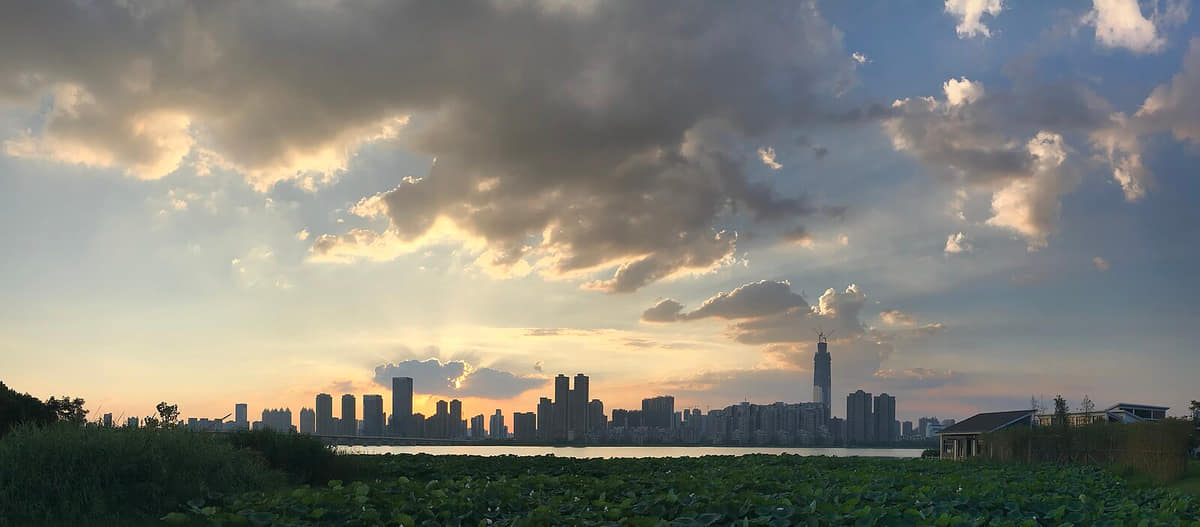
Spring is floral but changeable, while autumn is usually the easiest for long walks. Summer is extremely hot, humid, and storm-prone; winter is cold and damp, and river or lake conditions can reshape outdoor plans.
Season by season
March–May
Spring
Rapid warming, frequent rain, flowers, and changing river levels make flexible lake and neighborhood plans useful.[1][2][3][4]
June–August
Summer
Very hot humid conditions, heavy rain, and flood risk make shade, hydration, indoor stops, and official weather alerts essential.[1][2][3][4]
September–November
Autumn
Clearer and less humid periods favor river crossings, lake greenways, campuses, museums, and long walks.[1][2][3][4]
December–February
Winter
Cold damp spells can feel sharp; museums, food routes, historic interiors, and short waterfront sections combine well.[1][2][3][4]
How climate changes the plan
Humid subtropical monsoon climate
Summers are very hot, humid, and rainy; winters are cool and damp, while spring rain and autumn clarity strongly affect river and lake use.[8][10]
Build each day around Hankou, Wuchang, or Hanyang and one planned river crossing; repeating cross-city trips wastes time and hides the logic of the three towns.
Treat East Lake as a large landscape system with multiple gates and routes, not as a single stop that can be paired casually with distant central attractions.
Use museums and university collections to connect ancient regional history, 1911 memory, modern industry, science, medicine, and contemporary urban life.
Start breakfast exploration early, order in small portions, and confirm queues, ingredients, seating, and hygiene rather than relying on viral shop rankings.
Flexible city routes
Three towns by water
Hankou riverfront → ferry or bridge → Wuchang → Hanyang
Compare commercial, educational-administrative, and industrial histories through real river crossings.[1][2][3][4]
Museum to lake
Hubei Provincial Museum → East Lake greenway
Connect middle-Yangtze collections and ancient music with contemporary lake ecology, universities, and public recreation.[1][2][3][4]
Deep city
Panlongcheng → Hankou heritage → modern bridge
Move from early settlement to port-city streets and twentieth-century metropolitan infrastructure.[1][2][3][4]
Why Wuhan belongs in this collection
Wuhan adds the Yangtze–Han confluence, three-town urban form, lakes, universities, industrial history, flood adaptation, museums, and breakfast culture. This guide is a planning layer built from the city’s approved atlas profile rather than a booking or ranking page.