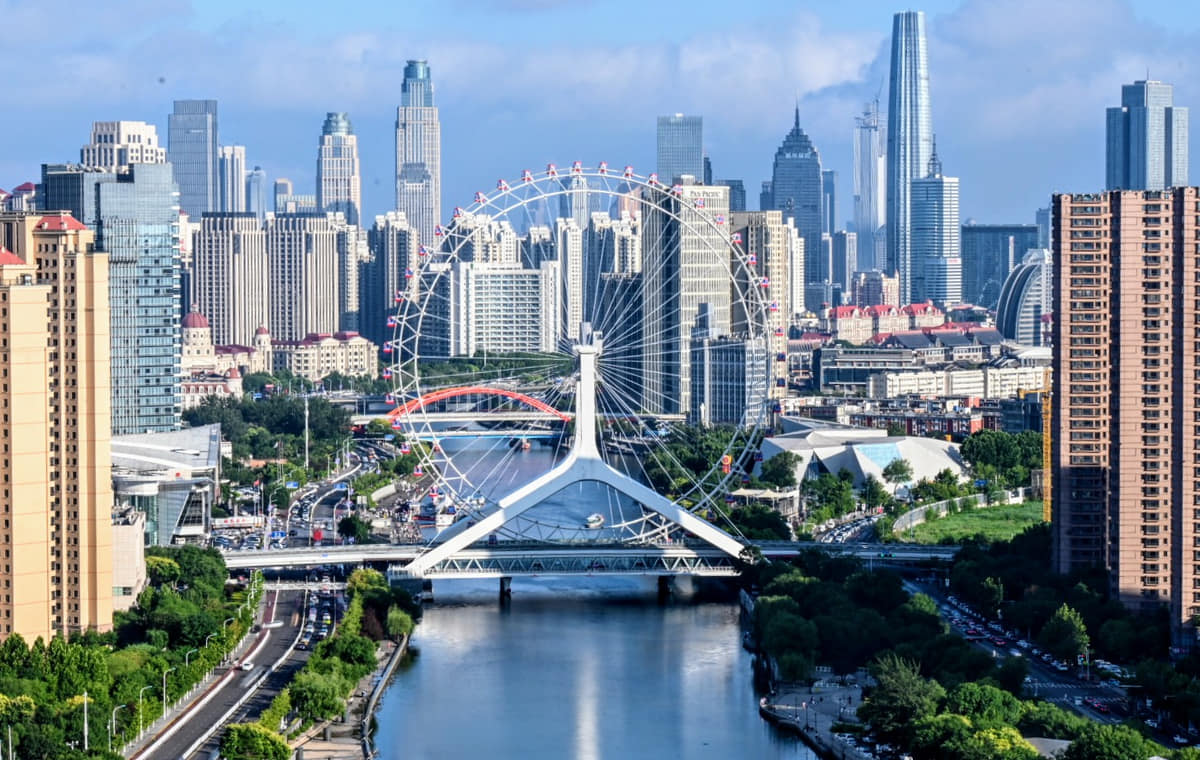
Three days should follow the Hai River through civic and commercial history, move into lived neighborhoods and food traditions, then use one full day to understand the municipality beyond its historic center.
A culture-first three-day route
Day 1
Read the river
Tianjin Eye → bridges → central waterfront
Follow infrastructure, public space, skyline change, and night-time use along the Hai River.[1][2][3][4]
Day 2
Architecture and everyday craft
Five Great Avenues → old city → Ancient Culture Street
Compare concession-era residences with markets, temples, prints, clay figures, and local snacks.[1][2][3][4]
Day 3
From city to coast
Tianjin Museum → Binhai waterfront → port context
Move from municipal history to the coastal scale that still shapes logistics, industry, and wetlands.[1][2][3][4]
Keep the pace realistic
Group central architecture and museum visits by Hai River crossing because bridge approaches, security checks, and one-way streets can add more time than a flat map suggests.
Treat the Five Great Avenues, Italian-style area, old commercial streets, and ordinary residential lanes as different historical settings rather than one visual category.
Binhai, the port, wetlands, and coastal museums require a separate transport plan and should not be inserted casually into a compact central-city day.
Use food formats to structure mornings and evenings, but verify opening times and ingredients because legacy names and online lists can outlast the businesses they describe.
What to eat along the way
Fourteen entries move from breakfast icons to technique, coastal supply chains, county condiments, allergens, dietary respect, labor, traceability and live safety checks.
Tianjin breakfast is a network of stalls, neighborhood shops, mills, oil, eggs, sauces, labor and rapid service. Jianbing, guobacai, tofu pudding, tea soup and fried foods vary by maker and district; no single table is universal.
Batter is spread thin on a hot griddle, combined with egg, aromatics, sauce and a crisp fried element, then folded for immediate eating. Flour mix, oil, soy, sesame, wheat, egg, chili and cross-contact require direct confirmation.
Thin mung-bean crepes are cut and softened in savory gravy, then finished with condiments. Despite the translated sound, it is not rice crust; wheat, soy, sesame, coriander, chili and shop-specific sauce should be checked.
Pleated steamed buns are part of a broad Tianjin food world; Goubuli is one famous brand and heritage technique, not the owner of every local bun tradition. Fillings, pork, stock, wheat, soy, sesame and serving size vary.
Strands of dough are seasoned, layered, twisted and fried to create a durable crisp pastry. Exhibition pieces can be dramatically oversized; retail size, fillings, sesame, nuts, wheat, sugar and oil differ by product.
A glutinous-rice exterior and sweet filling are fried for a crisp-soft contrast. Brand history should remain separate from the wider technique; hot oil, sugar, filling, wheat or nut cross-contact and serving temperature need attention.
Tianjin adds Hai River urbanism, port history, concession-era streets, industrial heritage, northern foodways, and a municipality that reaches the Bohai coast. This guide is a planning layer built from the city’s approved atlas profile rather than a booking or ranking page.