
Best Time to Visit Tianjin: Weather and Seasons
Compare Tianjin by season, including weather trade-offs, walking conditions, indoor alternatives, and the city experiences that change through the year.
The short answer
Spring and autumn usually provide the easiest walking conditions, although spring can be windy and dusty. Summer is hot, humid, and storm-prone; winter is cold and dry but can offer clear architectural views and quieter museums.
Season by season
Spring
Dry air, wind, and rapid warming make layers useful; riverfront trees and neighborhood parks become active.[1][2][3][4]
Summer
Hot, humid weather and concentrated rainfall favor shaded streets, museums, and later waterfront walks.[1][2][3][4]
Autumn
Lower humidity and clearer days suit long walks through historic districts and along the Hai River.[1][2][3][4]
Winter
Cold, dry weather, wind, and indoor heating define the season; coastal areas can feel especially exposed.[1][2][3][4]
How climate changes the plan
Warm-temperate, semi-humid continental monsoon climate
Hot, humid summers contrast with cold, dry winters; spring is windy and most rain falls in summer.[1][2][3][4]
- Group central architecture and museum visits by Hai River crossing because bridge approaches, security checks, and one-way streets can add more time than a flat map suggests.
- Treat the Five Great Avenues, Italian-style area, old commercial streets, and ordinary residential lanes as different historical settings rather than one visual category.
- Binhai, the port, wetlands, and coastal museums require a separate transport plan and should not be inserted casually into a compact central-city day.
- Use food formats to structure mornings and evenings, but verify opening times and ingredients because legacy names and online lists can outlast the businesses they describe.
Flexible city routes
Read the river
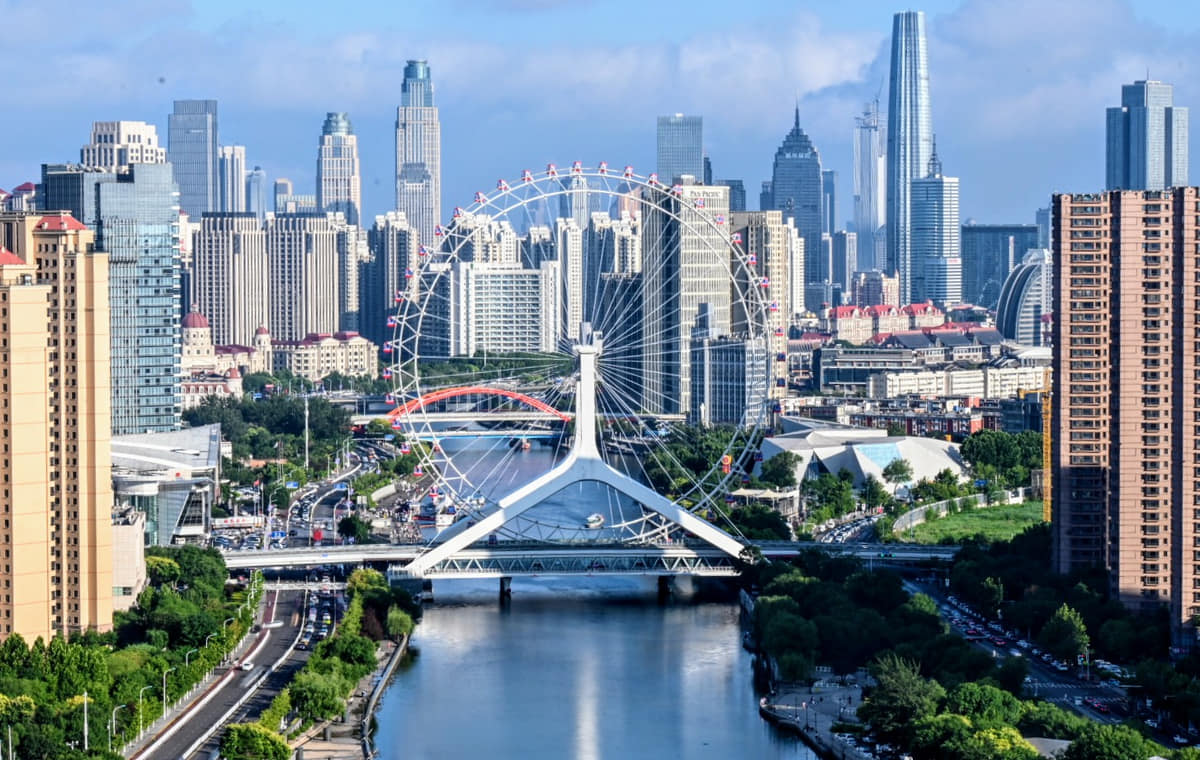
Tianjin Eye → bridges → central waterfrontFollow infrastructure, public space, skyline change, and night-time use along the Hai River.[1][2][3][4]
Architecture and everyday craft
Five Great Avenues → old city → Ancient Culture StreetCompare concession-era residences with markets, temples, prints, clay figures, and local snacks.[1][2][3][4]
From city to coast
Tianjin Museum → Binhai waterfront → port contextMove from municipal history to the coastal scale that still shapes logistics, industry, and wetlands.[1][2][3][4]