
Hangzhou Food Guide: What to Eat and How to Explore
Explore Hangzhou through signature dishes, meal formats, markets, food safety, neighborhood context, and the cultural practices around eating.
The short answer
Hangzhou food is often approached through freshwater ingredients, gentle braising, seasonal vegetables, tea-linked dishes, noodles, and Jiangnan sweets. Famous names still vary widely by kitchen and season.
What to eat
Fourteen entries move beyond signature dishes to technique, county produce, tea service, freshwater systems, allergens, traceability, labor and safety.
City and county table
Hangzhou cuisine includes restaurant classics, household dishes, breakfast, snacks, migrant kitchens and county produce. No four signature dishes can represent a municipality of 12.7 million people.[6][1]
West Lake fish in vinegar gravy
A whole fish is cooked to retain texture and finished with a glossy vinegar-based sauce. Species, source, bones, sugar, soy, wheat and timing vary; the name does not guarantee fish came from West Lake.[6][1]
Dongpo pork
Layered pork belly is braised with seasonings until tender. Recipes differ in soy, wine, sugar and serving size; diners should confirm pork, alcohol, wheat, soy, sodium and dietary restrictions.[6][1]
Longjing prawns
Prawns and tea leaves are lightly seasoned to emphasize texture and aroma. Shellfish allergy is central, and tea origin, stock, egg, starch and cross-contact should be checked with the kitchen.[6][1]
Pian'erchuan
Noodles with pork, preserved greens and bamboo shoots connect pantry preservation with seasonal ingredients. Wheat, pork, soy, sodium, pickling and stock vary by maker.[6][1]
Beggar's chicken
Chicken is associated with wrapping and slow cooking traditions, but modern restaurant methods differ. Confirm poultry, stuffing, lotus leaf, alcohol, soy, wheat, nuts and food-safety controls.[6][1]
Congbao hui
A thin wrapper, fried dough and scallion are pressed on a griddle and served with sauce. Wheat, gluten, oil, soy, sesame, sweetness and the historical story attached to the name should be checked rather than assumed.[6][1]
Dingsheng cake
Soft molded cakes commonly use rice flour and sweet filling. Color, bean paste, sugar, wheat cross-contact, nuts and celebratory meanings vary across makers and periods.[6][1]
Food as a way to read the city
A composed lake
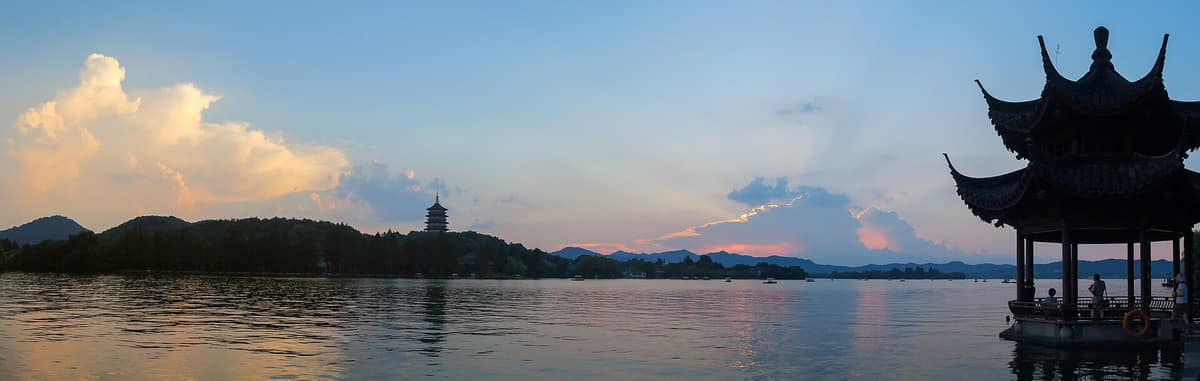
West Lake culture lies in relationships among water, hills, paths, architecture, vegetation, text and framed views. The landscape is maintained and interpreted, not untouched nature.[5]
Longjing as a system
Tea connects cultivar, soil, weather, picking, hand processing, grading, brewing, hospitality, certification and trade. A tea-field photograph covers only cultivation terrain.[6]
Silk from fiber to society
Sericulture and weaving link mulberry landscapes, silkworm care, reeling, dyeing, loom skill, design, labor and global circulation. Museum architecture should lead to this fuller production chain.[9]
Fan craft
Hangzhou fan making combines selecting materials, frame work, paper or silk mounting, painting, calligraphy and assembly. Heritage recognition does not freeze workshop methods or guarantee every retail fan is locally made.[11]
Seal art and Xiling
Seal carving connects script study, stone, knife work, impressions, calligraphy, painting, collecting and scholarly communities. Xiling Seal Society is both a physical site and an institution with a changing history.[5]
Poetry, painting and naming
Texts and images do not merely decorate Hangzhou; they shape routes, viewpoints and public memory. Famous associations should be presented as layered reception histories, not automatically verified biographies.[5]
Plan a responsible food day
- Choose one coherent West Lake side or loop rather than racing among every named scene.
- Start hill and tea-village walks early, especially in warm weather, and keep rain protection close.
- Use the Grand Canal and its museums to balance the lake-centered image with trade, craft, and neighborhood history.
- Separate scenic West Lake from the much larger contemporary city of universities, offices, housing, and technology districts.