
Best Time to Visit Hangzhou: Weather and Seasons
Compare Hangzhou by season, including weather trade-offs, walking conditions, indoor alternatives, and the city experiences that change through the year.
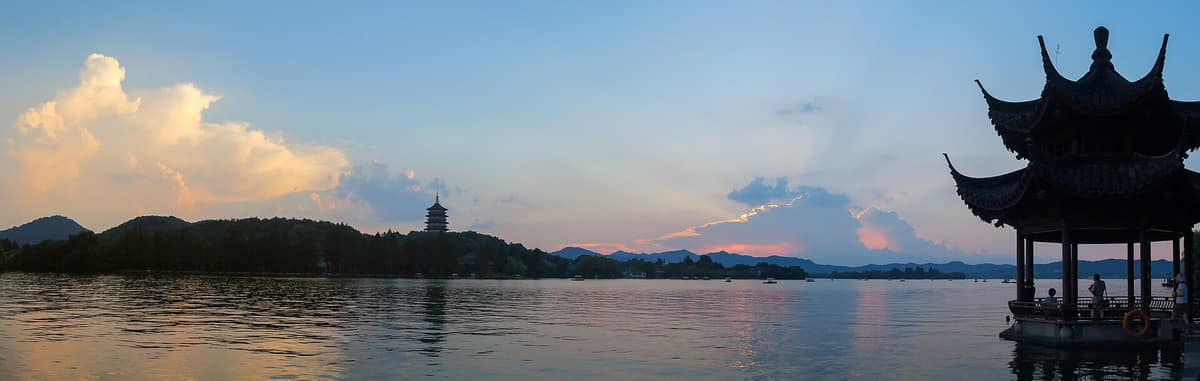
The short answer
Spring and autumn are the most comfortable for lake and tea-country walking, but both can be busy. Summer is hot, humid, and wet; winter is quieter and can be cold and damp.
Season by season
Spring
Flowers, new tea growth, rain, and changing temperatures make layers and waterproof footwear useful.[1][2][3][4][5][6]
Summer
Heat, humidity, plum rain, thunderstorms, and possible typhoon effects make shade and indoor breaks important.[1][2][3][4][5][6]
Autumn
Cooling air and lower humidity often support lake, canal, river, and hill walking.[1][2][3][4][5][6]
Winter
Cool damp weather, occasional frost, and quieter landscapes produce a different reading of gardens and water.[1][2][3][4][5][6]
How climate changes the plan
Subtropical monsoon climate
Summers are long, hot, humid, and rainy; winters are cool and comparatively drier. Spring and autumn are shorter transition seasons, and typhoons can affect the region.[1][2][3][4][5][6]
- Choose one coherent West Lake side or loop rather than racing among every named scene.
- Start hill and tea-village walks early, especially in warm weather, and keep rain protection close.
- Use the Grand Canal and its museums to balance the lake-centered image with trade, craft, and neighborhood history.
- Separate scenic West Lake from the much larger contemporary city of universities, offices, housing, and technology districts.
Flexible city routes
Composed landscape
West Lake causeway → temple or garden → hill viewpointRead how paths, inscriptions, architecture, vegetation, and framed views shape experience.[1][2][3][4][5][6]
Tea as a system
Tea museum → village landscape → tastingConnect plant ecology, labor, processing, aroma, and commerce.[1][2][3][4][5][6]
Three urban waters
Grand Canal → West Lake → Qiantang RiverCompare inherited transport water, composed cultural landscape, and metropolitan riverfront.[1][2][3][4][5][6]