
Guangzhou First-Time Guide: What to See and How to Plan
Plan a first visit to Guangzhou with realistic timing, cultural context, priority landmarks, seasonal guidance, and routes that reflect the city's geography.
The short answer
Three full days let you combine the historic river city, Lingnan architecture and museums, and a food-led neighborhood day. The metropolis is too dispersed for a single central checklist.
What to prioritize
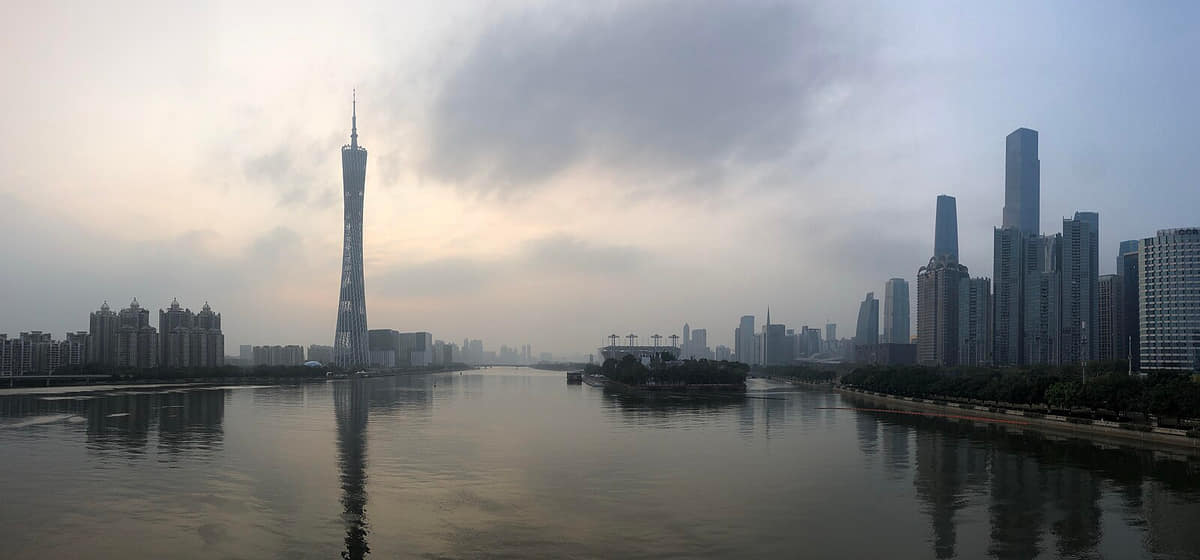
Guangzhou is best understood as an estuarine metropolis rather than a single skyline. The Pearl River and its channels connect the old Yuexiu–Liwan core, Haizhu and Pazhou, Tianhe's civic and commercial center, eastern port and industrial districts, Panyu's towns and transport hubs, northern mountain landscapes, and Nansha's coastal wetlands. The municipality covers eleven districts; distance, water, topography and development history create substantial variation between them. Its history is visible in layers that must not be collapsed: Nanyue archaeological remains and objects, long-distance maritime exchange, lineage institutions and craft architecture, religious sites, nineteenth- and twentieth-century waterfront transformation, protected neighborhoods, and a post-1980s multi-center metropolis. Museums, conservation plans and excavated context are stronger evidence than legends or visual resemblance. Cantonese language, Cantonese opera, Guangdong music, lion dance, Guangcai, Guang embroidery, flower markets, neighborhood storytelling and food practices remain living culture, not frozen exhibits. Mandarin and many other Sinitic varieties and languages are also part of daily metropolitan life. No district, accent, occupation, generation or migration history can stand in for all residents. The city has a humid subtropical monsoon climate: long hot humid summers, short mild winters, a pronounced rainy season, thunderstorms, high humidity and tropical-cyclone risk. Weather, flooding, heat, transport, venue opening and food safety are live conditions; this page supplies durable context and directs time-sensitive decisions to current official services.
Pearl River central section
The primary orientation system joining old riverfronts, bridges, islands, embankments, Haizhu, Tianhe and the Canton Tower axis; water and city must be read together.[7][9]
Nanyue King Museum
Two main exhibition areas connect an excavated royal tomb, palace-and-garden remains, objects, conservation and interpretation while preserving their different provenances.[10][11]
Chen Clan Ancestral Hall
A lineage and educational complex whose spatial organization and coordinated decorative crafts reveal institutions, workshops, materials and later conservation.[14]
Enning Road
A lived-in historic district where qilou, concrete-era buildings, lanes, residents, opera associations, repair, commerce and tourism overlap address by address.[16]
Cantonese Opera Art Museum
A purpose-built museum, garden and stage embedded in a neighborhood with continuing opera associations; institution, performance and old-city setting complement rather than replace one another.[17][18]
Shamian and the old riverfront
An island grid and layered waterfront of embankments, parks, religious, diplomatic, customs, commercial and residential buildings requiring building-by-building chronology.[15][9]
Build a realistic first visit
- Organize days by metro corridor and river crossing; the administrative city is much larger than the traditional center.
- Treat morning tea as a meal with pacing and shared ordering, not as a quick tasting stop between attractions.
- Use the Nanyue collections, Chen Clan complex, and older streets to distinguish different periods of Lingnan history.
- Keep an indoor museum block for high heat, heavy rain, or thunderstorms and move river walks toward the evening.
Seasonal orientation
Spring
Warm, increasingly humid weather, frequent rain, and low cloud reward breathable layers and flexible indoor-outdoor plans.[1][2][3][4]
Summer
Long hot humid periods, heavy rain, thunderstorms, and tropical cyclones require shade, hydration, and official alerts.[1][2][3][4]
Autumn
Drier and somewhat cooler conditions often suit old-neighborhood walks, mountain paths, river routes, and outer-district travel.[1][2][3][4]
Winter
Generally mild but sometimes damp or suddenly cool; this is a comfortable season for long walks and cross-district exploration.[1][2][3][4]