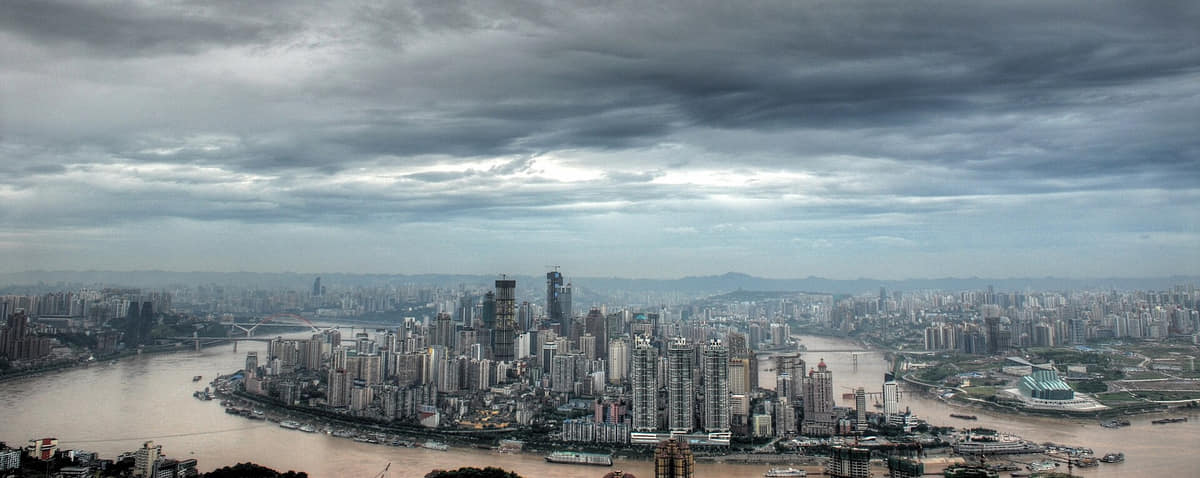
Three days should use elevation and river crossings as the organizing logic, then move beyond contemporary skyline viewpoints into museums, neighborhoods, and municipal scale.
A culture-first three-day route
Day 1
Vertical core
Liziba → ridge streets → Jiefangbei → Hongya Cave
Use rail, lifts, stairs, and river overlooks to test how many apparent ground levels one route crosses.[1][2][3][4]
Day 2
Two rivers
Chaotianmen → ferry or bridge → cableway → Nan'an
Read port history, confluence, bridges, banks, skyline, and everyday crossings from both sides.[1][2][3][4]
Day 3
Municipal depth
Three Gorges Museum → Dazu, Wulong, or an eastern county
Pair central collections with one outer landscape to avoid treating the core as the whole municipality.[1][2][3][4]
Keep the pace realistic
Use landmarks, station exits, elevation, and river level together; a short horizontal distance can hide stairs, bridges, or multiple street decks.
Do not schedule every skyline viewpoint. Choose one or two, then spend time inside ordinary streets and transit systems.
Cableway, river cruise, and popular cave-area operations are live services with queues and weather dependence.
Outer sites such as Dazu or Wulong require a dedicated day and should not be represented as central-city stops.
What to eat along the way
Fourteen entries move from famous dishes to district systems, fermentation, labour rhythms and evidence limits, with no restaurant endorsement and no claim of one canonical Chongqing recipe.
Shared meal with many variants
Hotpot
Broth may use beef tallow or other oils, chiles, peppercorn and aromatics; sliced meat, offal, vegetables, soy products and dipping sauces vary. Shop, household, religious, health, allergy and dietary contexts matter.[31][33]
Seasoning-centred everyday noodles
Xiaomian
Fresh alkaline noodles and greens meet a bowl pre-seasoned with soy, chile oil, peppercorn, garlic, ginger, preserved vegetables, peanuts, sesame or other condiments; broth and toppings remain optional and shop-specific.[32][31]
Blood-curd and offal dish family
Maoxuewang
Chongqing-style versions combine blood curd with offal, meat, vegetables, bean sprouts, chile oil and spices in many proportions. Ingredient identity, cooking temperature and safe handling require direct confirmation.[31]
Chicken-and-chile restaurant dish
Laziji
Small fried chicken pieces, dried chiles, peppercorn and aromatics produce a dry, fragrant dish with many restaurant variants. A generic image cannot establish Chongqing venue or canonical origin.[31]
Fast-changing popular restaurant repertoire
Jianghu cuisine
Strong-flavoured fish, chicken, rabbit, offal, pickles and aromatics circulate through informal restaurants, roadside places and urban food districts. The category is porous and changes with fashion, chefs and local naming.[31][33]
Preserved mustard-stem system
Fuling zhacai
Agriculture, salting, pressing, fermentation, slicing, seasoning, packaging and household use form a larger system than one brand. Raw-material origin, additives, sodium and current producer claims require label-level checks.[31][33]
Why Chongqing belongs in this collection
Chongqing adds mountain-and-river topography, vertical transport, layered streets, wartime memory, hotpot, and a vast municipality. This guide is a planning layer built from the city’s approved atlas profile rather than a booking or ranking page.