
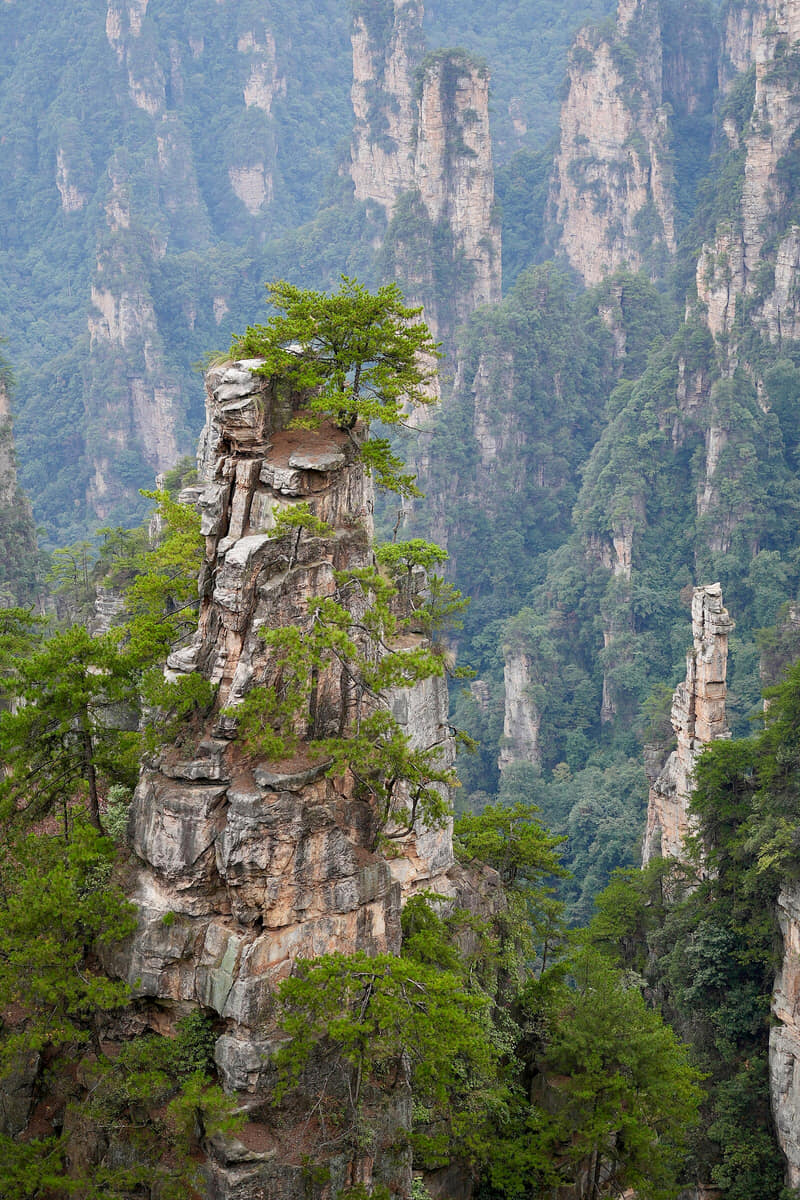
Conservation zoning, farms, village routes, tourism revenue, guiding work, relocation, weather, and visitor pressure create benefits and constraints that are not experienced equally.[1][2][3][4]
The evidence is distributed across museums, landscapes, working neighborhoods, district and county routes, and local collections. Reading them together avoids reducing Zhangjiajie to one postcard image.[1][2][3][4]
Zhangjiajie is best understood as connected systems rather than a single attraction.[1][2][3][4]
This account separates documented facts from interpretation, avoids political positioning, and leaves room for different residents' experiences.[1][2][3][4]
What does this reveal about Zhangjiajie?
Zhangjiajie is more than sandstone pillars: Wulingyuan's protected landscape, Tianmen Mountain, Tujia and other community traditions, Sangzhi county history, farms, forest work, tourism labor, and access constraints shape the municipality.[1][2][3][4]