
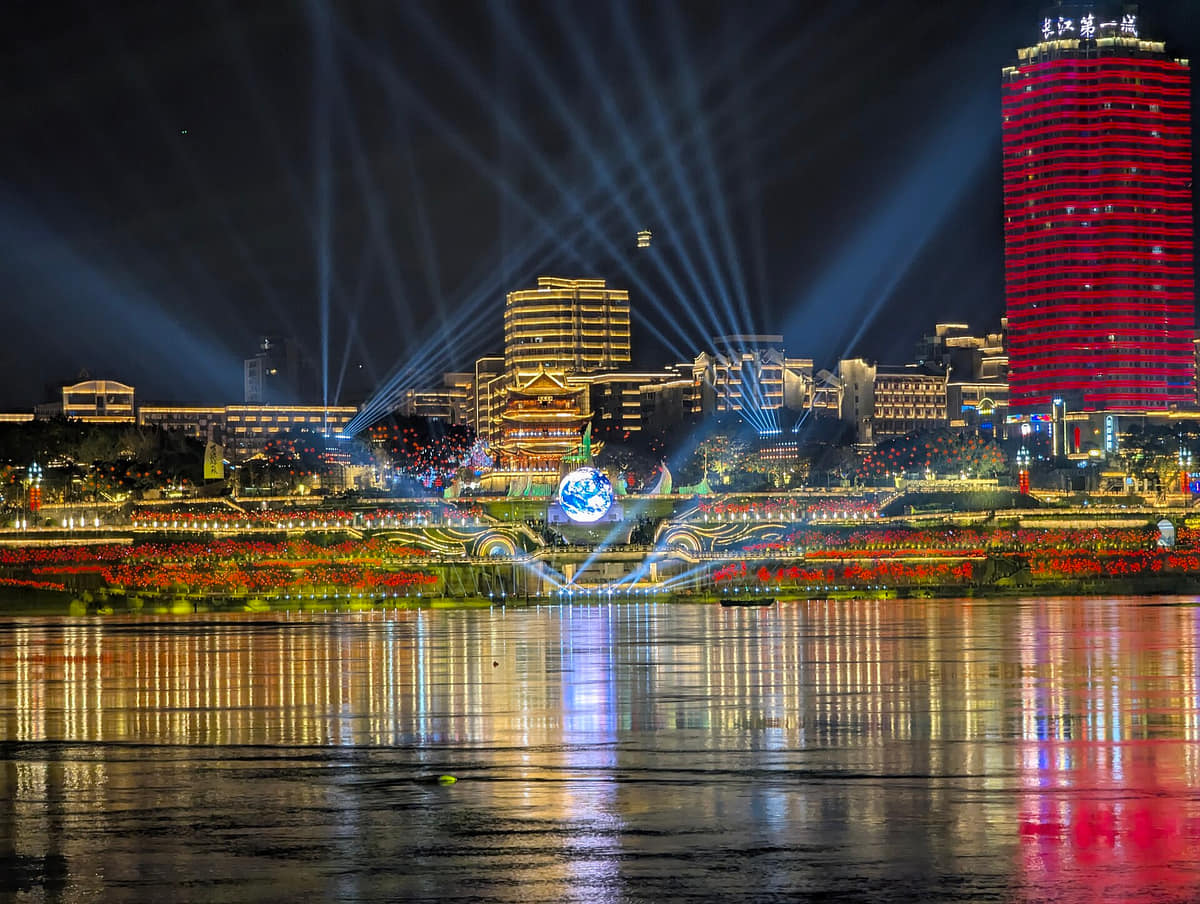
Yibin's confluence is both a naming point and a working landscape of currents, ports, bridges, ecology, industry, neighborhoods, and regional imagination.[1][2][3][4]
The evidence is distributed across museums, landscapes, working neighborhoods, county routes, and local collections. Reading them together avoids reducing Yibin to one postcard image.[1][2][3][4]
Yibin is best understood as connected systems rather than a single attraction.[1][2][3][4]
The result is a neutral, place-based explanation: it records change, identifies sources, and leaves room for different residents' experiences.[1][2][3][4]
What does this reveal about Yibin?
A city at the Min–Jinsha confluence where the Yangtze begins by name, while bamboo landscapes, historic brewing, river-port trade, old towns, karst, and ten county-level units extend the story far beyond the core.[1][2][3][4]