
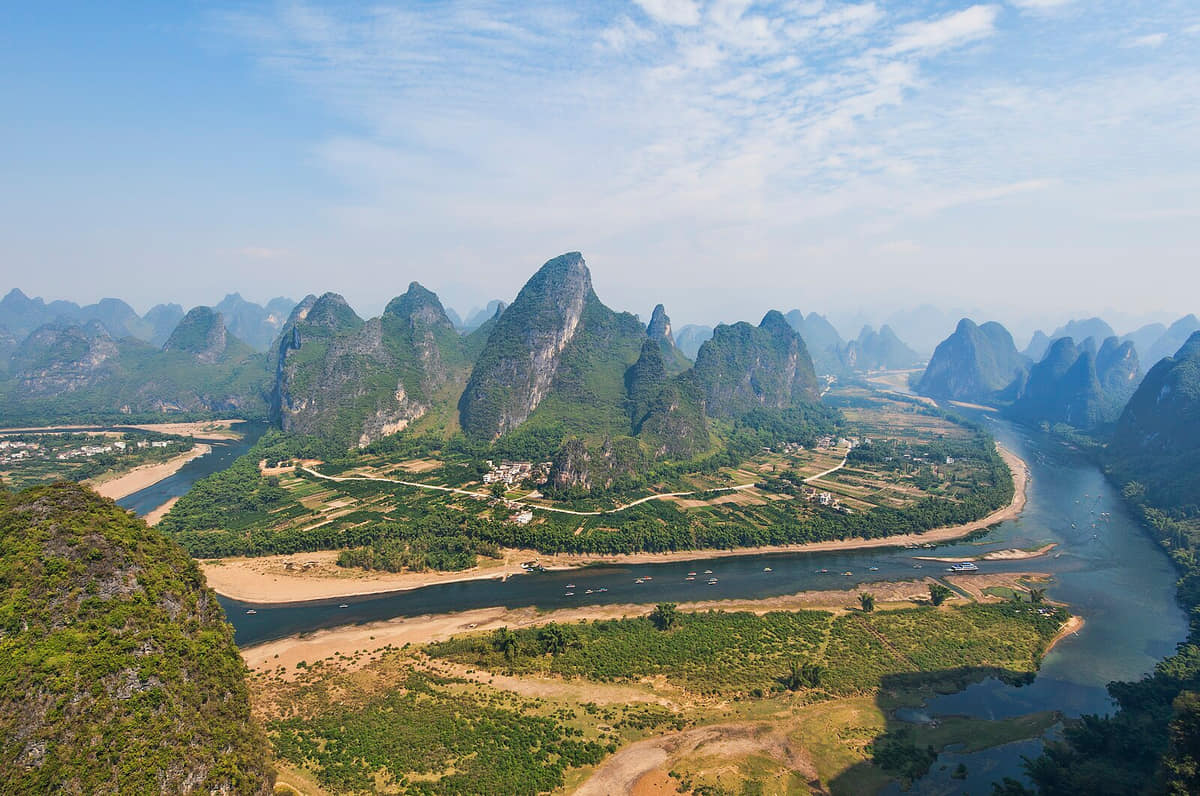
Steep limestone, caves, flood cycles, narrow fields, river transport, tourism, farming, and county access create opportunities and limits that vary across the municipality.[1][2][3][4]
The evidence is distributed across museums, landscapes, working neighborhoods, district and county routes, and local collections. Reading them together avoids reducing Guilin to one postcard image.[1][2][3][4]
Guilin is best understood as connected systems rather than a single attraction.[1][2][3][4]
This account separates documented facts from interpretation, avoids political positioning, and leaves room for different residents' experiences.[1][2][3][4]
What does this reveal about Guilin?
Guilin is a large seventeen-unit municipality where the Li River's karst core, Yangshuo tourism, Longji terraces, northern county history, Zhuang and Yao community traditions, caves, farms, and market towns differ sharply.[1][2][3][4]