
Suzhou First-Time Guide: What to See and How to Plan
Plan a first visit to Suzhou with realistic timing, cultural context, priority landmarks, seasonal guidance, and routes that reflect the city's geography.
The short answer
Two full days are enough for one coherent old-city and garden route plus a canal, museum, or water-town day. A third day makes room for Taihu or a county-level city without turning Suzhou into a hurried collection of garden names.
What to prioritize
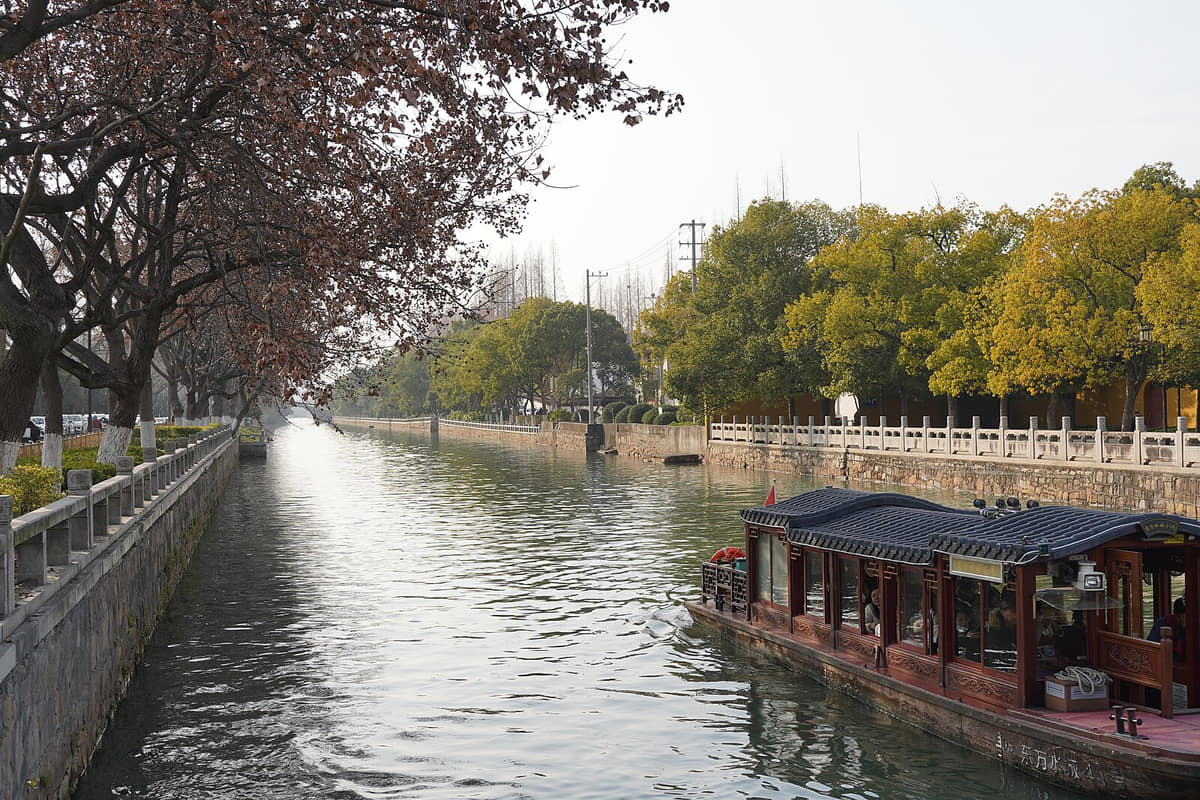
Suzhou is a municipality of several connected landscapes: the canal-lined old city, Taihu-facing districts, the eastern lake-and-industry corridor, Yangtze port towns, and four county-level cities. Treating only the gardens as 'Suzhou' hides most of the place. The old city is unusually legible because waterways, lanes, houses, gardens, temples and public institutions still sit close together. Conservation, tourism, residence, drainage, mobility and small business therefore operate in the same limited space. Suzhou's craft reputation rests on skilled labor and institutions, not decorative labels. Garden making, silk weaving, embroidery, Kunqu, pingtan and collection care each depend on materials, training, rehearsal, documentation and audiences. Contemporary Suzhou is also a major manufacturing and logistics city. Industrial Park, Kunshan, Taicang, Changshu and Zhangjiagang connect research, factories, housing, migration and port movement; these systems belong in the same city profile as the gardens and canals.
Classical Gardens of Suzhou
A nine-part World Heritage property best read as distinct gardens with different plans, dates and conservation histories—not one interchangeable style.[1][5][6][8][10]
Humble Administrator's Garden
A large water-centered garden whose sequence of views, planting and architecture requires time and movement rather than one photo stop.[1][5][6][8][10]
Lingering Garden
A garden known through spatial compression, varied courts and architectural framing. Current capacity and access should be checked before visiting.[1][5][6][8][10]
Master of the Nets Garden
A compact urban garden where scale depends on carefully arranged water, buildings and viewpoints.[1][5][6][8][10]
Lion Grove Garden
A rockery-centered garden whose close routes can be crowded and visually complex. Stone, repair and circulation need separate explanation.[1][5][6][8][10]
Suzhou Museum
A contemporary public museum joining collections, changing exhibitions and a carefully designed building beside older heritage sites.[1][5][6][8][10]
Build a realistic first visit
- Reserve only the gardens that matter most to your reading of the city; several dense garden visits in one day can blur distinct histories, scales, and design ideas.
- Walk Pingjiang or Shantang at quieter hours and look beyond retail frontage to bridges, water management, residential access, and everyday neighborhood use.
- Tongli and other water towns are separate lived settlements with ticketing and conservation pressures, not interchangeable photo stops attached to central Suzhou.
- Use the Grand Canal, Suzhou Museum, and one contemporary district to connect heritage stewardship with the municipality’s manufacturing and metropolitan scale.
Seasonal orientation
Spring
Spring in Suzhou can change quickly; rain, wind, pollen, fog, or elevation should be checked before long outdoor routes.[1][2][3][4]
Summer
Hot, rainy summers and cool, damp winters shape canal neighborhoods, gardens, lake margins, and farming across the municipality.[1][2][3][4]
Autumn
Autumn often provides clearer intervals and cooler evenings, but current forecasts still matter for coast, mountain, river, and county routes.[1][2][3][4]
Winter
Winter conditions vary across the municipality; layered clothing and paired indoor–outdoor routes are the safest general approach.[1][2][3][4]