
Harbin First-Time Guide: What to See and How to Plan
Plan a first visit to Harbin with realistic timing, cultural context, priority landmarks, seasonal guidance, and routes that reflect the city's geography.
The short answer
Plan two to three full days in winter and at least two in summer. Winter travel needs extra time for clothing, indoor warming, transport, and edition-specific event logistics.
What to prioritize
Harbin sits on both banks of the Songhua River in southern Heilongjiang. Its municipality spans a dense urban core and extensive districts, counties and county-level cities, so a complete reading must move beyond Central Street and winter festivals to river corridors, agricultural settlements and county towns. Its climate is a temperate continental monsoon type with a long, very cold winter, a short warm-to-hot summer and brief transitions. That baseline shapes heating, clothing, food storage, river use and seasonal construction, but it must not be confused with live weather, ice safety or a forecast. Modern Harbin grew rapidly around the Chinese Eastern Railway from the late nineteenth century, within an older river landscape with earlier settlements and regional histories. Railway investment, migration and trade brought Chinese and international communities together, leaving religious, commercial, industrial and residential layers that survive unevenly through original fabric, alteration, restoration and reuse. The city is simultaneously a music centre, ice-and-snow production base, transport hub, manufacturing and research city, and a place of difficult wartime memory. This edition treats architecture, food and festivals as evidence-bearing practices rather than slogans, and separates historical fact, present use, commercial claim and live visitor information.
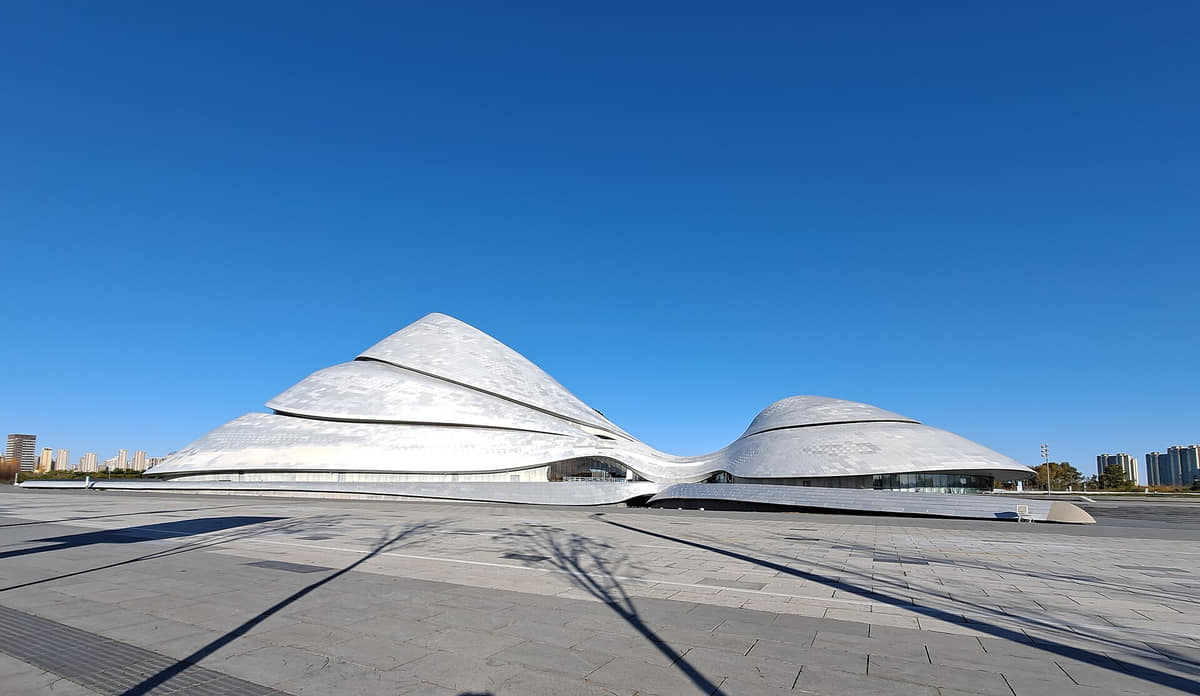
Harbin Grand Theatre
A contemporary riverside performance building whose flowing massing contrasts with the city's historic streets. Read it through architecture and performance infrastructure; current events, access and operations remain live.[11][13]
Central Street
A long pedestrian commercial spine with stone paving and mixed historic, restored and reconstructed facades. Distinguish building history from tenant marketing and verify crowd, weather and accessibility conditions.[13]
Saint Sophia Cathedral
A former Orthodox church now encountered as museum architecture and public square. Religious history, structural fabric, restoration and present exhibition use are related but not interchangeable.[13]
Harbin Ice and Snow World
An edition-based winter landscape built from ice, snow, steel, light and temporary operations. Do not reuse a previous edition's map, theme, dates, ticket or safety information as current fact.[9][10]
Sun Island
A large riverside landscape associated with parks, public art and snow-sculpture activity. Seasonal access, individual artwork records, ecology and event boundaries need separate evidence.[9][5]
Flood Control Memorial Tower
A civic monument at the Songhua waterfront that anchors memory of the 1957 flood response. Use it as an entry to documented history, not as a present flood-safety indicator.[5]
Build a realistic first visit
- Check the current edition, dates, operating status, and safety rules for every ice or snow venue.
- Build regular indoor warming stops into winter days and protect batteries, skin, hands, and feet from extreme cold.
- Read Central Street architecture through railway, migration, commerce, restoration, and present use rather than style labels alone.
- In summer, replace ice-festival assumptions with the Songhua waterfront, Sun Island, music, parks, and long evening light.
Seasonal orientation
Spring
Thaw, wind, rapid warming, and muddy transitions change river and street conditions quickly.[1][2][3][4]
Summer
Warm, humid days, long light, greenery, and concentrated rain create a very different city from the winter image.[1][2][3][4]
Autumn
Cool, clear weather and colored foliage arrive early; the first freezes can come well before winter tourism begins.[1][2][3][4]
Winter
Very cold temperatures, snow, frozen rivers, heating, short daylight, and ice engineering shape everyday systems and festivals.[1][2][3][4]