
3 Days in Guilin: A Culture-First Itinerary
A realistic three-day Guilin itinerary connecting geography, history, neighborhoods, food, museums, landscapes, and everyday public life.
The short answer
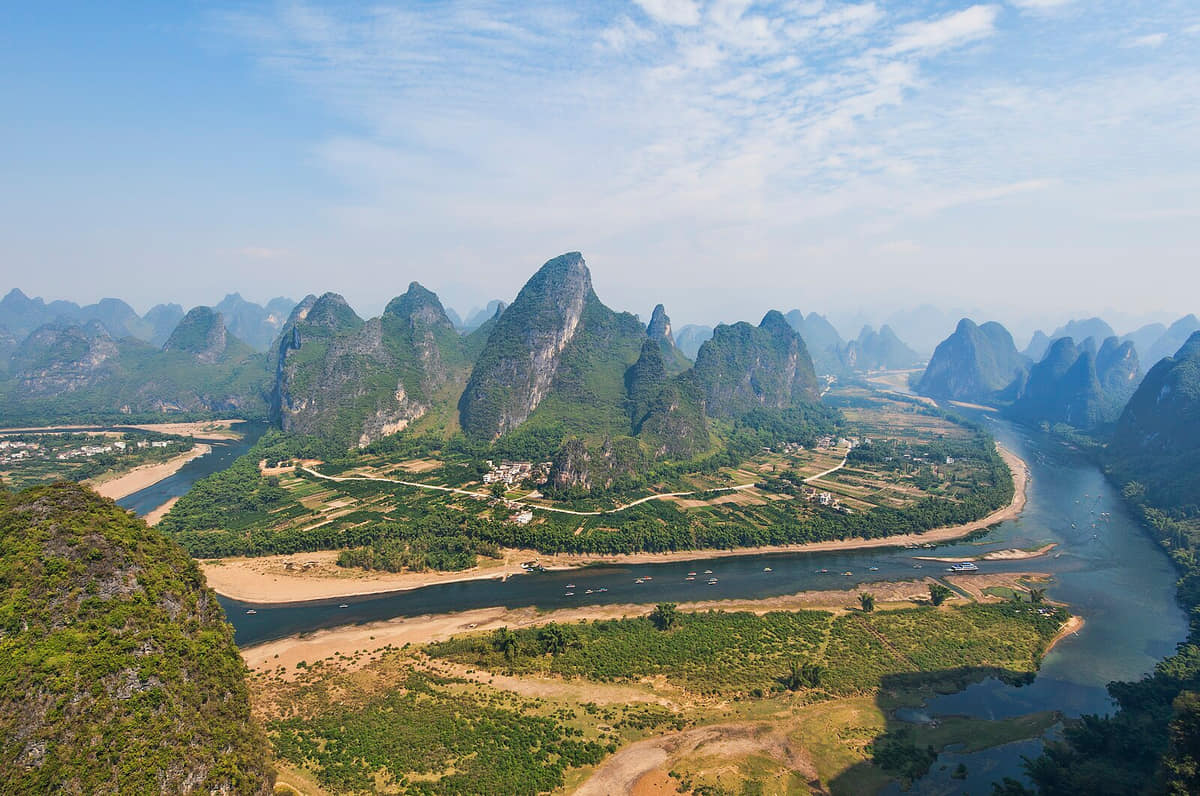
Three days can introduce Guilin’s central river-and-lake setting, follow the Li River through working and tourism landscapes, then compare it with terraces, caves, county towns, or village routes.
A culture-first three-day route
- Day 1
Field route
Guilin museum context → Elephant Hill → Li River bankGuilin museum context → Elephant Hill → Li River bank is a field sequence for comparing Guilin's built form, landscape, work, and district or county context. Check current opening hours, weather, transport, safety, and conservation rules before departure.[1][2][3][4]
- Day 2
Field route
Yangshuo West Street → river village → karst field routeYangshuo West Street → river village → karst field route is a field sequence for comparing Guilin's built form, landscape, work, and district or county context. Check current opening hours, weather, transport, safety, and conservation rules before departure.[1][2][3][4]
- Day 3
Field route
Longsheng county town → Longji terraces → village landscapeLongsheng county town → Longji terraces → village landscape is a field sequence for comparing Guilin's built form, landscape, work, and district or county context. Check current opening hours, weather, transport, safety, and conservation rules before departure.[1][2][3][4]
Keep the pace realistic
- Decide whether the Li River day is a one-way cruise, shorter river section, road-based route, or local ferry sequence before booking onward transport.
- Yangshuo is a county town and rural municipality context, not simply a Guilin attraction; allow time for residents, farming, traffic, and non-scenic daily life.
- Karst caves, peaks, rivers, and terraces respond differently to rain, heat, flooding, visibility, and crowd control, so keep route-specific alternatives.
- Use central museums or local interpretation to distinguish Zhuang, Yao, Miao, Dong, Han, and other community histories rather than merging them into one label.
What to eat along the way
Six locally specific food records connect ingredients, work, markets, and social routines.