
Best Time to Visit Guilin: Weather and Seasons
Compare Guilin by season, including weather trade-offs, walking conditions, indoor alternatives, and the city experiences that change through the year.
The short answer
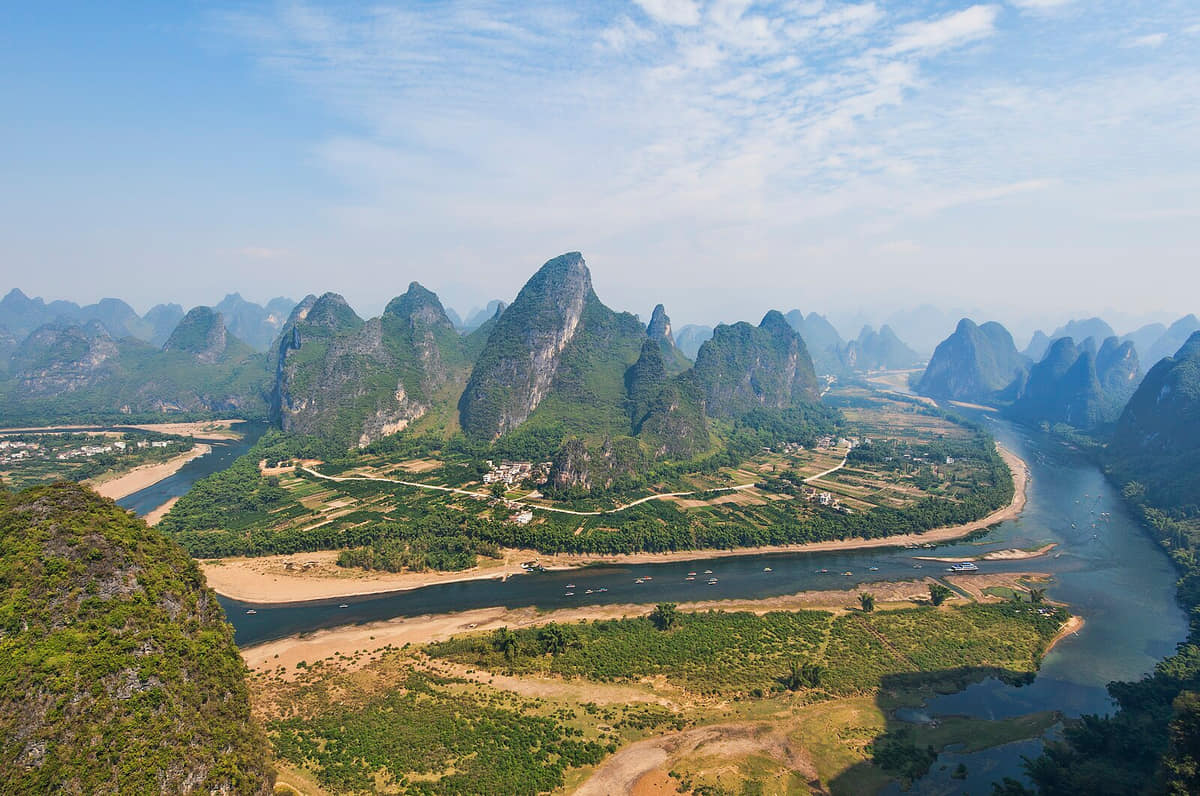
Spring and early summer bring lush landscapes but also persistent rain and high river levels. Autumn is often drier and clearer; winter is quieter and cooler, while summer heat, storms, and flooding require flexibility.
Season by season
Spring
Spring in Guilin can change quickly; rain, wind, pollen, fog, or elevation should be checked before long outdoor routes.[1][2][3][4]
Summer
Hot humid summers, cool damp winters, heavy spring rain, river-level change, and elevation differences shape the Li River, terraces, caves, and county routes.[1][2][3][4]
Autumn
Autumn often provides clearer intervals and cooler evenings, but current forecasts still matter for coast, mountain, river, and county routes.[1][2][3][4]
Winter
Winter conditions vary across the municipality; layered clothing and paired indoor–outdoor routes are the safest general approach.[1][2][3][4]
How climate changes the plan
Humid subtropical monsoon climate shaped by karst terrain
Hot humid summers, cool damp winters, heavy spring rain, river-level change, and elevation differences shape the Li River, terraces, caves, and county routes.[1][2][3][4]
- Decide whether the Li River day is a one-way cruise, shorter river section, road-based route, or local ferry sequence before booking onward transport.
- Yangshuo is a county town and rural municipality context, not simply a Guilin attraction; allow time for residents, farming, traffic, and non-scenic daily life.
- Karst caves, peaks, rivers, and terraces respond differently to rain, heat, flooding, visibility, and crowd control, so keep route-specific alternatives.
- Use central museums or local interpretation to distinguish Zhuang, Yao, Miao, Dong, Han, and other community histories rather than merging them into one label.
Flexible city routes
Field route
Guilin museum context → Elephant Hill → Li River bankGuilin museum context → Elephant Hill → Li River bank is a field sequence for comparing Guilin's built form, landscape, work, and district or county context. Check current opening hours, weather, transport, safety, and conservation rules before departure.[1][2][3][4]
Field route
Yangshuo West Street → river village → karst field routeYangshuo West Street → river village → karst field route is a field sequence for comparing Guilin's built form, landscape, work, and district or county context. Check current opening hours, weather, transport, safety, and conservation rules before departure.[1][2][3][4]
Field route
Longsheng county town → Longji terraces → village landscapeLongsheng county town → Longji terraces → village landscape is a field sequence for comparing Guilin's built form, landscape, work, and district or county context. Check current opening hours, weather, transport, safety, and conservation rules before departure.[1][2][3][4]