
Land and water
Foshan's land and water systems explain settlement, access, work, and the differences between its urban core and outer county-level units.
Guangdong Province · Guangdong Province, China
Foshan is a five-district manufacturing city whose identity grows from ancestral halls, Shiwan kilns, martial arts, Cantonese opera, Shunde food systems, river towns, workshops, and modern factories.
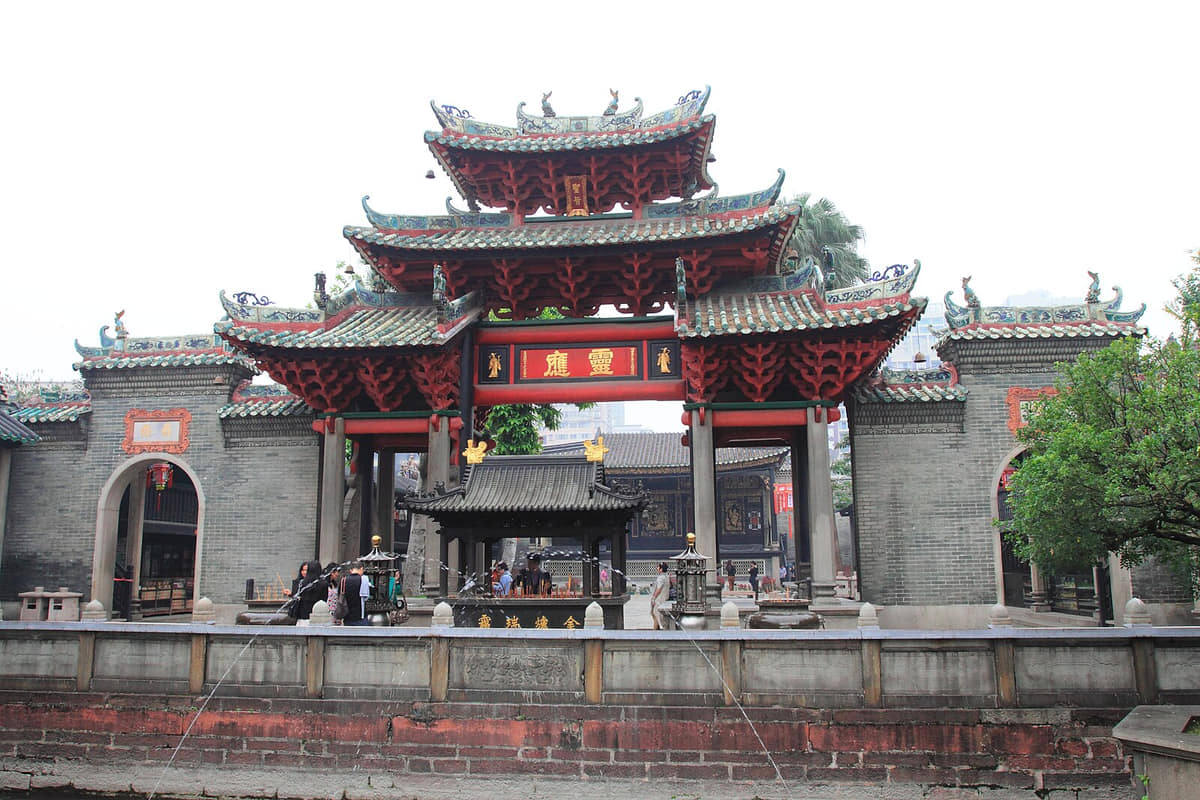
Foshan is a five-district manufacturing city whose identity grows from ancestral halls, Shiwan kilns, martial arts, Cantonese opera, Shunde food systems, river towns, workshops, and modern factories.
Pearl River Delta river plain, Xijiang and Beijiang-connected waterways, Xiqiao volcanic-hill landscape, Five specialized urban districts explain why the municipality cannot be reduced to its best-known attraction.
The guide connects documented history, living culture, food systems, work, landmarks, and three field routes without treating residents as a single type.
District and county conditions vary. Current weather, access rules, conservation requirements, and local guidance should be checked before travel.
Foshan's land and water systems explain settlement, access, work, and the differences between its urban core and outer county-level units.
Successive historical layers remain legible in Foshan's sites, collections, routes, neighborhoods, and present-day municipal form.
Living culture in Foshan is presented through specific skills, institutions, workplaces, food systems, and community choices.
Foshan's districts and counties have different landscapes, industries, memories, and daily rhythms; the city profile keeps those differences visible.
Six reviewed visual records for Foshan.
The interactive map covers all 5 county-level units, including Chancheng District, Nanhai District, Shunde District, Sanshui District.[1][2][3][4]
Four spatial relationships define Foshan.
In Foshan, Pearl River Delta river plain must be read together with Xijiang and Beijiang-connected waterways and Xiqiao volcanic-hill landscape. Their relationship distinguishes the central urban area from the municipality's district- and county-level landscapes.[1][2][3][4]
In Foshan, Xijiang and Beijiang-connected waterways must be read together with Xiqiao volcanic-hill landscape and Five specialized urban districts. Their relationship distinguishes the central urban area from the municipality's district- and county-level landscapes.[1][2][3][4]
In Foshan, Xiqiao volcanic-hill landscape must be read together with Five specialized urban districts and Pearl River Delta river plain. Their relationship distinguishes the central urban area from the municipality's district- and county-level landscapes.[1][2][3][4]
In Foshan, Five specialized urban districts must be read together with Pearl River Delta river plain and Xijiang and Beijiang-connected waterways. Their relationship distinguishes the central urban area from the municipality's district- and county-level landscapes.[1][2][3][4]
Loading current conditions…
Forecast data: Open-MeteoPermanent residents across Foshan Municipality
Population figures use the administrative area and source date shown below.[1][2][3][4]Long hot humid summers, intense rain, typhoons, mild winters, river floods, and heat in dense manufacturing districts shape daily routines.
Climate describes long-term seasonal patterns; live conditions appear separately.[1][2][3][4]Spring in Foshan can change quickly; rain, wind, pollen, fog, or elevation should be checked before long outdoor routes.[1][2][3][4]
Long hot humid summers, intense rain, typhoons, mild winters, river floods, and heat in dense manufacturing districts shape daily routines.[1][2][3][4]
Autumn often provides clearer intervals and cooler evenings, but current forecasts still matter for coast, mountain, river, and county routes.[1][2][3][4]
Winter conditions vary across the municipality; layered clothing and paired indoor–outdoor routes are the safest general approach.[1][2][3][4]
Five time layers connect surviving places with current urban and county form.
Kilns, metalwork, medicine, and commerce places Ming–Qing eras within Foshan's longer sequence from River markets and farming to Industrial upgrading and heritage reuse. Surviving sites, collections, routes, and urban form provide the evidence used in this guide.[1][2][3][4]
Guilds, opera, and martial-arts networks places Late 19th–early 20th centuries within Foshan's longer sequence from River markets and farming to Industrial upgrading and heritage reuse. Surviving sites, collections, routes, and urban form provide the evidence used in this guide.[1][2][3][4]
Township manufacturing expansion places Late 20th century within Foshan's longer sequence from River markets and farming to Industrial upgrading and heritage reuse. Surviving sites, collections, routes, and urban form provide the evidence used in this guide.[1][2][3][4]
Industrial upgrading and heritage reuse places Contemporary within Foshan's longer sequence from River markets and farming to Industrial upgrading and heritage reuse. Surviving sites, collections, routes, and urban form provide the evidence used in this guide.[1][2][3][4]
Residents are described through language, work, mobility, neighborhood, and present-day choice—not fixed personality labels.
Language use in Foshan varies by family, generation, neighborhood, school, workplace, and migration history; local speech and Standard Mandarin are not interchangeable identity labels.[1][2][3][4]
Foshan's central neighborhoods, district towns, county seats, and villages differ in density, access, employment, services, and daily schedules.[1][2][3][4]
Residents connect Foshan to other places through work, study, migration, family, trade, and tourism; these networks change how neighborhoods and county communities function.[1][2][3][4]
No single personality represents Foshan. Age, occupation, language, gender, neighborhood, county background, and individual preference produce different and changing experiences.[1][2][3][4]
Six locally specific food records connect ingredients, work, markets, and social routines.
Three field routes pair the core city with contrasting district or county landscapes.
Ancestral Temple → historic commercial lanes → opera museum is a field sequence for comparing Foshan's built form, landscape, work, and district or county context. Check current opening hours, weather, transport, safety, and conservation rules before departure.[1][2][3][4]
Nanfeng Ancient Kiln → Shiwan workshops → industrial edge is a field sequence for comparing Foshan's built form, landscape, work, and district or county context. Check current opening hours, weather, transport, safety, and conservation rules before departure.[1][2][3][4]
Qinghui Garden → Shunde market → river-town food route is a field sequence for comparing Foshan's built form, landscape, work, and district or county context. Check current opening hours, weather, transport, safety, and conservation rules before departure.[1][2][3][4]
Kilns, guilds, metalwork, food processing, family firms, township factories, logistics, and design upgrading form a continuous but changing production culture.
Read the story