
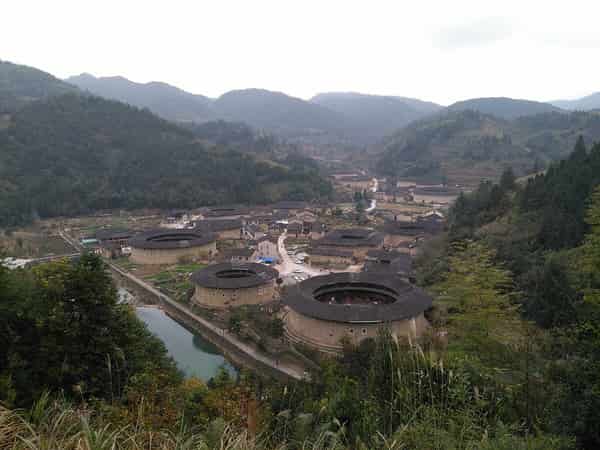
River routes linked the prefectural city, orchards, kilns, ports, fishing villages, Hakka valleys, and tulou communities, creating a municipality with several cultural geographies.[1][2][3][4]
Evidence is distributed across Jiulong River basin, Minnan coastal plain, Dongshan and volcanic coastline, Nanjing and Hua'an mountain counties, as well as museums, working neighborhoods, district and county routes, and local collections.[1][2][3][4]
Zhangzhou is best understood as connected systems rather than a single attraction.[1][2][3][4]
The account distinguishes documented facts from interpretation, avoids political positioning and fixed community stereotypes, and leaves room for different residents' experiences.[1][2][3][4]
What does this reveal about Zhangzhou?
Zhangzhou connects the Jiulong River plain, Dongshan and volcanic coasts, Minnan old streets, tulou and Hakka villages, puppet and print traditions, tea and fruit farming, ports, and manufacturing counties.[1][2][3][4]