
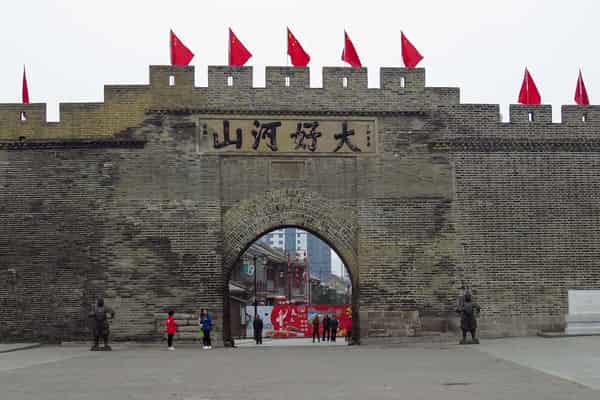
Mountain gates, postal stations, trade roads, railways, wind corridors, and contemporary sport routes repeatedly reorganized movement between valleys and plateau.[1][2][3][4]
Evidence is distributed across Sanggan and Yang River valleys, Great Wall mountain passes, Bashang plateau grasslands, Southern basins and northern wind corridors, as well as museums, working neighborhoods, district and county routes, and local collections.[1][2][3][4]
Zhangjiakou is best understood as connected systems rather than a single attraction.[1][2][3][4]
The account distinguishes documented facts from interpretation, avoids political positioning and fixed community stereotypes, and leaves room for different residents' experiences.[1][2][3][4]
What does this reveal about Zhangjiakou?
Zhangjiakou is a mountain-pass city shaped by Great Wall gates, postal and trade routes, Bashang grasslands, Xuanhua and Yuxian towns, energy landscapes, and winter-sport infrastructure.[1][2][3][4]