
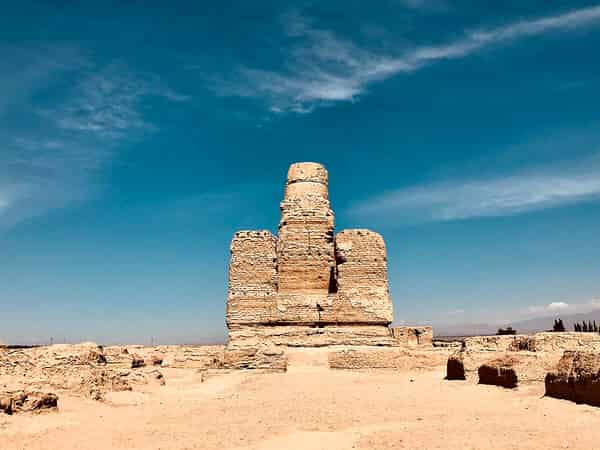
Snowmelt, wells, underground channels, canals, household use, grape farming, tourism, conservation, and urban growth all compete within a tightly limited oasis system.[1][2][3][4]
Evidence is distributed across Turpan Depression, Flaming Mountains, Bogda Mountain snowmelt slopes, Aydingkol lowland and oasis belts, as well as museums, working neighborhoods, district and county routes, and local collections.[1][2][3][4]
Turpan is best understood as connected systems rather than a single attraction.[1][2][3][4]
The account distinguishes documented facts from interpretation, avoids political positioning and fixed community stereotypes, and leaves room for different residents' experiences.[1][2][3][4]
What does this reveal about Turpan?
Turpan is a deep-basin oasis city where karez water systems, Jiaohe and Gaochang archaeology, Uyghur community life, grape cultivation and drying houses, Buddhist cave conservation, Flaming Mountain routes, rail logistics, and county oases depend on scarce water.[1][2][3][4]