
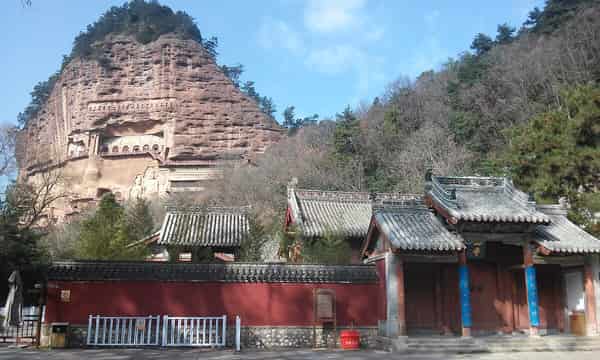
The Wei valley concentrated settlement, roads, religious sites, craft, farming, rail, and county exchange, while nearby mountains supplied materials, water, and protected niches.[1][2][3][4]
Evidence is distributed across Wei River basin, Qinling northern slopes, Longshan and eastern loess hills, Maijishan forest and grotto valleys, as well as museums, working neighborhoods, district and county routes, and local collections.[1][2][3][4]
Tianshui is best understood as connected systems rather than a single attraction.[1][2][3][4]
The account distinguishes documented facts from interpretation, avoids political positioning and fixed community stereotypes, and leaves room for different residents' experiences.[1][2][3][4]
What does this reveal about Tianshui?
Tianshui is a Wei River corridor city where Maijishan grottoes, Dadiwan archaeology, Fuxi Temple traditions, Qinling forests, loess farming, carved lacquer, Qin opera, rail routes, county towns, and apple orchards meet.[1][2][3][4]