
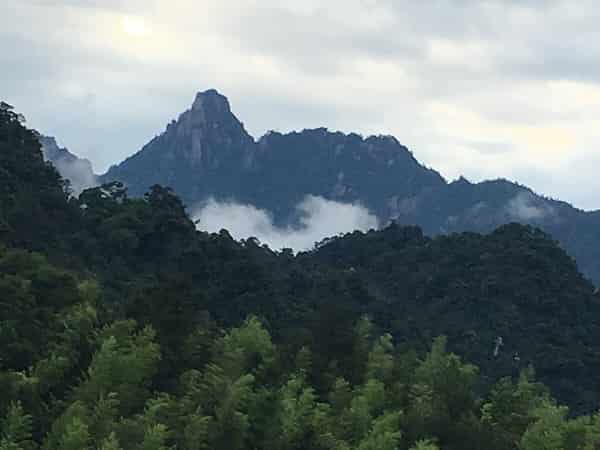
The municipality is distributed across contrasting landscapes whose routes support tea, farming, quarrying and mining history, tourism, rail movement, and village conservation.[1][2][3][4]
Evidence is distributed across Xin River valley, Sanqing Mountain granite landscape, Wuyuan hill and village country, Poyang Lake eastern wetlands, as well as museums, working neighborhoods, district and county routes, and local collections.[1][2][3][4]
Shangrao is best understood as connected systems rather than a single attraction.[1][2][3][4]
The account distinguishes documented facts from interpretation, avoids political positioning and fixed community stereotypes, and leaves room for different residents' experiences.[1][2][3][4]
What does this reveal about Shangrao?
Shangrao spans the Xin River, Sanqing and Wuyi mountain systems, Wuyuan villages and tea country, Poyang wetlands, Guifeng geology, rail corridors, and diverse county economies.[1][2][3][4]