
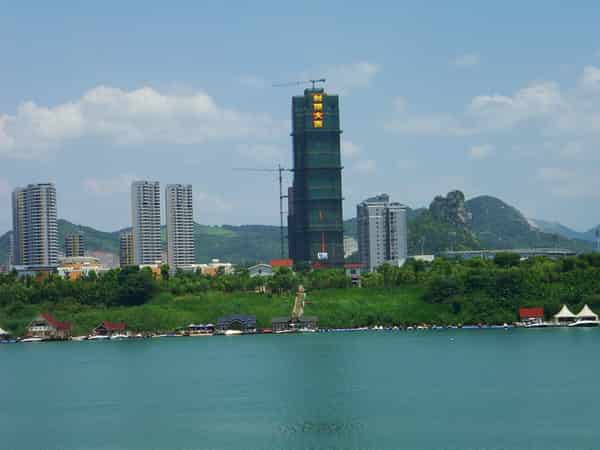
Rail, factories, housing, river transport, migrant labor, county roads, village architecture, food distribution, and tourism connect landscapes that remain socially and geographically distinct.[1][2][3][4]
Evidence is distributed across Liu River urban basin, Karst hills and caves, Sanjiang Dong uplands, Rongshui and northern forest mountains, as well as museums, working neighborhoods, district and county routes, and local collections.[1][2][3][4]
Liuzhou is best understood as connected systems rather than a single attraction.[1][2][3][4]
The account distinguishes documented facts from interpretation, avoids political positioning and fixed community stereotypes, and leaves room for different residents' experiences.[1][2][3][4]
What does this reveal about Liuzhou?
Liuzhou is a Liu River and karst basin city where a major industrial base connects with Dong wind-and-rain bridges, Miao and Dong community records, forest counties, folk songs, market food, riverfront public life, and mountain transport.[1][2][3][4]