
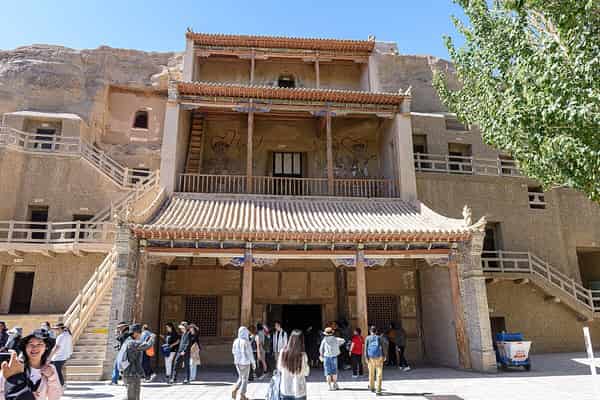
Water allocation, highways, rail, airports, conservation rules, energy grids, farms, service towns, and long-distance institutions connect settlements separated by Gobi and desert.[1][2][3][4]
Evidence is distributed across Western Hexi Corridor, Gobi and desert basins, Qilian Mountain glaciers, Dunhuang and Shule River oases, as well as museums, working neighborhoods, district and county routes, and local collections.[1][2][3][4]
Jiuquan is best understood as connected systems rather than a single attraction.[1][2][3][4]
The account distinguishes documented facts from interpretation, avoids political positioning and fixed community stereotypes, and leaves room for different residents' experiences.[1][2][3][4]
What does this reveal about Jiuquan?
Jiuquan is a vast western Hexi municipality of Gobi, Qilian glaciers, oasis irrigation, Yumen and Dunhuang, Mogao and Yulin cave conservation, Silk Road archaeology, wind and solar fields, farms, border deserts, and widely separated county towns.[1][2][3][4]