
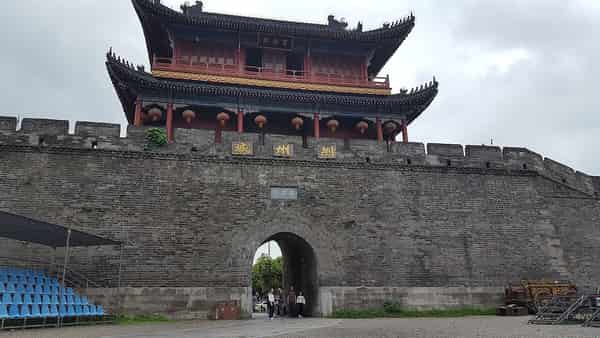
Ancient objects, later stories, city walls, embankments, lake livelihoods, farming, and modern engineering occupy the same lowland but come from different kinds of evidence.[1][2][3][4]
Evidence is distributed across Yangtze river corridor, Jianghan plain, Honghu and other lake wetlands, Canals, embankments, and agricultural lowlands, as well as museums, working neighborhoods, district and county routes, and local collections.[1][2][3][4]
Jingzhou is best understood as connected systems rather than a single attraction.[1][2][3][4]
The account distinguishes documented facts from interpretation, avoids political positioning and fixed community stereotypes, and leaves room for different residents' experiences.[1][2][3][4]
What does this reveal about Jingzhou?
Jingzhou is a Yangtze–Jianghan plain city of Chu archaeology, a surviving walled core, lake and wetland communities, Three Kingdoms literary memory, river engineering, agriculture, and county towns extending toward Honghu.[1][2][3][4]