
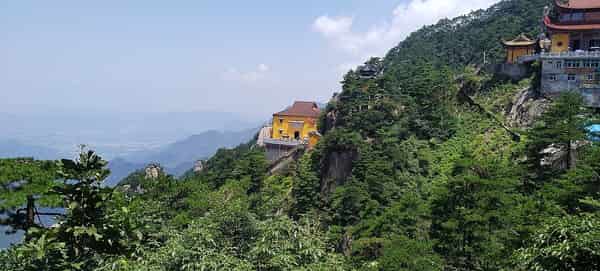
Jiuhua's institutions, Qiupu's literary memory, Yangtze wetlands, karst valleys, farming, and village performance traditions create several overlapping ways to read a small municipality.[1][2][3][4]
Evidence is distributed across Yangtze riverfront and wetlands, Jiuhua Mountain massif, Qiupu River valley, Shitai karst and southern hills, as well as museums, working neighborhoods, district and county routes, and local collections.[1][2][3][4]
Chizhou is best understood as connected systems rather than a single attraction.[1][2][3][4]
The account distinguishes documented facts from interpretation, avoids political positioning and fixed community stereotypes, and leaves room for different residents' experiences.[1][2][3][4]
What does this reveal about Chizhou?
Chizhou brings together the Yangtze, Jiuhua Mountain's pilgrimage landscape, Qiupu River poetry, Guichi Nuo traditions, karst counties, wetlands, tea, villages, and a small riverfront city.[1][2][3][4]